10.9
Section 10
Inspection and Reconditioning
10
Ring failure is usually indicated by excessive oil
consumption and blue exhaust smoke. When rings fail,
oil is allowed to enter the combustion chamber where it
is burned along with the fuel. High oil consumption can
also occur when the piston ring end gap is incorrect
because the ring cannot properly conform to the
cylinder wall under this condition. Oil control is also lost
when ring gaps are not staggered during installation.
When cylinder temperatures get too high, lacquer and
varnish collect on pistons causing rings to stick, which
results in rapid wear. A worn ring usually takes on a
shiny or bright appearance.
Scratches on rings and pistons are caused by abrasive
material such as carbon, dirt, or pieces of hard metal.
Detonation damage occurs when a portion of the fuel
charge ignites spontaneously from heat and pressure
shortly after ignition. This creates two flame fronts,
which meet and explode to create extreme hammering
pressures on a specific area of the piston. Detonation
generally occurs from using low octane fuels.
Preignition or ignition of the fuel charge before the
timed spark can cause damage similar to detonation.
Preignition damage is often more severe than
detonation damage. Preignition is caused by a hot spot
in the combustion chamber from sources such as
glowing carbon deposits, blocked cooling fins, an
improperly seated valve, or wrong spark plug(s).
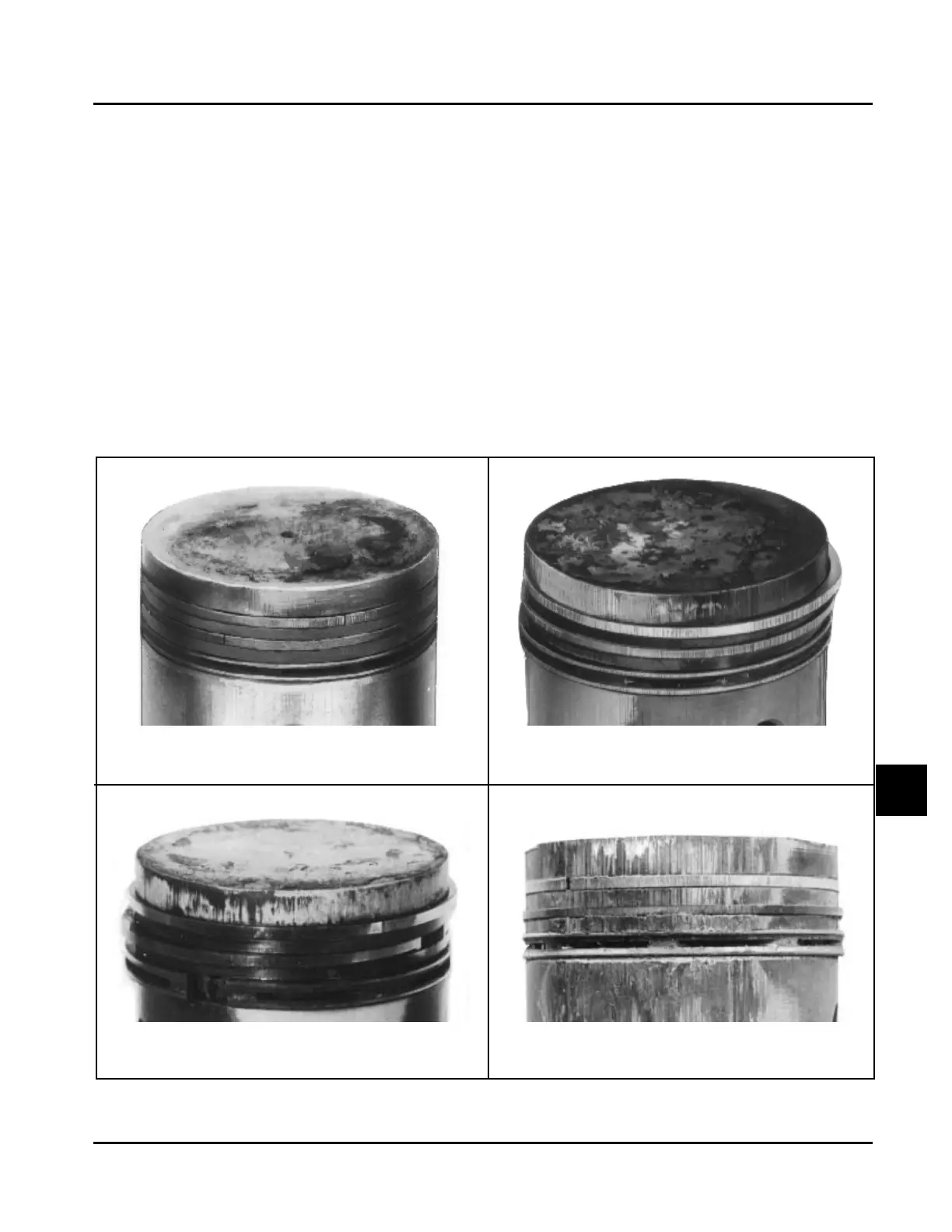
See Figure 10-8 for some common types of piston and
ring damage.
Figure 10-8. Common Types of Piston Damage.
Overheated or Deteriorated Oil
Scored Piston and Rings
Abrasive Scratched RingsStuck, Broken Rings
Kohler Engine Parts Call K&T 606-678-9623 or 606-561-4983
www.mymowerparts.com




 To Next Page