Need help?
Do you have a question about the Kospel WZ-80 and is the answer not in the manual?
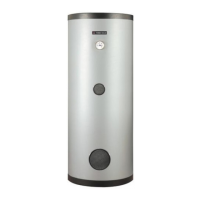
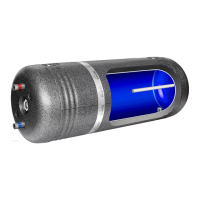
This document provides operating and installation instructions for a range of KOSPEL domestic hot water cylinders. These devices are designed for heating and storing water, making them suitable for use with low-temperature heating boilers in residential buildings, municipal dwellings, and sanitary rooms. The cylinders are specifically designed for horizontal installation.
The KOSPEL domestic hot water cylinder serves as a crucial component in a hot water system, ensuring a readily available supply of heated water. The core of the device is a vitreous enamel-coated steel tank, which provides durability and corrosion resistance. Different models within the range offer varying configurations to suit diverse heating requirements:
All models are designed to accommodate an optional immersion heater with a temperature controller, which can be installed in place of a specific plug (1½'' [16] as shown in fig. 2 abcd). This allows for supplementary or alternative heating methods.
The installation and operation of the KOSPEL domestic hot water cylinder require adherence to specific guidelines to ensure product reliability and longevity. The device must be installed and started up by an authorized serviceman. Crucially, the cylinder should not be installed in locations exposed to frost, as this can compromise its functionality and integrity.
For double-jacketed cylinders (like the WP model), installation must be on an open-vented central heating system, with the maximum jacket pressure not exceeding 0.15 MPa. Similarly, domestic hot water cylinders heated directly by the coil of a solid fuel cooker must also be installed in an open-vented central heating system and protected against excessive pressure by an expansion vessel and fittings, in accordance with relevant legal regulations. Solid fuel boilers, when used with these cylinders, must also be installed in an open-vented system protected by binding law regulations.
Connection to the central heating system is made via pipe unions (1½''), with cut-off valves installed before these unions. To achieve the desired efficiency, an appropriate domestic hot water flow rate must be ensured, particularly in forced circulation installations (those with a water pump). For gravity circulation installations, the device needs to be placed to achieve a significant height difference (at least 1.5m) between the heat source and the cylinder.
Connecting to the water supply system requires compliance with binding law regulations. As a pressure device, the maximum system pressure should not exceed 0.6 MPa. If the system pressure is higher, a pressure reducing valve must be installed. A safety valve (e.g., ZB-4) must be screwed to the 3/4″ connector [1] (fig.2) using a reducing union, following the direction indicated by the arrow on the valve body. It is critical that no cut-off valve or flow reducer is installed between the cylinder and the safety valve, or on the outlet. The safety valve must be visibly located for easy and quick leakage control. A wye with a drain valve should be installed between the cylinder and the safety valve, and a cut-off valve on the cold water inlet. The domestic hot water inlet is connected to the 3/4″ connector [2] on top of the cylinder (fig.2). Additionally, each hot water cylinder includes a 3/4'' [19] connector for connection to the domestic hot water circulation system.
Before start-up, all pipe connections must be checked, and the device installation procedures followed. The hot water cylinder, central heating system, and heating coil must be filled with water by:
During operation, the rated temperature of the hot water cylinder should not exceed 80°C. Damage to the thermal insulating cover due to cylinder overheating is not covered by the warranty. It is crucial not to use the device if there is any probability of safety valve failure.
Regular maintenance is essential for the safe and reliable operation of the KOSPEL domestic hot water cylinder. Key maintenance activities include:
Any failures or malfunctions should be reported to an authorized service provider. It is important to note that a small amount of water leaking from the outlet pipe of the safety valve is a normal effect of the device's operation and should not be stopped, as doing so can cause device failure. The activities listed above, such as safety valve checks, cleaning, anode replacement, and insulation, are generally considered beyond the scope of warranty and are the responsibility of the user.
For emptying the cylinder, the following steps should be followed:
 General
| Voltage | 400V 3N~ / 230V 1N~ |
|---|---|
| Fuel type | Electricity |
| Type | Electric flow boiler |
| Water connection | G ½" |
| Rated pressure | 1 MPa |
| Maximum water pressure | 1 MPa |

 To Next Page