2. Preparatory procedure
Preparatory
2
P2-4
2-7 Types of available films
Recommended 35-mm camera back films
Photography mode Type of film Film speed Development
Color photography Reversal film Color ISO 100 Standard
Fluorescein angiography
Negative film B&W ISO 400 3 X development
Negative film B&W ISO 1600 Standard
Red-free photography
Negative film B&W ISO 400 3 X development
Negative film B&W ISO 1600 Standard
• Do not use other than designated films to avoid improperly exposed photographs.
2-8 Preparatory procedure of the examined eye
1) In case of mydriatic photography, apply mydriatic eye drops to the examined eye. After it dilates fully, guide the
patient to the fundus camera. In case of non-mydriatic photography, take the patient to a dark room and let the
examined eye dilate spontaneously.
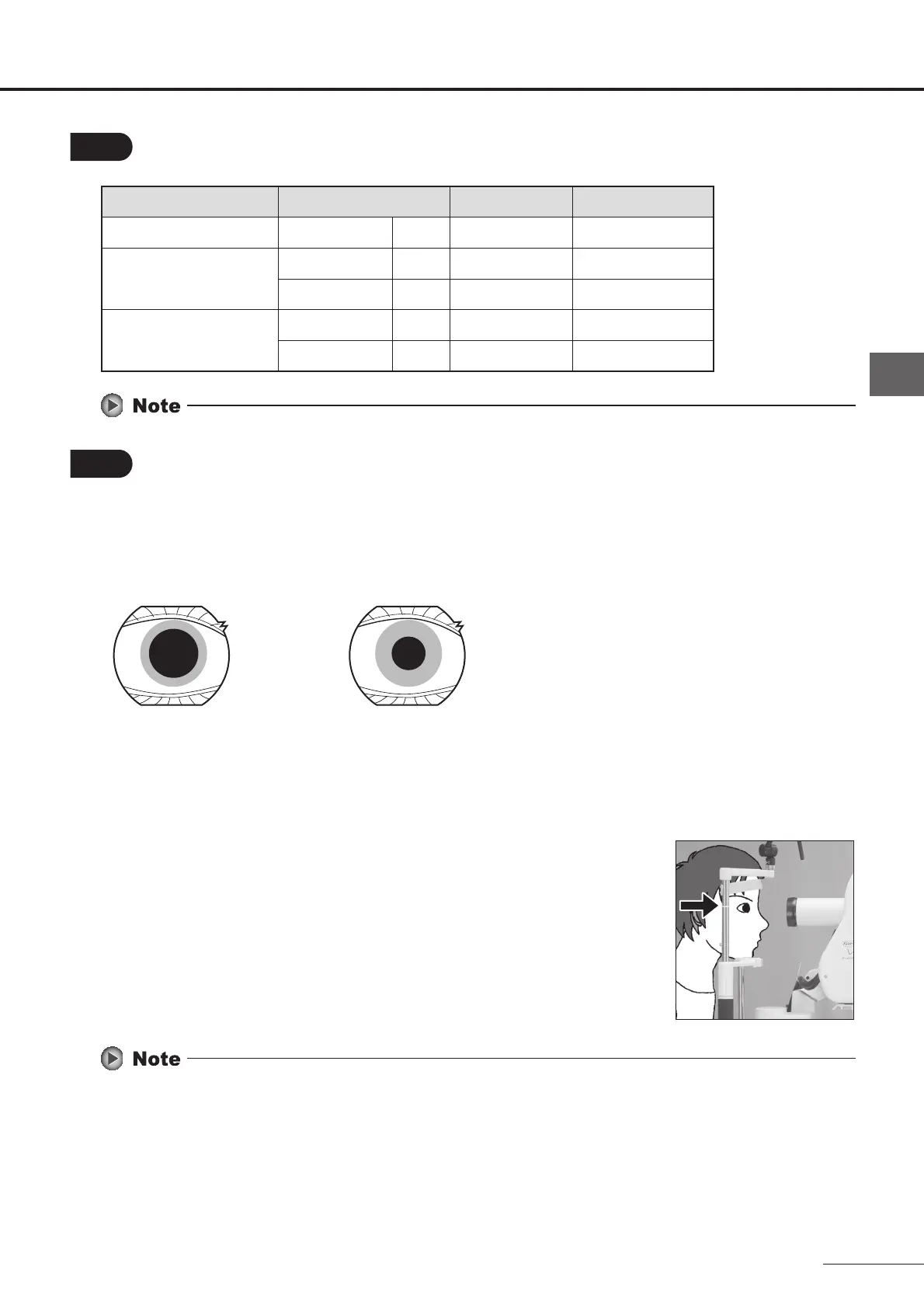
2) Make sure that the pupil is sufficiently open.
Sufficient diameter of the pupil is 5.5 mm or more in mydriatic mode, 4.0 mm or more in small pupil mode and 4.0
mm or more in non-mydriatic mode.
Mydriatic photography
is enabled if 5.5 mm or
more in diameter.
Small pupil or non-mydriatic
photography is enabled if
4.0 mm or more in diameter.
3) Fixing the patient
Instruct the patient whose eyes is dilated sufficiently, to be seated in front
of the fundus camera.
Adjust the height of motorized table to let the chin on the chin rest and the
forehead on the forehead rest in a natural posture.
Adjust the chin rest height by chin rest handle.
Set the examined eye at the eye level mark. (See illustration on the right.)
• The use of mydriatics may cause side effects in some patients. Make sure to read the instructions for use
carefully before using mydriatics, and follow the instructions.
• After photography using mydriatics, patient's pupils are dilated; therefore, patients may experience glaring or
blurred vision. Instruct patient to be careful when they walk or move around and refrain from driving.
3) Fixing the patient


 To Next Page