EasyManua.ls Logo

KRAL DS1 Series - User Manual

Default Icon
60 pages
Print Icon
To Next Page IconTo Next Page
Loading...
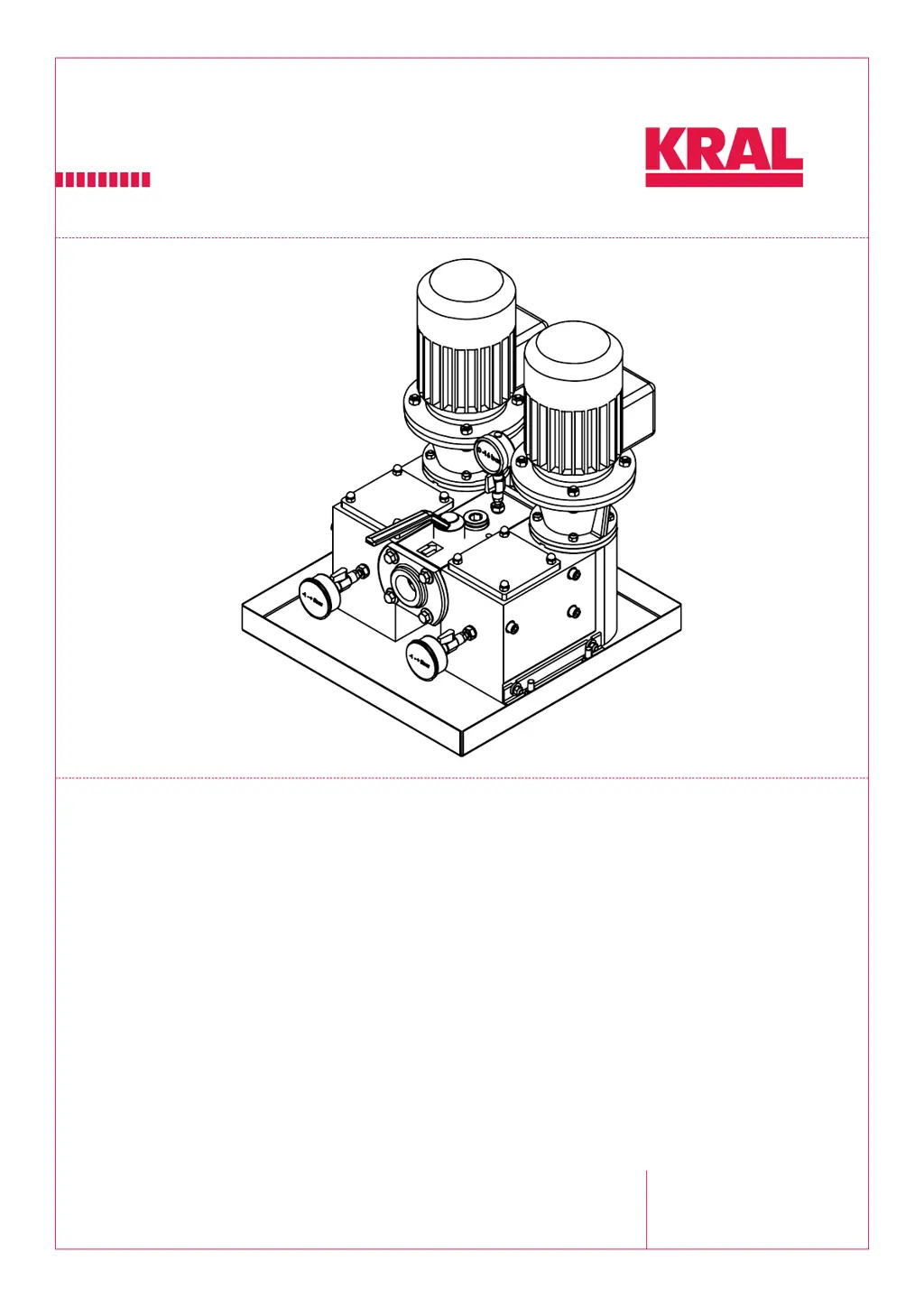
Operating instructions
KRAL pump stations.
Series DL3 / DL4 / DS1 / DS3 / DS4
Mechanical seal/Radial shaft seal
OID 06en-GB
Edition 2019-11
Original instructions
www.kral.at

Table of Contents

Questions and Answers

  • J
    Joseph MendozaAug 9, 2025
    What to do if there is a danger of poisoning and environmental damage through residues with KRAL DS1 Water Pump?
    • J
      jenniferwoodAug 9, 2025
      If you encounter a danger of poisoning and environmental damage through residues, wear personal protective clothing, ensuring face protection during all work. Before disposal, collect any pumped liquid safely and dispose of it in an environmentally compatible manner according to local regulations. Neutralize the residues before disposing of them.
  • A
    Angela AndrewsAug 15, 2025
    Why is there no pump suction in my KRAL DS1 Water Pump?
    • K
      krausechristineAug 15, 2025
      There could be several reasons for the lack of pump suction. It might be due to a closed pump suction line, so check and open any shut-off devices. Alternatively, parts like the filter, suction line, suction valve, or strainer could be soiled and need cleaning. A suction head that is too high, a level in the intake container that is too low (fill the intake container), too little pumped liquid in the pump (fill the pump), airlock/gas in the pumped liquid (test the pipe system for air admission, replace leaking parts; reduce the suction head or increase the inlet pressure), incorrect pump direction of rotation, or soiling of the filters/strainers could also be the cause.
  • L
    Lisa JoyceAug 21, 2025
    What to do if my KRAL Water Pump has no suction?
    • J
      John MurilloAug 21, 2025
      If your KRAL Water Pump isn't drawing suction, start by checking if the pump suction line is closed and open it if necessary. Inspect and clean any soiled parts like the filter, suction line, suction valve, or strainer. Ensure the level in the intake container is adequate; if not, fill it. Also, verify that there's enough pumped liquid in the pump itself—add more if needed. Finally, check for airlocks or gas in the pumped liquid; test the pipe system for air leaks and replace any faulty parts. You might also need to reduce the suction head or increase the inlet pressure.
  • R
    Roberto MendozaAug 27, 2025
    How do I fix a KRAL Water Pump with no suction due to a high suction head?
    • C
      Caitlin WalkerAug 27, 2025
      If your KRAL Water Pump isn't drawing suction and you suspect it's due to a high suction head, you can try the following: reduce the level difference, reduce the line length, increase the line cross-section, heat up the pumped liquid, or install a filter/strainer with a larger mesh width, ensuring that the permissible mesh width is not exceeded.
  • C
    Crystal RamosSep 2, 2025
    What to do if coupling aligned incorrectly in KRAL DS1?
    • E
      Evan ChurchSep 2, 2025
      If the coupling is aligned incorrectly in your KRAL Water Pump, assemble the coupling and motor correctly, see the associated operating instructions of the pumps.

Summary

1 About this document

1.4.1 Danger levels

Explains different danger levels and their consequences.

1.4.2 Danger signs

Details specific danger signs and their potential hazards.

1.4.4 Symbols for personal protective equipment

Lists required personal protective equipment and associated risks.

2 Safety

2.1 Proper use

Defines the intended use of the pump station and operating limits.

2.4.1 Fundamental safety instructions

Lists critical safety instructions that must be strictly observed.

4 Technical data

4.1 Operating limits

Specifies the operational limits for pressure, temperature, and viscosity.

5 Function description

6 Transportation, storage

6.1 Dangers during transportation

Lists safety instructions and hazards related to transporting the pump station.

6.2 Dangers during storage

Outlines safety instructions and hazards associated with storing the pump station.

6.4 Transporting the pump station

Details personnel qualifications, PPE, and aids for transporting the pump station.

7 Preservation

8 Installation, removal

8.1 Dangers during installation

Lists safety instructions and hazards specific to the installation process.

8.2 Dangers during removal

Lists safety instructions and hazards specific to the removal process.

8.3 Mounting the pump station

Provides instructions and considerations for mounting the pump station correctly.

8.4 Removing the pump station

Details the procedure and safety precautions for removing the pump station.

9 Connection

9.1 Dangers during connection work

Lists safety instructions and hazards related to connecting the pump station.

9.3 Connecting the pump station to the power supply

Details the procedure and safety precautions for connecting to the power supply.

10 Operation

10.1 Dangers during operation

Lists critical safety instructions and hazards during pump station operation.

10.2.4 Commissioning the pump station

Outlines the final steps and checks for commissioning the pump station.

10.4.1 Taking the pump station out of operation

Details the procedure for safely taking the pump station out of operation.

11 Maintenance

11.1 Dangers during maintenance

Lists critical safety instructions and hazards specific to maintenance activities.

11.2 Required maintenance

Specifies the required maintenance tasks and their cycles for the pump station and components.

12 Servicing

12.1 Dangers during servicing

Lists critical safety instructions and hazards specific to servicing activities.

12.5 Replacing the pump

Outlines the procedure and safety precautions for replacing the pump.

13 Disposal

14 Troubleshooting

14.1 Possible faults

Lists common faults, their potential causes, and troubleshooting measures.

14.2 Troubleshooting

Provides a detailed table of faults, causes, and remedies for troubleshooting.

17 Appendix

17.1 Tightening torques for screws with metric screw threads with and without wedge lock washers

Provides tightening torques for metric screw threads with different material properties.

17.2 Tightening torques for screw plugs with thread measured in inches and elastomer seal

Provides tightening torques for inch-threaded screw plugs with elastomer seals.

KRAL DS1 Series Specifications

General IconGeneral
SeriesDS1
Seal TypeMechanical seal
Motor TypeElectric motor
ControlFrequency inverter optional
ConnectionFlanged

Related product manuals