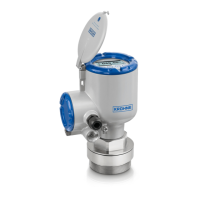
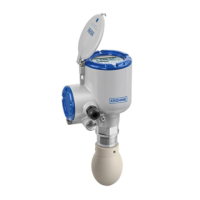
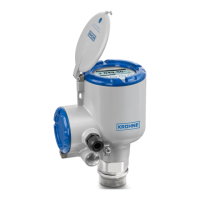
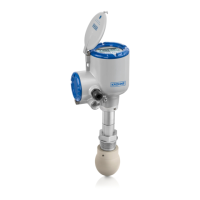
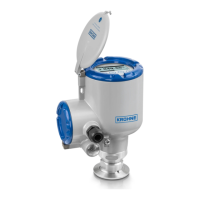
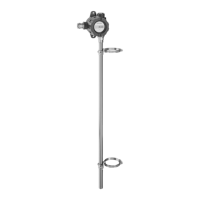
The OPTIBAR 5060 is a pressure transmitter designed for measuring the pressure of vaporous, gaseous, and liquid media. It is suitable for use in hazardous atmospheres containing all combustible materials of explosion groups IIA, IIB, and IIC, for applications requiring equipment categories 1G, 1/2G, or 2G.
Function Description:
The device measures pressure and level in hazardous areas. It consists of an electronics housing with an integrated electronic insert, a process connection element, a probe, and a pressure measuring cell, which can optionally be connected with a diaphragm seal. A display and adjustment module can also be integrated.
Important Technical Specifications:
Protection Type and Marking:
The pressure transmitter is designed with intrinsic safety protection type, protection level "ia," according to EN 60079-11 or IEC 60079-11.
- ATEX Marking: II 1G, 1/2G, 2G Ex ia IIC T6...T1 Ga, Ga/Gb, Gb
- IECEx Marking: Ex ia IIC T6...T1 Ga, Ga/Gb, Gb
Electrical Data (Intrinsic Safety Ex ia IIC/IIB):
- For electronics Z (4-20 mA), H (4-20 mA/HART®), A (4-20 mA/HART® with SIL qualification):
- Maximum values: Uᵢ = 30 V, Iᵢ = 131 mA, Pᵢ = 983 mW.
- Effective inner capacitance Cᵢ is negligibly small.
- For versions with permanently mounted connection cable: Cᵢ wire/wire = 150 pF/m, Cᵢ wire/shield = 270 pF/m.
- Effective inner inductance Lᵢ is Lᵢ ≤ 5 µH. For versions with permanently mounted connection cable: Lᵢ = 0.62 µH/m.
- For electronics P (Profibus PA), F (Foundation Fieldbus):
- Maximum values (FISCO model): Uᵢ = 17.5 V, Iᵢ = 500 mA, Pᵢ = 5.5 W.
- Alternatively: Uᵢ = 24 V, Iᵢ = 250 mA, Pᵢ = 1.2 W.
- Effective inner capacitance Cᵢ is negligibly small.
- For versions with permanently mounted connection cable: Cᵢ wire/wire = 150 pF/m, Cᵢ wire/shield = 270 pF/m.
- Effective inner inductance Lᵢ is negligibly small. For versions with permanently mounted connection cable: Lᵢ = 0.62 µH/m.
- For electronics S or T (electronic differential pressure measurement):
- Maximum values: Uᵢ = 30 V, Iᵢ = 131 mA, Pᵢ = 983 mW.
- Effective inner capacitance Cᵢ is negligibly small.
- For versions with permanently mounted connection cable: Cᵢ wire/wire = 150 pF/m, Cᵢ wire/shield = 270 pF/m.
- Effective inner inductance Lᵢ is Lᵢ ≤ 0.62 µH/m.
- For electronics H (4-20 mA/HART®) or A (4-20 mA/HART® with SIL qualification) and additional electronics Z (second current output):
- Supply and signal circuit I and II: Uᵢ = 30 V, Iᵢ = 131 mA, Pᵢ = 983 mW.
- Effective inner capacitance Cᵢ is negligibly small.
- For versions with permanently mounted connection cable: Cᵢ wire/wire = 150 pF/m, Cᵢ wire/shield = 270 pF/m.
- Effective inner inductance Lᵢ is Lᵢ ≤ 5 µH. For versions with permanently mounted connection cable: Lᵢ = 0.62 µH/m.
- For versions with separate cable outlet:
- The length of the supplied cable between the external housing and the probe unit should not exceed 180 m.
Ambient and Product Temperature Ranges:
- Category 1G (EPL Ga) equipment:
- T6: Ambient and media temperature range: -20...+23°C / -4...+73.4°F.
- T5, T4, T3, T2, T1: Ambient and media temperature range: -20...+60°C / -4...+140°F.
- Process pressure must be between 0.8...1.1 bar.
- Category 1/2G (EPL Ga/Gb) equipment:
- T6: Ambient temperature range at electronics (zone 1): -50...+39°C / -58...+102.2°F. Media temperature range at probe (zone 0): -20...+23°C / -4...+73.4°F.
- T5, T4, T3, T2, T1: Ambient temperature range at electronics (zone 1): -50...+70°C / -58...+158°F. Media temperature range at probe (zone 0): -20...+60°C / -4...+140°F.
- Process pressure must be between 0.8...1.1 bar.
- Category 2G (EPL Gb) equipment - OPTIBAR PC 5060, OPTIBAR PM 5060 with metallic-ceramic measuring cell:
- T6: Ambient temperature (electronics, zone 1): -50...+39°C / -58...+102.2°F. Product temperature (sensor, zone 1): -50...+39°C / -58...+102.2°F.
- T5: Ambient temperature (electronics, zone 1): -50...+70°C / -58...+158°F. Product temperature (sensor, zone 1): -50...+100°C / -58...+212°F.
- T4: Ambient temperature (electronics, zone 1): -50...+50°C / -58...+122°F. Product temperature (sensor, zone 1): -50...+135°C / -58...+275°F.
- T3, T2, T1: Ambient temperature (electronics, zone 1): -50...+50°C / -58...+122°F. Product temperature (sensor, zone 1): -50...+200°C / -58...+392°F.
- Category 2G (EPL Gb) equipment - OPTIBAR PM 5060 with piezoresistive or strain gauge measuring cell without cooling fins:
- T6: Ambient temperature (electronics, zone 1): -50...+39°C / -58...+102.2°F. Product temperature (sensor, zone 1): -50...+39°C / -58...+102.2°F.
- T5: Ambient temperature (electronics, zone 1): -50...+70°C / -58...+158°F. Product temperature (sensor, zone 1): -50...+85°C / -58...+185°F.
- T4: Ambient temperature (electronics, zone 1): -50...+40°C / -58...+104°F. Product temperature (sensor, zone 1): -50...+105°C / -58...+221°F.
- T3, T2, T1: Ambient temperature (electronics, zone 1): -50...+30°C / -58...+86°F. Product temperature (sensor, zone 1): -50...+120°C / -58...+248°F.
- Category 2G (EPL Gb) equipment - OPTIBAR PM 5060 with piezoresistive or strain gauge measuring cell with cooling fins:
- T6: Ambient temperature (electronics, zone 1): -50...+39°C / -58...+102.2°F. Product temperature (sensor, zone 1): -50...+39°C / -58...+102.2°F.
- T5: Ambient temperature (electronics, zone 1): -50...+70°C / -58...+158°F. Product temperature (sensor, zone 1): -50...+85°C / -58...+185°F.
- T4: Ambient temperature (electronics, zone 1): -50...+50°C / -58...+122°F. Product temperature (sensor, zone 1): -50...+120°C / -58...+248°F.
- T3, T2, T1: Ambient temperature (electronics, zone 1): -50...+40°C / -58...+104°F. Product temperature (sensor, zone 1): -50...+150°C / -58...+302°F.
Usage Features:
- Installation: Mounting and setup must be performed by qualified personnel trained in explosion protection, following applicable installation standards (e.g., EN 60079-14 or IEC 60079-14).
- Placement: Install pressure transmitters away from pneumatic flow, prevent excessive dust deposits (over 5 mm), and ensure no danger from mechanical impact.
- Static Electricity Protection: For versions with electrostatically chargeable plastic parts (e.g., plastic housing, sight window, plastic-coated sensor unit, suspension cable/hose, distance tube, connection cable), avoid friction, dry cleaning, and mounting in areas with flowing, non-conductive products. A caution label indicates these measures.
- Overvoltage Arrester: If necessary, a suitable overvoltage arrester can be connected in front of the device, especially for category 1G or 1/2G equipment, as protection against voltage surges according to EN 60079-14 or IEC 60079-14 section 12.3.
- Grounding: For category 1G or 1/2G equipment, metallic parts must be electrostatically connected to the local equipotential bonding (transfer resistance ≤ 1 MΩ) via the ground terminal to prevent electrostatic charging.
- Impact and Friction Sparks: For category 1G or 1/2G equipment in aluminum/titanium versions, mounting must prevent sparks from impact and friction between aluminum/titanium and steel (except stainless steel, if rust particles can be excluded).
- Material Resistance: For category 1G or 1/2G applications, the device must only be used with products against which the wetted materials are sufficiently resistant.
- Mounting/Setup: The sensor unit must be effectively secured against touching the tank wall, considering other tank installations and flow conditions. This is particularly important for suspension pressure transmitters and versions with distance tube lengths over 3 m.
- Remote Housing Setup: For versions with remote housing, equipotential bonding must be provided across the entire mounting area of the connection cable between the electronics housing and the probe housing.
Maintenance Features:
- Assembly, installation, start-up, and maintenance may only be performed by personnel trained in explosion protection.
- The operator or their agent is responsible for observing any additional standards, directives, or laws required by operating conditions or place of installation.

 Need help?
 General

 To Next Page