EasyManua.ls Logo

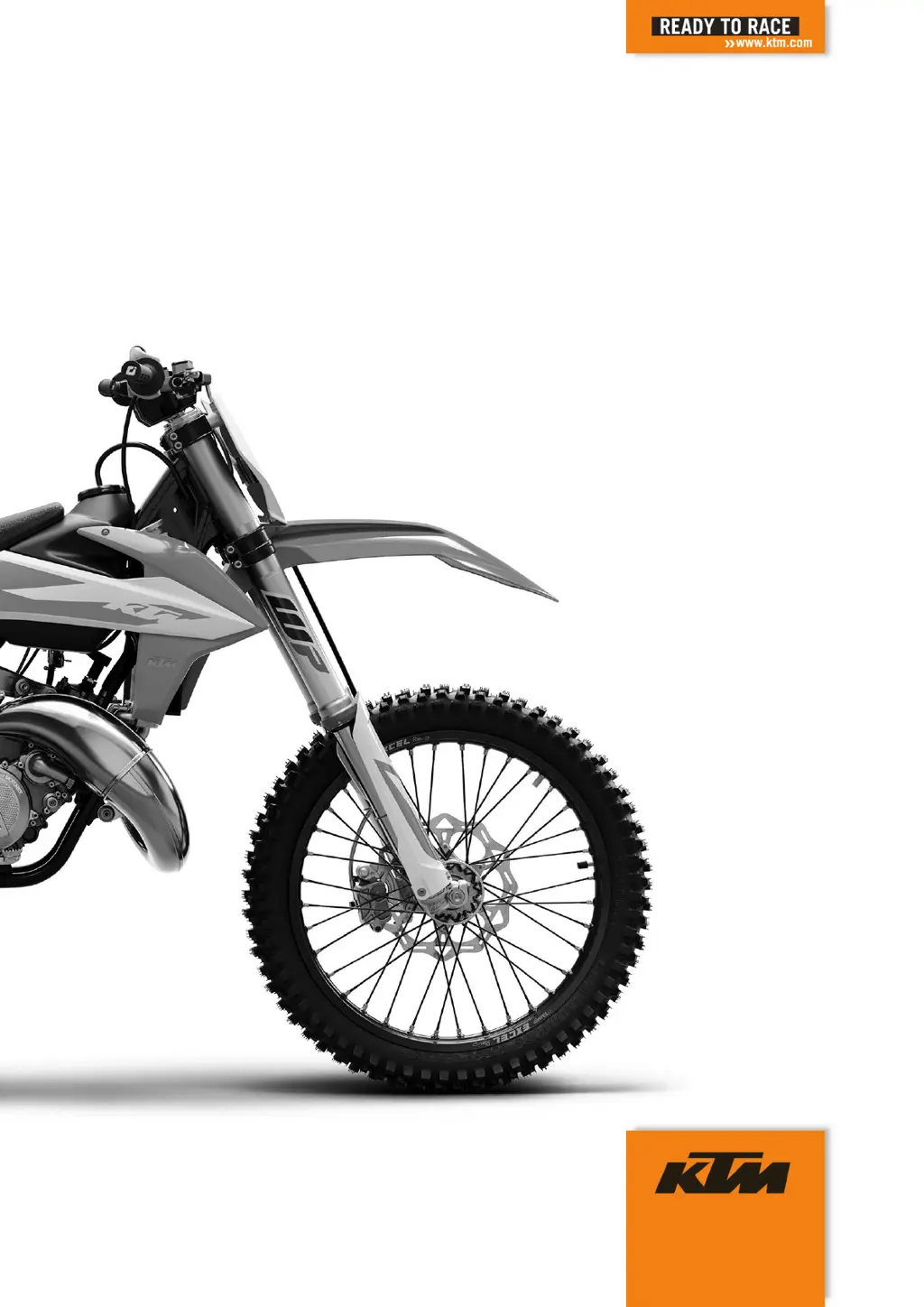
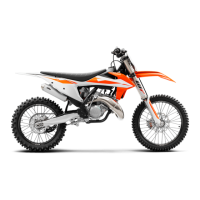
KTM 125 SX 2020 - User Manual

KTM 125 SX 2020
139 pages
Print Icon
To Next Page IconTo Next Page
Loading...
OWNER'S MANUAL 2020
125 SX
150 SX
Art. no. 3214000en

Table of Contents

Questions and Answers

  • D
    David BonillaAug 1, 2025
    What causes KTM 125 SX 2020 engine not to speed up?
    • T
      tiffanyallenAug 1, 2025
      If your KTM Motorcycle engine does not speed up, it could be due to the carburetor running over because the float needle is dirty or worn, or loose carburetor jets. In both cases, you should check the carburetor components. Additionally, a fault in the ignition system could be the cause, so check the ignition system.
  • B
    Brian MartinAug 6, 2025
    Why does my KTM 125 SX 2020 engine have so little power?
    • R
      Richard FischerAug 6, 2025
      Several issues could cause your KTM Motorcycle engine to have too little power. The fuel feed might be interrupted; check the fuel tank breather, clean the fuel tap, and inspect the carburetor components. A very dirty air filter can also restrict power, so clean the air filter and air filter box. Inspect the exhaust system for leaks or deformation and consider changing the glass fiber yarn filling in the main silencer. A fault in the ignition system could also be responsible, so check the ignition system. Lastly, inspect the diaphragm and reed valve housing for damage.
  • R
    riosshawnAug 10, 2025
    What to do if KTM 125 SX 2020 engine overheats?
    • R
      ryanhowardAug 10, 2025
      If your KTM Motorcycle engine overheats, start by checking the cooling system for leaks and ensure the coolant level is adequate. If the engine is stationary, switch it off to prevent overheating due to too little air stream. Clean the radiator fins if they are very dirty. If there's foam in the cooling system, drain and refill it with coolant. Inspect the cylinder head and cylinder head gasket for damage. Finally, check the radiator hose and change it if it's bent.
  • T
    trevorporterAug 14, 2025
    Why does my KTM 125 SX 2020 Motorcycle engine stall or pop in the carburetor?
    • D
      Dominique PattersonAug 14, 2025
      If your KTM Motorcycle engine stalls or pops in the carburetor, it could be due to a lack of fuel; ensure the fuel tap is in the ON position and refuel if necessary. The engine might be taking in bad air, so check the intake flange and carburetor for tightness. Also, check the connector and treat it with contact spray if it's loose or oxidized.
  • L
    Leah FordAug 18, 2025
    What does white smoke from KTM 125 SX 2020 Motorcycle exhaust mean?
    • A
      Adrian SpencerAug 18, 2025
      White smoke emission (steam in exhaust gas) from your KTM Motorcycle exhaust could indicate a damaged cylinder head or cylinder head gasket. In this case, you should check the cylinder head and cylinder head gasket.
  • C
    Corey VasquezAug 23, 2025
    Why is gear oil coming out of the KTM 125 SX 2020 Motorcycle vent hose?
    • S
      simpsonmarkAug 23, 2025
      If gear oil is exiting at the vent hose of your KTM Motorcycle, it could be because too much gear oil was added. Check the gear oil level.
  • J
    Jenny NormanOct 27, 2025
    How to fix KTM 125 SX 2020 engine that turns but won't start?
    • L
      lopezjamesOct 27, 2025
      If your KTM Motorcycle engine turns over but doesn't start, several factors could be at play. It could be due to an operating error, so ensure you're following the correct start procedure. If the motorcycle has been sitting unused for a while, old fuel in the float chamber might be the culprit; in this case, you should empty the carburetor float chamber. Also, the fuel feed could be interrupted, so check the fuel tank breather and clean the fuel tap. Inspect the spark plug; if it's oily or wet, clean and dry it, or replace it if needed. Make sure the spark plug gap is correctly adjusted to 0.60 mm (0.0236 in). A fault in the ignition system could also be the reason, so check the ignition system. Examine the kill switch for frayed cables or defects. Clean the connector with contact spray if...

Summary

1 Means of Representation

1.1 Symbols and Formats Used

Explains symbols and typographical formats used in the manual for clarity.

2 Safety Advice

2.1 Vehicle Intended Use and Misuse Warnings

Defines intended use, misuse dangers, and general safety advice.

2.2 Safe Operation and Protective Gear Guidelines

Covers safe operation, tampering warnings, and protective clothing requirements.

2.3 Environmental Responsibility & Manual Usage

Addresses environmental aspects and the importance of the owner's manual.

3 Important Notes

3.1 Warranty, Fuel, and Spare Parts Information

Covers warranty, fuel, auxiliary substances, and spare parts.

3.2 Service and Customer Support Details

Information on service, figures, and customer service.

4 Vehicle Overview

4.1 Component Identification Views

Illustrates vehicle components from front-left and rear-right views.

4.2 Serial Number Identification Locations

Details where to find vehicle identification, type label, and engine numbers.

5 Motorcycle Controls

5.1 Primary Controls and Fuel System Operation

Identifies clutch, brake levers, throttle, kill switch, and fuel systems.

5.2 Starting, Shifting, and Other Controls

Covers choke, shift lever, kick starter, and service hour counter.

6 Preparing for Use

6.1 Initial Preparation and Engine Running-In

Advice for first use, pre-sales checks, and engine break-in procedures.

6.2 Vehicle Preparation for Difficult Riding Conditions

Prepares vehicle for sand, mud, high/low temperatures, and snow.

7 Riding Instructions

7.1 Pre-Ride Checks and Engine Starting

Essential checks before riding and engine starting procedures.

7.2 Riding Techniques and Braking

Covers starting off, shifting, braking, and stopping procedures.

7.3 Transporting and Refueling Procedures

Guidelines for transporting the motorcycle and safe refueling.

8 Service Schedule

8.1 Required Maintenance Tasks and Intervals

Lists required service tasks and their intervals.

8.2 Recommended Maintenance Tasks and Intervals

Lists recommended maintenance tasks and intervals.

9 Chassis Tuning and Suspension Setup

9.1 Basic Chassis and Rider Weight Adjustment

Adjusting chassis settings based on rider weight and suspension.

9.2 Shock Absorber Adjustment Guide

Details compression and rebound damping adjustments for the shock absorber.

9.3 Fork Adjustment Procedures

Covers checking and adjusting fork air pressure and damping.

9.4 Handlebar Position Customization

Adjusting handlebar position for rider comfort and ergonomics.

10 Service Work on the Chassis

10.1 Fork System Maintenance Procedures

Steps for raising, removing, and installing fork legs.

10.2 Frame, Fender, and Protector Service

Covers fork protector, frame, and front fender checks and installation.

10.3 Steering Head and Triple Clamp Servicing

Procedures for removing/installing triple clamps and checking steering head bearing.

10.4 Rear Shock Absorber Service

Steps for removing and installing the rear shock absorber.

11 Brake System Maintenance

11.1 Hand Brake Lever Operation Checks

Checking free travel and adjusting basic position of hand brake lever.

11.2 Brake Disc and Fluid Level Checks

Checking brake discs wear limits and front/rear brake fluid levels.

11.3 Brake Lining Service Procedures

Procedures for checking and changing front and rear brake linings.

11.4 Foot Brake Lever Adjustment Guide

Adjusting foot brake lever free travel and basic position.

12 Wheels and Tires

12.1 Front Wheel Removal and Installation

Steps for removing and installing the front wheel.

12.2 Rear Wheel Removal and Installation

Procedures for removing and installing the rear wheel.

12.3 Tire Condition and Pressure Checks

Checking tire condition, age, and correct pressure.

12.4 Spoke Tension Checking and Adjustment

Methods for checking and adjusting spoke tension.

13 Cooling System Maintenance

13.1 System Overview and Radiator Cover Usage

Explains cooling system operation and radiator cover usage.

13.2 Radiator Cover Installation and Removal Steps

Procedures for installing and removing radiator covers.

13.3 Antifreeze and Coolant Level Checks

How to check antifreeze protection and coolant levels.

13.4 Coolant Draining and Refilling Procedures

Steps for draining and refilling the cooling system with coolant.

14 Engine Tuning

14.1 Throttle Cable Play Adjustment

Checking and adjusting throttle cable play for smooth operation.

14.2 Carburetor Tuning Fundamentals

Explains carburetor components and their influence on performance.

14.3 Idle Speed and Mixture Adjustment Guide

Procedures for setting idle speed and mixture using adjustment screws.

14.4 Ignition Timing Map Adjustment Options

Changing ignition timing maps for soft or performance settings.

15 Engine Service Procedures

15.1 Carburetor Float Chamber Draining Procedure

Safely drains fuel from the carburetor float chamber.

15.2 Gear Oil Level Check and Change Process

How to check and change the engine gear oil.

16 Cleaning and Care

16.1 Motorcycle Washing Guidelines

Guidelines for washing the motorcycle safely and effectively.

16.2 Lubrication and Surface Protection

Lubricating moving parts and protecting surfaces after cleaning.

17 Storage Procedures

17.1 Motorcycle Storage Preparation Steps

Steps for preparing the motorcycle for long-term storage.

17.2 Post-Storage Preparation for Use

Procedures for getting the motorcycle ready after storage.

18 Troubleshooting Guide

18.1 Engine Starting Problem Diagnosis

Diagnoses and actions for engine starting problems.

18.2 Engine Performance Issue Resolution

Addresses overheating, stalling, and power loss issues.

19 Technical Data

19.1 Engine Specifications and Data

Provides detailed engine data for 125 and 150 SX models.

19.2 Engine Component Tightening Torques

Lists torque specifications for various engine components.

19.3 Carburetor Specifications and Settings

Details carburetor types, settings, and tuning for different conditions.

19.4 Chassis and Tire Specifications

Technical data for frame, suspension, brakes, and tires.

20 Substances and Fluids

20.1 Brake Fluid and Coolant Type Information

Details types and properties of brake fluid and coolant.

20.2 Engine Oil and Fork Oil Specifications

Specifies engine oil, 2-stroke oil, and fork oil types.

21 Auxiliary Substances

21.1 Recommended Cleaning and Lubrication Products

Lists recommended cleaning agents, greases, and sprays.

22 Standards and Classifications

22.1 Oil and Fluid Standard Explanations

Explains JASO, SAE, and other relevant standards for fluids.

23 Manual Navigation Aids

23.1 List of Abbreviations

Provides a list of common abbreviations used in the manual.

23.2 Document Index

An alphabetical index to help locate specific topics within the manual.

KTM 125 SX 2020 Specifications

General IconGeneral
Engine Type1-cylinder, 2-stroke engine
Displacement124.8 cm³
Bore x Stroke54 mm x 54.5 mm
StarterKickstarter
Transmission6-speed
Front BrakeDisc brake
Rear BrakeDisc brake
Ground Clearance375 mm
Seat Height950 mm
ClutchWet, multi-disc clutch, Brembo hydraulics
EMSKokusan
FrameCentral double-cradle type, 25CrMo4 steel
Front SuspensionWP XACT-USD, Ø 48 mm
Rear SuspensionWP XACT shock absorber with linkage
Fuel Tank Capacity7.5 liters
Fuel SystemKeihin carburetor

Related product manuals