EasyManua.ls Logo

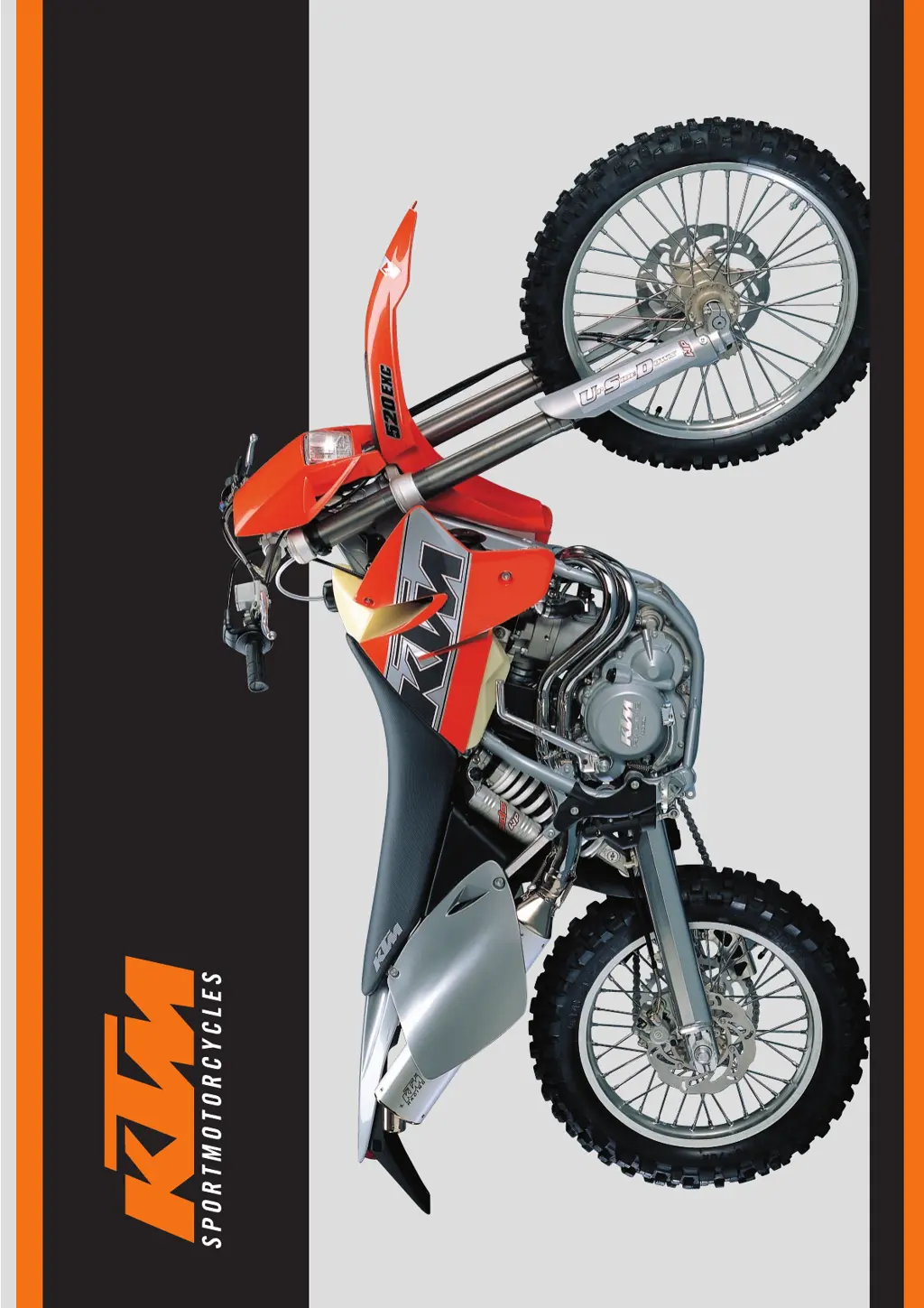
KTM 520 SX RACING 2000 - User Manual

KTM 520 SX RACING 2000
47 pages
Print Icon
To Next Page IconTo Next Page
Loading...
OWNERS HANDBOOK
MANUALE D’USO
MANUEL D’UTILISATION
MANUAL DE INSTRUCCIONES
2000
400/520 SX, EXC RACING
BEDIENUNGSANLEITUNG
Art.Nr. 3.205.72 11/99

Table of Contents

Questions and Answers

  • E
    Emily AveryAug 19, 2025
    What to do if KTM 520 SX RACING 2000 engine gets too hot?
    • J
      Jeremy BishopAug 19, 2025
      If your KTM Motorcycle engine is overheating, there are several potential causes to investigate. First, check the cooling liquid level and refill if it's insufficient, also inspect the cooling system for any leaks. Ensure there's enough air stream by driving briskly. If the cooling system hasn't been bled, bleed it. Clean the radiators with a water jet if they are very dirty. Replace the cooling liquid if there's foam formation, and use antifreeze liquid with a brand name. Inspect the cooling hoses for bends and either shorten or replace them. Finally, check the thermostat for defects by dismounting it and verifying its opening temperature (70°C / 158°F), or replace it if necessary.
  • A
    Alexis HintonAug 22, 2025
    How to fix a KTM 520 SX RACING 2000 that doesn’t crank?
    • M
      melissa02Aug 22, 2025
      If your KTM Motorcycle engine isn’t cranking, start by checking for an operating error, such as ensuring the emergency-OFF switch is turned on (Australia only). If that's not the issue, a blown fuse could be the culprit; dismount the left paneling and the filter box cover to replace the fuse in the starter relay. A discharged battery can also prevent cranking, so recharge the battery and investigate the causes for discharging.
  • J
    Jessica MezaAug 25, 2025
    What causes KTM 520 SX RACING 2000 Motorcycle engine not reaching full power?
    • E
      Elizabeth AlvarezAug 25, 2025
      Several factors can cause a KTM Motorcycle engine to not reach full power. These include a partially interrupted fuel supply or a dirty carburetor, a leaking float, a very dirty air filter, a damaged or non-tight exhaust system, a valve gap that is too small, loss of compression, or faulty electronical ignition timing. Clean and check the fuel system and carburetor, replace the float, clean or replace the air filter, check the exhaust system, adjust the valve gap, check the setting of the hand decompression cable, or have the ignition system checked.
  • W
    williamsmichaelAug 27, 2025
    Why KTM Motorcycle engine fails to idle?
    • W
      william00Aug 27, 2025
      A KTM Motorcycle engine may fail to idle for several reasons. The idling jet might be clogged, which requires disassembling the carburetor and cleaning the jets. The adjusting screws on the carburetor might be incorrectly adjusted, necessitating a carburetor adjustment. A defective spark plug can also cause idling issues, so replace the spark plug. Lastly, a defective ignition system could be the problem, in which case you should have the ignition system checked.
  • S
    sue38Aug 30, 2025
    Why is my KTM Motorcycle battery discharged?
    • M
      Michelle MorseAug 30, 2025
      The KTM Motorcycle battery may be discharged because it isn’t being charged by the generator. Remove the seat and fuel tank and check voltage regulator connections. A KTM dealer should check the voltage regulator and generator.
  • C
    Carlos ReynoldsSep 2, 2025
    What to do if horn, flasher lights, and E-starter do not work on KTM Motorcycle?
    • K
      Katherine GoodSep 2, 2025
      If the horn, flasher lights, and E-starter on your KTM Motorcycle are not working, the cause may be a blown fuse in the starter relay. To address this, dismount the left side paneling and filter box cover, then replace the fuse.
  • Z
    zacharypetersonSep 4, 2025
    What causes KTM 520 SX RACING 2000 engine to stop or sputter in the carburetor?
    • E
      emily03Sep 5, 2025
      If your KTM Motorcycle engine stops or sputters in the carburetor, it could be due to insufficient fuel. In this case, clean and check the fuel system and carburetor. Another possibility is that the engine is taking in air uncontrollably. Check the rubber sleeve and carburetor for a tight fit.
  • W
    wchambersSep 7, 2025
    What to do if KTM 520 SX RACING 2000 engine does not rev high?
    • W
      williemoralesSep 8, 2025
      If your KTM Motorcycle engine does not rev high, it could be due to a few reasons. The carburetor fuel level may be too high because the float needle valve is dirty or worn out; therefore, dismount the carburetor and check if it's worn out. Another cause could be loose carburetor jets, which you should tighten. Finally, faulty electronical ignition timing could be the issue, requiring you to have the ignition system checked.
  • J
    Justin BarrettSep 10, 2025
    What causes high oil consumption in KTM 520 SX RACING 2000 Motorcycle?
    • P
      Patricia JohnsonSep 10, 2025
      High oil consumption in your KTM Motorcycle can be attributed to several factors. The hose of the engine ventilation might be bent, so dislocate or replace it with a non-buckling ventilation hose. The engine oil level may be too high, requiring you to check and correct it if necessary. Additionally, the motor oil might be too thin (low viscosity); in this case, use a thicker engine oil.
  • J
    Justin OwensSep 12, 2025
    Why all switched on lamps blown out on KTM 520 SX RACING 2000 Motorcycle?
    • A
      Aaron RoweSep 13, 2025
      If all the switched-on lamps in your KTM Motorcycle have blown out, the capacitor or voltage regulator may be faulty. To address this, dismount the seat and fuel tank and check the connections. Have the capacitor and voltage regulator checked.

Summary

Introduction

About This Owners Handbook

Details the purpose and importance of the owner's manual for proper bike use.

Motorcycle Operation and Controls

Serial Number Locations

Identifies the location of chassis and engine serial numbers for your motorcycle.

Operation Instruments Overview

Details the function and location of various controls on the handlebars.

Digital Speedometer and Indicators

Explains the functions of the digital and analog speedometers and indicators.

Switches and Levers

Describes the function of combination switches, headlamp, flasher, and emergency-off switches.

Fuel System Operation

Covers filler cap, fuel tap operation, and fuel type requirements.

Drivetrain and Suspension Controls

Explains shift lever, kickstarter, foot brake, and fork damping adjustments.

Steering Lock and Side Stand

Covers steering lock operation and side stand usage for parking.

Driving Instructions

Pre-Ride Checks and Initial Operation

Outlines essential checks before riding and initial operation guidelines.

Engine Starting and Riding Techniques

Guides on starting, riding, shifting gears, and braking techniques.

Braking and Parking Procedures

Explains braking techniques, stopping, parking, and safety precautions.

Periodic Maintenance Schedule

Chassis and Engine Maintenance

Clutch Lever and Steering Head Bearing

Details clutch lever position adjustment and steering head bearing checks.

Front Fork and Handlebar Maintenance

Covers breather plugs, dust sleeve cleaning, and handlebar position adjustment.

Shock Absorber and Chain Maintenance

Explains spring preload adjustment, pivot bearing care, and chain tension checks.

Chain Tension and Wear

Details correct chain tension, maintenance, wear, and sprocket condition.

Disc Brake System Information

Covers general disc brake info, free travel adjustment, and brake fluid types.

Front Brake Maintenance

Details checking and refilling front brake fluid and replacing front brake pads.

Rear Brake and Foot Brake Maintenance

Explains foot brake pedal adjustment and rear brake fluid checks/refills.

Rear Brake Pads and Front Wheel Procedures

Covers rear brake pad replacement and front wheel removal/mounting.

Rear Wheel Dismounting and Mounting

Details rear wheel removal and mounting procedures.

Tire Pressure and Speedometer Battery

Explains tire pressure, spoke tension, and speedometer battery replacement.

Speedometer Settings and Sensor Adjustment

Covers setting wheel circumference and magnetic sensor distance for the speedometer.

Battery and Electrical System

Battery Care and Charging

Details battery removal, care, storage, and charging procedures.

Fuses and Headlight Lamp Replacement

Explains fuse identification and replacement, and how to change the headlight lamp.

Cooling System and Air Filter

Cooling System Operation and Bleeding

Covers coolant level checks, system bleeding, and cooling system warnings.

Air Filter and Exhaust System Maintenance

Details cleaning the air filter and replacing the glass fiber yarn packing in the silencer.

Carburetor and Oil System Maintenance

Carburetor Adjustment Procedures

Explains carburetor idling adjustment, mixture control, and float level checking.

Carburetor Draining and Oil Circuit

Covers draining the carburetor float chamber and the engine oil circuit.

Engine Oil Level and Changing

Details checking engine oil level and procedures for changing engine oil and filters.

Troubleshooting and Special Procedures

Engine Starting and Performance Issues

Addresses common engine starting problems and performance issues.

Cleaning, Winterization, and Storage

Provides guidelines for motorcycle cleaning, winter storage, and preparation.

Technical Data and Specifications

Engine Specifications and Settings

Lists detailed technical data for the engine and basic carburetor settings.

Chassis Specifications and Torques

Details chassis technical data, fork/shock adjustments, and tightening torques.

Wiring Diagram and Appendices

Electrical System Wiring Diagram

Illustrates the motorcycle's electrical system layout and component connections.

KTM 520 SX RACING 2000 Specifications

General IconGeneral
Bore x Stroke95 mm x 72 mm
Power60 hp
Seat Height950 mm
Compression Ratio11.5:1
Fuel SystemCarburetor
IgnitionCDI
Front SuspensionUSD Forks
Front BrakeDisc brake
Rear BrakeDisc brake
Cooling SystemLiquid-cooled
Engine Stroke4-Stroke
Fuel Capacity9.5 L
Rear SuspensionMonoshock
Engine TypeSingle-cylinder, 4-stroke

Related product manuals