EasyManua.ls Logo

KTM META SYSTEM DEF-COM T - User Manual

KTM META SYSTEM DEF-COM T
8 pages
Print Icon
To Next Page IconTo Next Page
Loading...
MotorCycle Alarm
by
SIGNALS
If various alarms have been triggered, the memory will signal them in a sequence with 3 second
pauses and will repeat the sequence every 6 seconds.
The memory is reset when the motorcycle is started up or when the alarm system is armed
with the remote control again.
The acoustic signal emitted when the alarm is armed and disarmed fails to comply with the national
norms in Germany and must therefore be disabled.
10
STATUS OF CENTRAL UNIT
LED DIRECTION
INDICATORS SIREN
Passive arming (only if programmed) Slow flashing 1 short flash 1 B
EEP
Arming by remote control Flashing 2 flashes 2 BEEP
Arming without internal lift and tilt sensor
On fixed during initial immunity phase
flashes 2 + 1 BEEP 2 + 1
Arming with open contact Flashing 2 flashes 2 BEEP
-1 BOOP
Initial immunity phase Reversed flashing
Testing during the initial immunity phase Reversed flashing 1 B
EEP
Central unit armed Flashing
Alarm cycles Flashing lampeggianti Sounds
Disarming without alarms Switches off 1 flash 1 B
EEP
Disarming when the motorcycle’s battery is flat Switches off 4 BEEP
Disarming when alarms have been memorised Switches off briefly every 6 sec. 1 BEEP - 1 BOOP
MEMORISED ALARMS LED SIGNALS
Internal movement sensor 1 flash
Contacts 2 flashes
Ignition sensing 3 flashes
Tampering with cables or battery 4 flashes
EN
EN
BUTTON B
BUTTON A
DEF•COM T
V81548A Is.Uso Def-Com3 KTM 23-11-2006 16:28 Pagina 10
Question and Answer IconNeed help?

Do you have a question about the KTM META SYSTEM DEF-COM T and is the answer not in the manual?

Summary

Signals Overview

Status of Central Unit

Details central unit states like passive arming, arming by remote, testing phases, and armed status.

Memorised Alarms

Explains how the system records triggered alarms from sensors, ignition, and tampering.

Alarm System Operation

Arming and Disarming Procedures

Covers passive arming, manual arming, arming without movement sensor, and disarming the system.

Alarm Phases

Explains the initial immunity phase and the active phase of the alarm system.

System Protection and Modes

Protection by the Alarm System

Details what triggers an alarm cycle, including ignition, movement, and power disconnection.

Stop Mode and Emergency Features

Describes stop mode for current saving and the emergency blinker and panic functions.

Configuration and Customization

Special Functions Configuration

Guide to setting up special functions like buzzer, indicators, horn, and passive arming.

Override Code Customization

Instructions for personalizing the 'override' emergency code for easier recall.

Emergency and Remote Control Management

Override Emergency Code Procedure

Procedure to disarm the alarm using a 5-digit emergency code when the remote is lost or damaged.

Remote Control Management

Details on restoring default override code and adding/removing additional remote controls.

Technical Specifications

System Specifications

Lists power supply, consumption, operating temperature, sound level, and sensor sensitivity.

Timing and Alarm Cycles

Details timing parameters like immunity phase, alarm duration, and alarm cycle counts.

Summary

Signals Overview

Status of Central Unit

Details central unit states like passive arming, arming by remote, testing phases, and armed status.

Memorised Alarms

Explains how the system records triggered alarms from sensors, ignition, and tampering.

Alarm System Operation

Arming and Disarming Procedures

Covers passive arming, manual arming, arming without movement sensor, and disarming the system.

Alarm Phases

Explains the initial immunity phase and the active phase of the alarm system.

System Protection and Modes

Protection by the Alarm System

Details what triggers an alarm cycle, including ignition, movement, and power disconnection.

Stop Mode and Emergency Features

Describes stop mode for current saving and the emergency blinker and panic functions.

Configuration and Customization

Special Functions Configuration

Guide to setting up special functions like buzzer, indicators, horn, and passive arming.

Override Code Customization

Instructions for personalizing the 'override' emergency code for easier recall.

Emergency and Remote Control Management

Override Emergency Code Procedure

Procedure to disarm the alarm using a 5-digit emergency code when the remote is lost or damaged.

Remote Control Management

Details on restoring default override code and adding/removing additional remote controls.

Technical Specifications

System Specifications

Lists power supply, consumption, operating temperature, sound level, and sensor sensitivity.

Timing and Alarm Cycles

Details timing parameters like immunity phase, alarm duration, and alarm cycle counts.

Overview

This document describes the features and operation of the KTM Motorcycle Alarm by META DEF COM T system. It covers various signals, arming and disarming procedures, protection mechanisms, special functions, override code management, and technical specifications.

Function Description

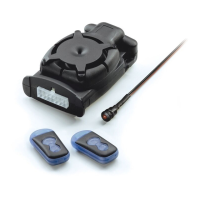
The KTM Motorcycle Alarm is a security system designed to protect motorcycles from theft and tampering. It offers several modes of operation, including passive arming, manual arming, and arming without activating the internal movement sensor. The system provides visual and acoustic signals to indicate its status and alert the user to potential threats. Key functions include:

  • Engine Immobilisation: Prevents the motorcycle from being started when the alarm is armed.
  • Movement Sensor: Detects internal movement, lift, and tilt of the motorcycle.
  • Contact Protection: Monitors specific switches on the motorcycle (e.g., seat, storage compartment).
  • Ignition Sensing: Triggers an alarm if the ignition key is turned ON without disarming the system.
  • Cable Tampering Detection: Alerts if the alarm system's supply cables are disconnected or cut.
  • Battery Monitoring: Detects if the motorcycle's battery is disconnected or almost flat.
  • Panic Function: Allows the user to manually trigger a 10-second alarm cycle.
  • Emergency Blinker: Can be armed to flash the motorcycle's blinkers.
  • Override Code: A 5-digit emergency code to disarm the system if remote controls are lost or damaged.
  • Customisable Functions: Allows users to adapt alarm functions to their specific needs.
  • Remote Control Management: Supports adding or removing remote controls.

Important Technical Specifications

  • Power Supply: 12Vcc (10V-15V)
  • Consumption: 1.8 mA
  • Consumption in Stop mode: 0 mA
  • Operating Temperature: -25°C to +85°C
  • Sound Level of Siren (1m): 114 dB
  • Self-supply Autonomy: 5 minutes
  • Remote Controls: Utilises 72 million billion variable codes (lithium battery)
  • Sensitivity of Internal Movement Sensor: 1.5° per second
  • Direction Indicator Relay: 5A + 5A
  • Horn Control: Negative electronic 300mA
  • Initial Immunity Phase: 26 seconds
  • Duration of Alarm Cycle: 26 seconds
  • Interval Between Alarm Cycles: 5 seconds
  • Passive Arming Delay: 50 seconds
  • Stop Mode Delay: 5 days
  • Intermittence of Direction Indicators: 0.4 sec.off/0.4 sec.on
  • Alarm Cycles (Contact Alarm Inputs): 10 cycles
  • Alarm Cycles (Ignition Sensing): 10 cycles
  • Alarm Cycles (Cable Tampering): 9 cycles

Usage Features

Arming the System:

  • Passive Arming: The central unit automatically arms after 50 seconds if the motorcycle's key is turned OFF, or if the alarm was disarmed by remote control or override code. This is signalled by a short flash of direction indicators, a BEEP from the siren, and slow flashing of the LED. Only the engine immobiliser is armed by default, but full alarm system passive arming can be selected.
  • Manual Arming: Briefly press button A on the remote control within 50 seconds of turning the ignition key OFF. Direction indicators flash twice, the siren emits 2 BEEP sounds, and the LED flashes. All central unit functions are activated.
  • Arming Without Internal Movement Sensor: Press button A for approximately 2 seconds within 50 seconds of turning the ignition key OFF. Direction indicators flash 2+1 times, the siren emits 2+1 BEEP sounds. The LED remains on during the initial immunity phase and then flashes normally.

Disarming the System:

  • Briefly press button A on the remote control. Direction indicators flash once, the siren emits 1 BEEP sound, and the LED switches off if no alarms were triggered. If the LED remains on and the siren emits a BOOP sound, it indicates that an alarm was triggered. The "MEMORISED ALARMS" table can be consulted to identify the cause.

Alarm Signals:

The system uses LED flashes, direction indicator flashes, and siren sounds to communicate its status:

  • Slow Flashing LED: Passive arming.
  • Flashing LED: Manual arming, central unit armed, initial immunity phase (after 26 seconds).
  • On Fixed LED: Arming without internal movement sensor (initial immunity phase).
  • Reversed Flashing LED: Testing during initial immunity phase, central unit armed.
  • Switches Off LED: Disarming without alarms, disarming when motorcycle battery is flat, disarming when alarms have been memorised.
  • Switches Off Briefly Every 6 Sec LED: Disarming when alarms have been memorised.
  • 1 Short Flash (Direction Indicators): Passive arming.
  • 2 Flashes (Direction Indicators): Manual arming, arming with open contact.
  • Flashes 2+1 (Direction Indicators): Arming without internal lift and tilt sensor.
  • Lampeggianti (Direction Indicators): Alarm cycles.
  • 1 Flash (Direction Indicators): Disarming.
  • 1 BEEP (Siren): Passive arming, disarming without alarms, disarming when motorcycle battery is flat.
  • 2 BEEP (Siren): Manual arming, arming with open contact.
  • BEEP 2+1 (Siren): Arming without internal lift and tilt sensor.
  • 2 BEEP-1 BOOP (Siren): Testing during initial immunity phase.
  • Sounds (Siren): Alarm cycles.
  • 4 BEEP (Siren): Disarming when alarms have been memorised.

Initial Immunity Phase:

  • Lasts 26 seconds after arming. The LED flashes slowly. During this phase, alarm triggers only result in BEEP sounds and reset the immunity phase, without provoking a full alarm. After this phase, the LED reverses its flashing, and any trigger will provoke an alarm.

Active Phase:

  • After the initial immunity phase, any alarm trigger initiates a 26-second alarm cycle. Direction indicators flash, the siren emits a modulated sound, the horn sounds intermittently, and the engine cannot be started.

Stop Mode (Limiting Current Consumption):

  • The system automatically switches off alarm functions (but maintains engine immobilisation) to save battery power. This activates 5 days after arming (if no alarms occurred) or if the motorcycle's battery is almost flat.
  • To exit Stop Mode, turn the ignition key ON. The siren will BEEP. Press the remote control within 5 seconds to disarm. If not pressed, an alarm cycle will trigger.

Emergency Blinker:

  • To arm: Press button A twice when the ignition key is ON.
  • To disarm: Press button A once when the ignition key is ON.
  • Note: If the blinker is armed and the ignition key is OFF, the alarm can still be armed, automatically neutralising the internal lift and tilt sensor.

Panic Function:

  • Press button B on the remote control to trigger a 10-second alarm cycle. Pressing it again interrupts the cycle.

Special Functions - Configuration:

Users can customise alarm functions:

  1. Arm the alarm system with the remote control.
  2. Turn the ignition key ON within 10 seconds (siren BEEP confirms).
  3. Press button A 4 times (siren 4 BOOPs confirm).
  4. Turn the ignition key OFF.
  5. Turn the ignition key ON and OFF the number of times corresponding to the desired function (leave ON on the last time).
  6. Briefly press button A once for BEEP column settings.
  7. Briefly press button A twice for BOOP column settings.
  8. Turn the ignition key OFF and briefly press the remote control button to exit programming.

Configurable functions include:

  • Buzzer when arming/disarming (YES/NO)
  • Direction indicators when arming/disarming (YES/NO)
  • Horn/siren alarm output or control of activation (Alarm/Activation)
  • Control of alternate horn or continuous siren (Alternated/Continuous)
  • Passive arming only of immobiliser or also alarm function (Immobiliser/Also alarm)
  • Passive arming with movement sensor enabled (YES/NO)
  • Alarms of cyclical or single contacts (Cyclical/Single)
  • Enabling of automatic arming (YES/NO)

'Override' Emergency Code:

  • A 5-digit code used to disarm the system if remote controls are lost. The procedure involves turning the ignition key ON/OFF a specific number of times corresponding to each digit of the code. Alarm cycles will be triggered during this process if the alarm is active.
  • Warning: 3 incorrect attempts will block the central unit for 30 minutes.

Customising the 'Override' Code:

  • The override code can be changed for easier remembrance. The process involves entering the current override code, then entering the new code by turning the ignition key ON/OFF a specific number of times for each digit, with pauses between digits. Confirmation is given by BEEP/BOOP sounds.

Restoring the Default Override Code:

  • If the override code is forgotten, it can be restored to '11111' using two remote controls. Disarm the product, turn the ignition key ON, and press button A alternately on both remote controls twice. The siren confirms restoration with a Beep-Beep-Boop-Boop sequence, and the LED displays '11111'.

Maintenance Features

Additional Remote Controls:

  • The system typically comes with two remote controls. The number of programmed remote controls is indicated by the LED flashes when the motorcycle is switched off.
  • To add or remove remote controls:
    1. Disarm the alarm system.
    2. Turn the ignition key ON 3 times within 5 seconds and keep it ON (BEEP confirms).
    3. Turn the ignition key OFF within 5 seconds and insert the 'override' code.
    4. When the fifth digit is confirmed, keep the ignition key ON (BEEP-BEEP-BOOP-BOOP confirms code correctness).
    5. Briefly press button A of the remote control to be included (LED flashes confirms reception).
    6. Press button A of the same remote control again (BEEP sound, LED switches OFF confirms memorisation).
    7. Repeat steps 5 and 6 for all remote controls to be included. Unused/lost controls will be excluded.
    8. Turn the ignition key OFF (BEEP-BEEP-BOOP-BOOP confirms end of procedure, LED flashes the number of included controls).

KTM META SYSTEM DEF-COM T Specifications

General IconGeneral
BrandKTM
ModelMETA SYSTEM DEF-COM T
CategorySecurity System
LanguageEnglish