EasyManua.ls Logo

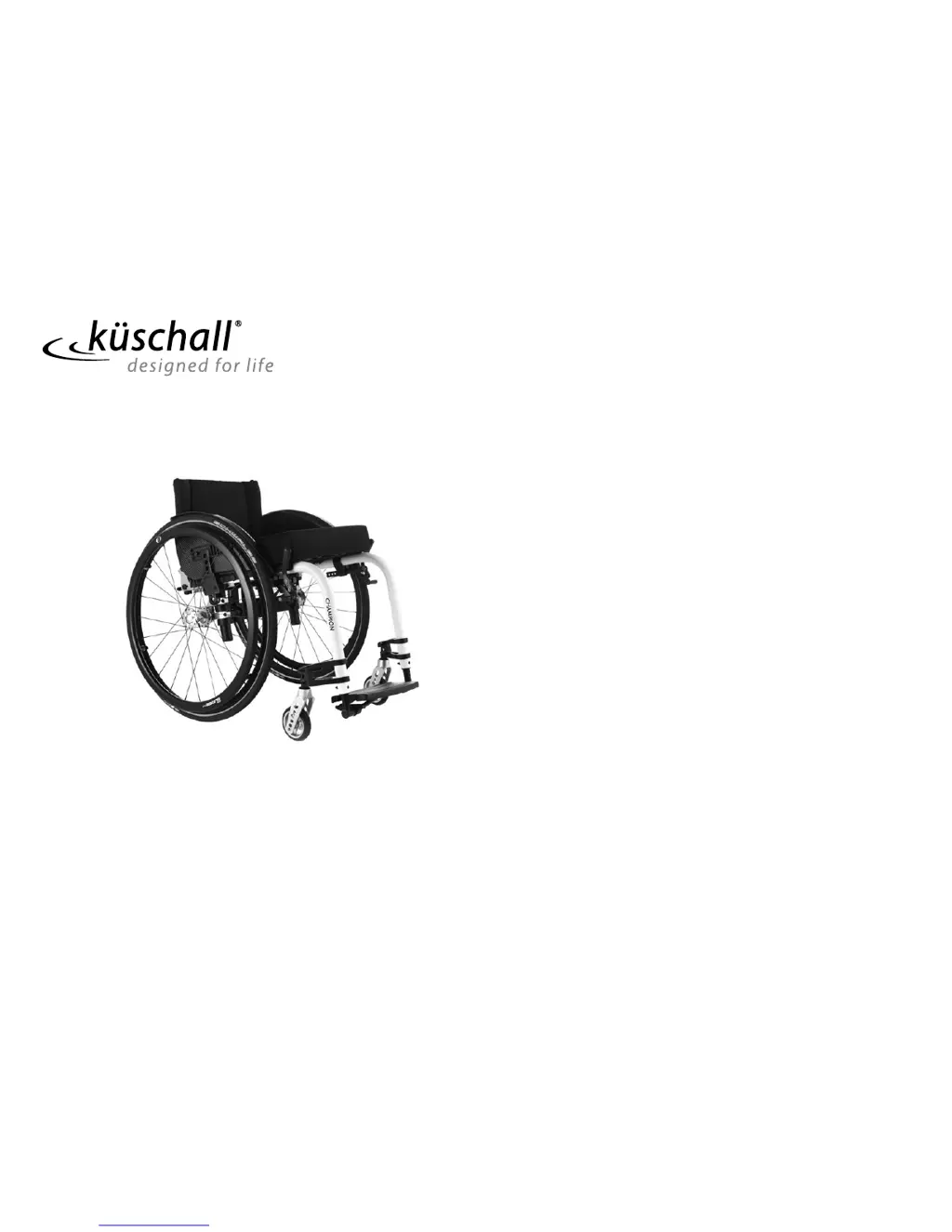
Kuschall CHAMPION - User Manual

Kuschall CHAMPION
56 pages
Print Icon
To Next Page IconTo Next Page
Loading...
KÜSCHALLCHAMPION
enActivewheelchair
UserManual
ThismanualMUSTbegiventotheuseroftheproduct.
BEFOREusingthisproduct,readthismanualandsaveforfuturereference.

Table of Contents

Other manuals for Kuschall CHAMPION

Questions and Answers

  • M
    Mrs. Carmen LaneSep 10, 2025
    Why Küschall Wheelchair does not travel in a straight line?
    • J
      James HayesSep 10, 2025
      If your Küschall Wheelchair isn't moving straight, several factors could be at play. It might be due to incorrect tire pressure in one of the rear wheels. Unevenly tightened or broken spokes could also be the cause. The front wheel bearings might be dirty or damaged, or the rear wheels could be off track. Also, check if the bearing block of the front wheel is not in a vertical position or if the front wheels are not adjusted to the same height. Correcting the tire pressure can resolve the issue. For other causes, it is best to consult with a specialist.
  • A
    Angela BridgesAug 22, 2025
    Why does my Küschall Wheelchair have very high rolling resistance?
    • S
      Sandra HerreraAug 23, 2025
      If you are experiencing very high rolling resistance with your Küschall Wheelchair, it could be due to low tire pressure in the rear tires. Correct the tire pressure to resolve this. Another potential cause is that the rear wheels are off track, in this case change the track.
  • E
    eddie91Aug 25, 2025
    What to do if Küschall Wheelchair wheel locks are gripping poorly?
    • J
      Joseph MillerAug 25, 2025
      If the wheel locks on your Küschall Wheelchair are gripping poorly or asymmetrically, it may be due to incorrect tire pressure in one or both rear tires. Correct the tire pressure to solve this. Another possible cause is an incorrect wheel lock setting; in this case, correct the wheel lock setting.
  • N
    Nicole TorresAug 26, 2025
    Why does Küschall Wheelchair tip backwards easily?
    • C
      Catherine KerrAug 26, 2025
      If your Küschall Wheelchair tips backwards too easily, it might be because the rear wheels are mounted too far forwards, in this case, mount the rear wheels further back. Alternatively, the back angle might be too large, reduce the backrest angle. A further cause may be that the seat angle is too large, use longer vertical struts.
  • D
    Dana ParkAug 27, 2025
    How to stop front wheels wobbling on Küschall Wheelchair?
    • D
      dgonzalezAug 27, 2025
      If the front wheels of your Küschall Wheelchair wobble when moving fast, it could be due to too little tension in the front wheel bearing block. To fix this, tighten the nut on the bearing block axle slightly.
  • H
    hamptonamandaAug 29, 2025
    What to do if Küschall Wheelchair is very difficult to unfold?
    • S
      sharonliAug 29, 2025
      If your Küschall Wheelchair is very difficult to unfold, it could be because the backrest cover is too tight. Try loosening the Velcro bands of the backrest cover a little. Another possible cause is that the folding mechanism is adjusted too hard; in this case, adjust the folding mechanism.
  • N
    nortondavidSep 18, 2025
    Why Küschall Wheelchair is very difficult to unfold?
    • J
      James DunnSep 18, 2025
      If your Küschall Wheelchair is hard to unfold, the backrest cover might be too tight. Try loosening the Velcro bands of the backrest cover a little. Alternatively, the folding mechanism might be adjusted too tight. For other causes, it is best to consult with a specialist.
  • P
    Peter RamosSep 12, 2025
    Why Küschall Wheelchair rolling resistance is very high?
    • E
      edwin74Sep 12, 2025
      High rolling resistance in your Küschall Wheelchair can be due to a couple of reasons. First, check the tire pressure in the rear tires, as low pressure can significantly increase resistance. Also, ensure that the rear wheels are correctly aligned. Correcting the tire pressure can resolve the issue. For other causes, it is best to consult with a specialist.
  • J
    Joseph SandersSep 8, 2025
    Why is my Küschall Wheelchair very difficult to unfold?
    • S
      swallSep 8, 2025
      If your Küschall Wheelchair is very difficult to unfold, it could be because the backrest cover is too tight. Loosen the hook and loop straps of the backrest cover a little. It might also be that the folding mechanism is adjusted too hard, so adjust the folding mechanism.
  • W
    wallaceveronicaSep 5, 2025
    What to do if removable axles cannot be inserted correctly in Küschall Wheelchair?
    • S
      schroederashleeSep 5, 2025
      If you find that the removable axles cannot be inserted correctly into your Küschall Wheelchair, it might be because the removable axles are dirty. Clean the removable axles. It could also be that the removable axles are misaligned, so adjust them. Another cause could be incorrect tire pressure in one or both rear tires, so correct the tire pressure.

Summary

General Information and Warranty

Symbols in this Manual

Explains the meaning of symbols and signal words used in the manual for hazard identification.

Intended Use and Indications

Specifies the intended purpose and conditions for which the wheelchair is indicated.

Warranty Information

Provides details of the limited warranty, coverage periods, and terms for the wheelchair.

Safety Guidelines and Warnings

General Safety Information

Contains crucial safety information for the user and assistant for safe operation of the wheelchair.

Accessory Safety Warnings

Warns about using non-Küschall accessories and the risks involved.

Stability and Handling Warnings

Explains factors affecting wheelchair stability and the need for qualified technician adjustments.

Transport Safety

Advises against transporting users in wheelchairs in vehicles and recommends proper transfer methods.

Operating Precautions

Provides critical operating guidelines for safe use, including bending, reaching, and tipping precautions.

Seat Positioning Strap Safety

Emphasizes the importance and proper use of seat positioning straps for user safety.

Critical Hazard Warnings

Highlights severe risks including fire hazards and injury from improper use or adjustments.

Component-Specific Safety

Details safety precautions related to wheel locks, hand grips, and tire information.

Safety Devices and Labels

Explains the importance of safety devices and the information provided on product labels.

Components and Their Functions

Overview of Wheelchair Components

Provides a visual overview of the wheelchair's main components and a brief description.

Wheel Lock Operation

Explains the function of wheel locks and provides instructions for engaging and disengaging them.

Backrest Adjustment

Details how to adjust the tension of the backrest cover and associated tipping risks.

Armrest Adjustment

Explains how to remove, install, and adjust the height of the armrests.

Antitipper Functionality and Safety

Explains the function of antitippers and recommends their use for user safety.

Tire Pressure and Selection

Provides information on ideal tire pressure, tire types, and the need for qualified technicians for tire changes.

Accessories and Setup

Securing Strap Usage

Describes the use of the securing strap to keep the wheelchair folded during transport.

Seat Positioning Strap Importance

Explains the function of the seat positioning strap to prevent sliding and falling out, with safety warnings.

Transit Wheel Installation and Use

Explains the use of transit wheels for narrow applications and associated warnings.

Setup Safety Information

Provides safety precautions before using the wheelchair, including checking its condition and functions.

Using the Wheelchair Safely

General Operating Safety

Emphasizes safety and handling for both user and assistant, practicing techniques, and safe terrain use.

Stability and Balance Management

Addresses stability, balance, not lifting by detachable parts, checking hand grips, and using antitippers.

Reaching, Leaning, and Bending Techniques

Discusses techniques for reaching, leaning, and bending while maintaining stability and balance.

Tipping Prevention and Methods

Warns against tipping without assistance and proper lowering of front casters.

Navigating Stairways Safely

Provides detailed procedures and warnings for moving wheelchairs up or down stairs.

Transferring and Stopping Procedures

Gives instructions and precautions for safe transfers between the wheelchair and other seats.

Safe Stopping and Braking

Explains how to stop the wheelchair safely using handrims and wheel locks.

Transport and Maintenance

Transport Safety Information

Contains warnings about securing the wheelchair during transport and risks of unsecured parts.

Folding and Unfolding Procedures

Provides instructions and safety precautions for folding and unfolding the wheelchair.

Rear Wheel Removal and Installation

Details the process for removing and installing rear wheels, with overturning risk warnings.

Maintenance Safety and Schedule

Includes safety warnings and outlines a schedule for regular checks and maintenance tasks.

Component Checks and Cleaning

Provides guidance on visual checks, cleaning, and inspecting key components like bolts and spokes.

Collision Checks and Inspections

Emphasizes the need for professional inspection after impacts and annual safety checklists.

Regular Maintenance Adjustments

Details weekly and monthly inspection and adjustment tasks for wheelchair components.

Cleaning and Disinfection

Provides instructions for regular cleaning and disinfecting of the wheelchair to maintain its condition.

Troubleshooting and After Use

Troubleshooting Safety

Safety precautions and recommendations for identifying and repairing faults, emphasizing professional help.

Identifying and Repairing Faults

A table listing common faults, their possible causes, and recommended actions for repair.

Storage Recommendations

Provides important instructions and warnings regarding the proper storage of the wheelchair.

Re-use and Disposal Information

Outlines steps for reuse and advises contacting authorities for proper disposal.

Technical Data and Specifications

Dimensions and Weight Specifications

Lists the dimensions and weight specifications for the wheelchair, varying by configuration.

Environmental Conditions

Specifies the acceptable environmental conditions, particularly temperature limits, for the wheelchair.

Material Composition

Details the materials used in the construction of the wheelchair components.

Manufacturer Specification Sheets

Presents technical data as per RESNA WC-1:2009 standards, including stability and testing requirements.

Kuschall CHAMPION Specifications

General IconGeneral
BrandKuschall
ModelCHAMPION
CategoryWheelchair
LanguageEnglish

Related product manuals