EasyManua.ls Logo

L.R. Baggs Element Active System - User Manual

Default Icon
3 pages
Print Icon
To Next Page IconTo Next Page
Loading...
Element Active System
Installation Manual
Jack tip recessed inside of strap-ring
Jack tip ush with strap-ring
PACKAGE CONTENTS
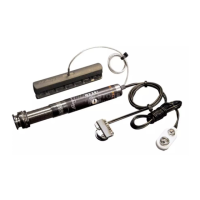
One Element Active System with undersaddle pickup, endpin preamp w/volume control
attached.
One battery bag
Three self-stick wire clips
OVERVIEW AND CAUTIONS
The Element Active System combines the Element undersaddle pickup with a pre-contoured,
all-discrete Class A endpin preamp. A soundhole mounted volume pot gives you additional
control and versatility without requiring any other modications to your instrument. The
Element Active is designed to interface with just about anything you plug into, but best
results will be realized through a high-quality, full-range PA. Plugging in and unplugging
the cord from your guitar will turn the preamp on and o.
We recommend that this pickup system be installed by a professional dealer/installer. We
do not provide installation advice or support for home or hobbyist installations.
Installers: Please read the instructions carefully before proceeding. We will not be
responsible for any damage to the guitar or personal injury from installation, improper
installation, use or misuse of the product.
STRAPJACK/PREAMP INSTALLATION
If your guitar already has a half inch hole in the tail block, proceed to the installation.
Drilling the strapjack hole: This jack requires a clean, half inch hole in the tail block of
the instrument. The easiest way to drill this hole accurately and eectively is to use a half
inch “step” drill-bit, available at any hardware store. Other options are to use a “Forstner
Bit, or a “Brad-point bit.
CAUTION: DO NOT USE A SPADE BIT OR STANDARD DRILL BIT FOR THIS!
Begin by placing a piece of masking tape over the area to be drilled (generally, in the center
of the tail block). This is to protect the guitar’s nish. Drill a pilot hole approximately 3/16
dia. Now you can nish up using the step-drill. Place the tip of the step-drill in the pilot
hole, line up the drill as straight as you can, and proceed to drill until you’ve gone all the
way through the tail block.
Installing the strapjack: Remove the strap ring, retaining nut, and one washer from the
end of the jack. There will still be one at washer, one star-locking washer, and one nut
remaining on the threaded barrel of the jack.
Adjust this nut and washers to a depth on the barrel that will allow approximately 90% of
the smaller threaded portion of the jack to extend beyond the tail block outside the guitar.
Bring the jack down through the soundhole into the guitar and insert it into the pre-drilled
hole in the tail-block to check the adjustment. There should be a couple of threads
remaining within the hole.
With the jack in place, lay the remaining washer over the threads and attach the external
retaining nut until it’s tight. Finish by attaching the strap ring.
Upon completion, the small threaded section of the jack should be ush or near ush with
the end of the strap ring. If the threaded section is recessed too far, the plug will not make
electrical contact with the jack! Therefore, be sure to adjust this until it is right.
Question and Answer IconNeed help?

Do you have a question about the L.R. Baggs Element Active System and is the answer not in the manual?

Summary

Overview and Cautions

System Overview and Recommendations

Describes the Element Active System, its features, and recommends professional installation, advising against DIY support.

Strapjack;Preamp Installation

Drilling the Strapjack Hole

Instructions for drilling a clean half-inch hole in the tail block using specific drill bits and protective tape.

Installing the Strapjack

Guidance on fitting the strapjack, adjusting depth for proper connection, and securing it with nuts and rings.

Pickup Installation

Saddle and Slot Preparation

Ensuring a flat bridge slot and saddle surface for even contact, and preparing the saddle for the pickup.

Compensating for Pickup Thickness

Adjusting the saddle height by removing material to match the pickup's thickness for proper seating and performance.

Finishing the Installation

Volume Wheel and Battery Placement

Instructions for mounting the volume wheel inside the soundhole and positioning the battery bag for accessibility.

Other Applications

Adding Auxiliary Pickups or Mic

Details on connecting a second passive pickup or a mini-microphone via the stereo input, including wiring.

Overview

The Element Active System is an undersaddle pickup and preamp system designed for acoustic guitars, providing amplified sound with a focus on high-quality, full-range audio. It is intended for professional installation and use, offering a blend of performance and user control.

Function Description

The core function of the Element Active System is to convert the vibrations of an acoustic guitar's strings and body into an electrical signal, which can then be amplified through a PA system or amplifier. It achieves this through an undersaddle pickup that captures string and bridge vibrations, feeding them into a pre-contoured, all-discrete Class A endpin preamp. This preamp processes the signal, ensuring a clean and robust output. A soundhole-mounted volume control allows the player to adjust the output level conveniently without requiring permanent modifications to the instrument's body beyond the initial installation. The system is designed to be compatible with a wide range of amplification equipment, though optimal results are achieved with high-quality, full-range PA systems. The preamp automatically turns on and off when a cable is plugged into or unplugged from the guitar's output jack, conserving battery life.

Important Technical Specifications

  • Pickup Type: Undersaddle pickup (Element).
  • Preamp Type: All-discrete Class A endpin preamp.
  • Control: Soundhole-mounted volume pot.
  • Power Activation: Automatic on/off when cable is plugged/unplugged.
  • Bridge Slot Depth Requirement: 3/16" (.187") or deeper for optimal performance.
  • Saddle Fit: Crucial for performance; saddle should fit loosely enough to be removed with slight drag, but not excessively loose to prevent leaning.
  • Pickup Thickness Compensation: Requires removal of approximately .030" from the saddle height.
  • Strapjack Hole: Requires a clean, half-inch hole in the tail block.
  • Auxiliary Channel (Optional): Supports a second passive pickup (magnetic pickups recommended) or a mini-mic in a stereo configuration.
    • Wiring: Hot lead to positive, ground lead to negative of auxiliary passive input.
    • Output: Requires a stereo cable or stereo "Y" cable; the second pickup/mic will be on the "ring" contact of the stereo plug.
    • Mini-mic Power: Passive channel, requires phantom power for the mic.

Usage Features

  • Volume Control: A soundhole-mounted volume wheel provides easy access for on-the-fly adjustments during performance. It is typically positioned at the top of the soundhole, above the strings, for convenient access while playing.
  • Automatic Power Management: The system powers on automatically when a cable is inserted into the endpin jack and powers off when the cable is removed. This eliminates the need for a separate power switch and helps prevent accidental battery drain.
  • Stereo Output Capability (with auxiliary channel): For advanced users, the system supports the integration of a second passive pickup (such as a magnetic pickup) or a mini-mic. This allows for a blended stereo signal, providing greater tonal versatility. When using this feature, a stereo cable or a stereo "Y" cable is required to route the two signals to separate inputs on an amplifier or mixer.
  • Professional Installation Recommended: While the system offers advanced features, the manual strongly recommends professional installation by a dealer/installer to ensure optimal performance and prevent damage to the instrument. This recommendation highlights the precision required for saddle fitting, hole drilling, and wiring.

Maintenance Features

  • Battery Bag Placement: The system includes a battery bag designed for secure placement within the guitar. Recommended locations include the neck block for stability and ease of access for battery changes. This thoughtful placement ensures that battery replacement is straightforward and minimizes disruption to the instrument's internal components.
  • Saddle Fit Importance: The manual emphasizes the critical role of saddle fit for the pickup's performance. It provides detailed instructions on how to achieve the correct fit, including sanding the saddle to ensure a perfectly flat bottom surface and appropriate thickness. This attention to detail in installation is a key aspect of maintaining the system's sound quality. If the saddle binds or is excessively loose, it can lead to poor performance, including uneven string balance.
  • Wire Management: Self-stick wire clips are provided to secure internal wiring, preventing unwanted vibrations or interference. Proper wire routing and securing contribute to the longevity and reliable performance of the system.
  • Troubleshooting String Balance: The manual acknowledges that string balance issues can occur and provides guidance on what to do if they arise. While it details proper installation steps to mitigate these issues, it also advises contacting customer service if problems persist, indicating a support structure for users. This proactive approach to potential issues helps users maintain optimal sound quality.

L.R. Baggs Element Active System Specifications

General IconGeneral
BrandL.R. Baggs
ModelElement Active System
CategoryAccessories For Music Instruments
LanguageEnglish

Related product manuals