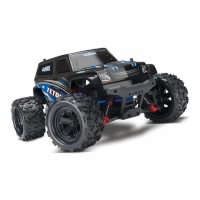
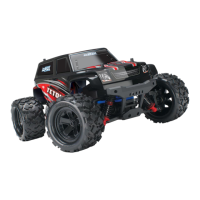
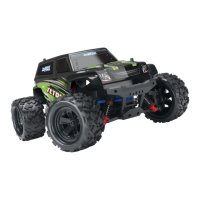
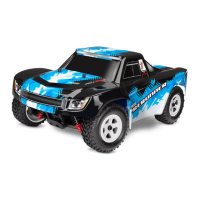
The LaTrax Teton is a 1/18-scale 4X4 adventure vehicle designed for off-road performance and driving fun. It features a 4-wheel independent suspension system, oil-filled shocks, and an efficient 4WD drivetrain. The model is also waterproof, allowing for operation in wet conditions.
Function Description:
The Teton is a radio-controlled (R/C) vehicle operated by a 2.4GHz transmitter. It is designed for recreational off-road driving, offering proportional control over steering and throttle. The electronic speed control (ESC) manages motor power and includes various programmable profiles (Sport, Race, Training) and safety features like Low-Voltage Detection and thermal shutdown protection. The vehicle is powered by a rechargeable NiMH battery pack.
Important Technical Specifications:
- Model: 76054-1
- Scale: 1/18
- Drive System: 4X4 (4-wheel drive)
- Suspension: 4-wheel independent suspension with oil-filled shocks
- Water Resistance: Waterproof electronics (receiver, servos, ESC)
- Radio System: 2.4GHz 2-channel radio system (transmitter and receiver)
- Transmitter Operation Frequency: 2406~2453 MHz
- Transmitter Max RF Power: -1 dBm
- Transmitter Batteries: 4 AA alkaline batteries (supplied) or rechargeable NiMH
- ESC (Electronic Speed Control) Specifications:
- Input Voltage: 5-6 cells NiMH (6.0–7.2V DC)
- Case Size (W x D x H): 26.5 x 46.5 x 22mm
- Weight: 33 grams
- BEC Voltage: 6.0V DC
- Power Wire: 18 Gauge / 40mm
- Input Harness: 26 Gauge / 130mm
- Motor Wires: 18 Gauge / 65mm
- Features: Low-Voltage Detection (disabled by default for NiMH), thermal shutdown protection, programmable profiles (Sport, Race, Training)
- Motor Specifications:
- Type: 370, brushed
- Turns: 28-turn
- Voltage: 7.2V
- Battery (Supplied): 5-cell 2/3A NiMH battery pack (7.2V)
- Charger (Supplied): 5-6 cell 2-amp DC NiMH battery charger (12-volt automotive auxiliary power socket compatible)
- Charging Time: Approximately 35 minutes for the supplied battery
- Traxxas iD Battery Connector Operation Frequency: 13.56 MHz
- Traxxas iD Battery Connector Max RF Power: -29.27 dBuA/m @ 10m
Usage Features:
- Ready-to-Run (RTR): The model comes with most necessary components, including a transmitter, battery, and charger, requiring minimal setup before first use.
- 2.4GHz Radio System: Provides reliable control with automatic frequency selection, reducing interference. The transmitter features a steering wheel, throttle trigger, steering trim knob, and a set button for adjustments.
- Programmable ESC Profiles:
- Sport Mode (Default): 100% forward, 100% brakes, 100% reverse.
- Race Mode: 100% forward, 100% brakes, no reverse.
- Training Mode: 50% forward, 100% brakes, 50% reverse. This mode is ideal for beginners to reduce power output and improve control.
- Low-Voltage Detection: A built-in feature in the ESC to protect LiPo batteries from over-discharge. It is disabled by default for NiMH batteries but can be activated. When active, it limits power output to 50% throttle and eventually shuts down motor output as battery voltage drops.
- Thermal Shutdown Protection: The ESC automatically shuts down if operating temperatures exceed safe limits to prevent damage.
- Failsafe Function: The 2.4GHz radio system includes a failsafe that returns the throttle to its last saved neutral position in case of signal loss, preventing runaways.
- Battery Installation: Easy access battery compartment with a hold-down secured by a body clip.
- Charging: The included 12-volt DC charger allows for convenient charging from an automotive auxiliary power socket. The charger indicates charging status via an LED (red for disconnected, blinking green for charging, solid green for charged).
- Range Testing: Recommended before each run to ensure proper radio system operation.
- Wet Conditions Operation: The model's water-resistant electronics allow for driving through puddles and other wet conditions, though it is not submersible. Special precautions and maintenance are required for wet running.
Maintenance Features:
- Regular Inspection: Before each run, inspect for cracked, bent, or damaged parts, check wheels and steering for binding, examine shock absorber operation and for leaks, verify wiring for fraying or loose connections, check mounting of receiver, servo, and speed control, and ensure tightness of wheel hex bolts and pivot balls.
- Battery Care: Always disconnect and remove the battery from the model after use. Store battery packs safely out of reach of children and pets. NiMH batteries should be recycled at the end of their useful life.
- Motor Maintenance: Every 10-15 runs, remove and clean the motor to remove accumulated dirt and debris. Lubricate the motor shaft bushings with lightweight electric motor oil.
- Chassis Maintenance: Keep the chassis clean of dirt and grime. Periodically inspect for damage.
- Shock Absorber Maintenance: Keep oil levels full using 100% pure silicone shock oil. Inspect bladders and seals for leakage and rebuild if necessary (Traxxas Part #7662 rebuild kit available).
- Suspension Maintenance: Periodically inspect for bent or dirty suspension pins, bent camber links, loose screws, and any signs of stress or bending. Replace components as needed.
- Driveline Maintenance: Inspect for worn drive yokes, dirty axle driveshafts, unusual noise or binding. Check spur gear for wear and pinion gear set screw tightness.
- Post-Wet Running Maintenance:
- Remove the battery.
- Rinse excess dirt off the model with low-pressure water (avoiding transmission and differentials).
- Blow off with compressed air (optional, but recommended).
- Remove wheels.
- Spray bearings, bushings, and fasteners with WD-40® or similar water-displacing light oil.
- Lubricate the drivetrain with thrust bearing grease (Traxxas Part #2717).
- Allow the model to air dry thoroughly.
- As a precautionary step, remove the rubber plug from the receiver box to check for trapped water or dampness and allow it to dry.
- Increase frequency of disassembly, inspection, and lubrication of internal steel components after extended wet use or prolonged storage to prevent corrosion.
- General Storage: Disconnect and remove the battery from the model when storing. If storing for a long time, also remove batteries from the transmitter.

 Need help?
 General

 To Next Page