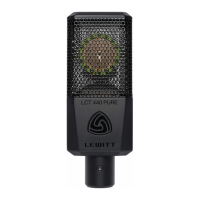
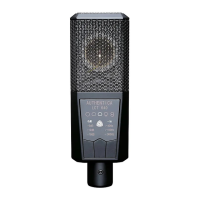
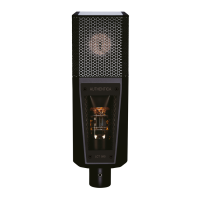
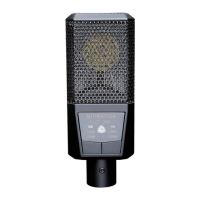
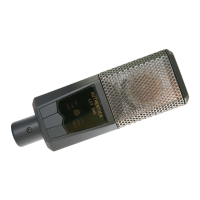
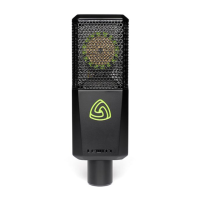
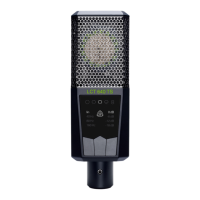
The LEWITT LCT 441 FLEX is a multi-pattern studio microphone designed for high-quality audio recording across a wide range of applications. It features high-end capsule technology housed in a sleek and sturdy casing, making it suitable for both studio work and live situations. The microphone's core function is to capture sound with exceptional detail and precision, while preserving the musical character of the source. Its versatility is enhanced by nine selectable polar patterns, allowing users to adapt the microphone to various recording scenarios.
Function Description
The LCT 441 FLEX operates as a condenser microphone, utilizing a diaphragm positioned close to a solid metal plate to form a capacitor. Sound waves cause the diaphragm to move, changing the capacitance, which is then converted into an electrical signal. This process ensures high sensitivity to changes in sound pressure, capturing subtle nuances in the audible frequency range. The microphone requires external "Phantom Power" (typically 48V DC) to generate polarization voltage for the capsule and power its internal electronics, which include an impedance converter and internal amplifier to process the induced voltage for transmission to subsequent equipment.
The microphone's multi-pattern capability is a key functional aspect, offering nine distinct polar patterns: Omni, wide cardioid, cardioid, supercardioid, figure-8, reverse wide cardioid, reverse cardioid, and reverse supercardioid. Each pattern dictates the microphone's sensitivity to sound from different angles, allowing users to control the amount of direct signal versus room sound, minimize unwanted bleed from other sources, and influence the frequency response and handling noise sensitivity.
- Omnidirectional: This pattern offers equal sensitivity to sound from all directions, providing the best bass response and flattest frequency response. It is least sensitive to handling or wind noise and is ideal for good-sounding rooms and time-based stereo recordings. However, its broad pickup can be a disadvantage in live situations due to potential feedback.
- Wide Cardioid: A blend between omni and cardioid, offering characteristics of both.
- Cardioid: The most common pattern, highly sensitive at 0° (front) and least sensitive at 180° (rear). It's excellent for isolating sound sources and achieving a dry signal by blending out room reflections or background noise.
- Supercardioid: More directive than cardioid, with slightly less side rejection and a bit more rear rejection. This pattern is highly effective in live settings for achieving high gain before feedback and capturing a very dry, direct signal.
- Figure-8: Equally sensitive at 0° and 180°, and least sensitive at 90° and 270°. It is often used for stereo recording techniques like Mid-Side or Blumlein. Its high side rejection makes it useful for minimizing bleed from sources at a 90° angle. This pattern typically has the least bass response and is most sensitive to wind and handling noise.
Usage Features
The LCT 441 FLEX is designed for user-friendly operation with several intuitive features:
- User Interface: The microphone features a simple interface with two buttons for polar pattern selection. The right button cycles clockwise through the patterns, while the left button cycles counter-clockwise.
- Key-lock: To prevent accidental changes during recording or handling, users can activate a key-lock by pressing and holding any button for 2 seconds. Repeating this action unlocks the buttons.
- Status Indicator: An LED indicator provides visual feedback on the microphone's status. It illuminates for standard operation, flashes to indicate clipping, and remains unilluminated when key-lock is active.
- LED Check: Pressing the left button for more than 5 seconds triggers an LED animation, which can be exited by pressing any button.
- Random Mode: Pressing the right button for more than 5 seconds initiates a random selection of a polar pattern, which can be used as a creative tool or decision-maker.
- Recording Versatility: The microphone's multi-pattern design makes it highly adaptable for various sound sources, including vocals, drums, guitar amps, and acoustic instruments.
- Vocals: For vocal recordings, the LCT 50 PSx magnetic pop filter is recommended to prevent plosives and hisses and protect the capsule from moisture. Defining a consistent distance from the microphone (e.g., 15 cm) is crucial, with closer distances enhancing the proximity effect for a fuller sound. Experimenting with singing slightly off-axis can also alter the sound, potentially yielding a more suitable tone.
- Guitar Amps: When miking guitar or bass cabinets, starting with the microphone pointed at the speaker's center and gradually moving it outwards helps find the desired sound. Small changes in position can significantly alter the tone.
- Acoustic Guitar: A common technique involves placing the microphone 20-30 cm from the instrument, pointing towards where the neck and body meet. For two-microphone setups, one can point towards the 12th fret and the other towards the soundhole.
- Drums: Even with a single LCT 441 FLEX, good drum recordings can be achieved, especially for pre-production or demos. A front-of-kit position captures all parts of the kit with a punchy kick sound. Adding a dynamic microphone for the kick drum and moving the LCT 441 FLEX to an overhead position can further enhance the sound. For snare drums, positioning the mic above the rim, pointing to the center, and utilizing the cardioid pattern's rear rejection helps achieve a clean recording.
- Stage Use: Despite being a high-precision tool, the LCT 441 FLEX is robust enough for stage applications, such as miking cymbals, amplifiers, overheads, vocals, and acoustic instruments. While durable, appropriate care is always recommended to ensure longevity.
Maintenance Features
Proper care and maintenance are essential to preserve the microphone's performance and extend its lifespan:
- Cleaning: The microphone casing can be easily cleaned with a wet cloth. It is crucial to avoid using alcohol or other solvents, as these can damage the finish or internal components.
- Storage: When not in use, the microphone should be stored in the supplied DTP 40 Lb leatherette transport bag. This protects it from dust, humidity, and potential physical damage. It should not be left on a stand where it can gather dust or be exposed to environmental factors.
- Handling: The capsule is a sensitive, high-precision component. Users should avoid dropping the microphone from high heights and protect it from strong mechanical stress or force.
- Environmental Protection: To maintain high sensitivity and sound reproduction quality, the microphone should not be exposed to excessive moisture, dust, or extreme temperatures.
- Cable Disconnection: When disconnecting cables, always pull on the connector itself, not the cable, to prevent damage to both the cable and the microphone's input.
- No Modifications: Users should not attempt to modify or repair the microphone themselves, as this will void the product warranty. Any issues should be addressed by authorized service personnel.
- Pop Filter Use: The LCT 50 PSx magnetic pop filter not only helps with plosives but also protects the condenser capsule from moisture, contributing to the microphone's longevity.
- Shock Mount Use: The LCT 40 SH shock mount isolates the microphone from structure-borne noise, which helps maintain a clean recording and prevents unwanted vibrations from reaching the capsule.

 Need help?
 General
 Weight and Dimensions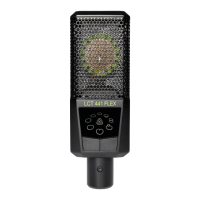

 To Next Page