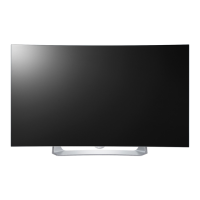
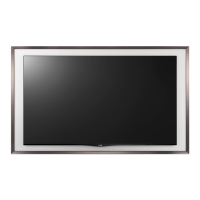
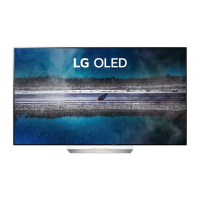
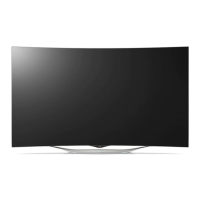
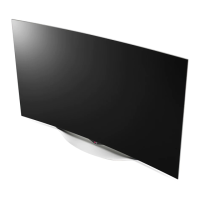
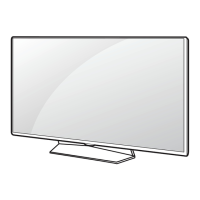
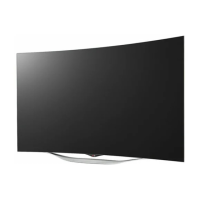
This document is a service manual for the LG OLED TV, models 55EF9500 and 55EF9500-UA, with chassis EA59E. It provides comprehensive information for servicing, including safety precautions, technical specifications, adjustment instructions, block diagrams, exploded views, and troubleshooting guidelines.
Function Description:
The LG OLED TV is a high-definition television designed for immersive viewing experiences. It supports various input modes, including CVBS, Component, HDMI (DTV and PC), USB, DLNA, Miracast, and Widi, accommodating a wide range of media sources. The TV also features 3D mode capabilities, both manually and automatically supported, for an enhanced entertainment experience.
Important Technical Specifications:
- Chassis: EA59E
- Models: 55EF9500, 55EF9500-UA
- Market: USA (North/Latin America, Europe/Africa, Asia/Oceania regions are also supported with specific service URLs)
- Receiving System: ATSC/NTSC-M / 64 QAM / 256 QAM
- Program Coverage:
- VHF: 02-13
- UHF: 14-69
- DTV: 02-69
- CATV: 01-135
- CADTV: 01-135
- Input Voltage: AC 120~240V 50/60Hz (USA models typically 120V 50/60Hz)
- 2D Mode Input (CVBS):
- 720*480i: H-freq 15.73 kHz, V-freq 59.94/60.00 Hz, Pixel clock 13.50/13.51 MHz (SDTV, DVD 480i(525i), NTSC-M)
- 2D Mode Input (Component - Y, CB/PB, CR/PR):
- 720*480i: H-freq 15.73 kHz, V-freq 59.94/60.00 Hz, Pixel clock 13.50/13.51 MHz (SDTV, DVD 480i(525i))
- 720*480p: H-freq 31.47/31.50 kHz, V-freq 59.94/60.00 Hz, Pixel clock 27.00/27.03 MHz (SDTV 480P)
- 1280*720: H-freq 44.96/45.00 kHz, V-freq 59.94/60.00 Hz, Pixel clock 74.18/74.25 MHz (HDTV 720P)
- 1920*1080: H-freq 28.13-67.50 kHz, V-freq 50.00-60.00 Hz, Pixel clock 74.25-148.50 MHz (HDTV 1080i/1080P)
- 3840*2160 (UHD only): H-freq 53.95-135.00 kHz, V-freq 23.98-60.00 Hz, Pixel clock 297.00-594.00 MHz (UDTV 2160P)
- 4096*2160 (UHD only): H-freq 53.95-135.00 kHz, V-freq 23.98-60.00 Hz, Pixel clock 297.00-594.00 MHz (UDTV 2160P)
- HDMI Input (DTV): Supports various resolutions from 640480p to 40962160p with corresponding H-freq, V-freq, and Pixel clock values. UHD resolutions (38402160 and 40962160) are supported.
- HDMI Input (PC): Supports resolutions from 640350 to 40962160 with various refresh rates. UHD resolutions are supported.
- 3D Mode (RF Input):
- 1280*720 (37.50 kHz, 50 Hz, 74.25 MHz)
- 1920*1080 (28.13 kHz, 50 Hz, 74.25 MHz)
- 3D Mode (HDMI Input): Supports various resolutions and formats including Side-by-Side (Half), Top & Bottom, Checker Board, Row Interleaving, and Column Interleaving.
- 3D Mode (USB – Movie, DLNA – Photo, Component Input, HDMI-PC Input, Miracast, Widi): Supports various resolutions and 3D formats.
- Main PCBA: LM14A + URSA11 I2C Block Diagram, LM14A + URSA11 Power Block Diagram, LM14A + URSA11 Internal Block.
- Tuner/CI Block Diagram: Details the connections and components related to tuner and Common Interface (CI) functionality.
- Video/Audio In Block Diagram: Outlines the signal paths for various video and audio inputs.
- Audio Out Block Diagram: Shows the signal paths for audio outputs, including speakers and headphones.
- HDMI Block Diagram: Illustrates the HDMI signal flow and related components.
- USB/WIFI/M-REMOTE/UART Block Diagram: Details the connections for USB, Wi-Fi, Magic Remote, and UART.
Usage Features:
- Automatic Adjustment: Includes ADC Calibration, MAC address D/L, CI+ key D/L, Widevine key D/L, ESN D/L, HDCP20 D/L, Model name & Serial number Download.
- Manual Adjustment: White Balance adjustment (Cool, Medium, Warm modes), Tool Option setting & Inspection per countries, Magic Motion remote controller Check.
- 3D Pattern Test: Allows for testing 3D display functionality.
- HDMI ARC Function Inspection: Verifies the Audio Return Channel (ARC) functionality.
- Ship-out Mode Check (In-stop): Ensures the unit enters Stand-by mode after final inspection.
- USB S/W Download: Facilitates software updates via USB.
- Green Eye Inspection Guide: A procedure to check the intelligent sensor module.
- Joystick Button: Provides basic control for power, volume, and channels, as well as menu navigation.
Maintenance Features:
- Safety Precautions: Emphasizes the importance of using an isolation transformer, replacing safety-related parts with specified components, and performing AC leakage current checks.
- Servicing Precautions: Guidelines for safe servicing, including unplugging the receiver, proper high voltage testing, cleaning electrical contacts, and handling electrostatically sensitive (ES) devices.
- Soldering Guidelines: Instructions for proper soldering and unsoldering techniques to prevent damage to circuit boards.
- Component Removal/Replacement: Detailed procedures for removing and replacing ICs, small-signal discrete transistors, power output transistors, diodes, fuses, and conventional resistors.
- Circuit Board Foil Repair: Techniques for repairing damaged copper patterns on circuit boards.
- Troubleshooting Guide: A comprehensive section with flowcharts for diagnosing and resolving common issues such as video errors (no video/normal audio, picture broken/freezing, color error, vertical/horizontal bar, residual image, light spot, external device color error), power errors (no power, off when on/off while viewing, power auto on/off), audio errors (no audio/normal video, wrecked audio/discontinuation/noise), function errors (remote control & local switch checking, MR15 operating checking, Wifi operating checking, camera operating checking, external device recognition error), noise (circuit noise, mechanical noise), and exterior defects.
- Adjustment Items: Lists main PCBA adjustments (MAC Address Download, ADC adjustment, EDID/DDC download) and final assembly adjustments (White Balance adjustment, RS-232C functionality check, PING Test, Factory Option setting, Ship-out mode setting, GND and HI-POT test).
- Exchange the Module: Provides visual examples of un-repairable cases that require module replacement, such as vertical abnormal display, brightness difference, line dim, crosstalk, press damage, burnt pixels, angle view color difference, brightness dot noise, half dead, green noise on power on/off time, line defect, and mura.

 Need help?

 To Next Page
 General