52
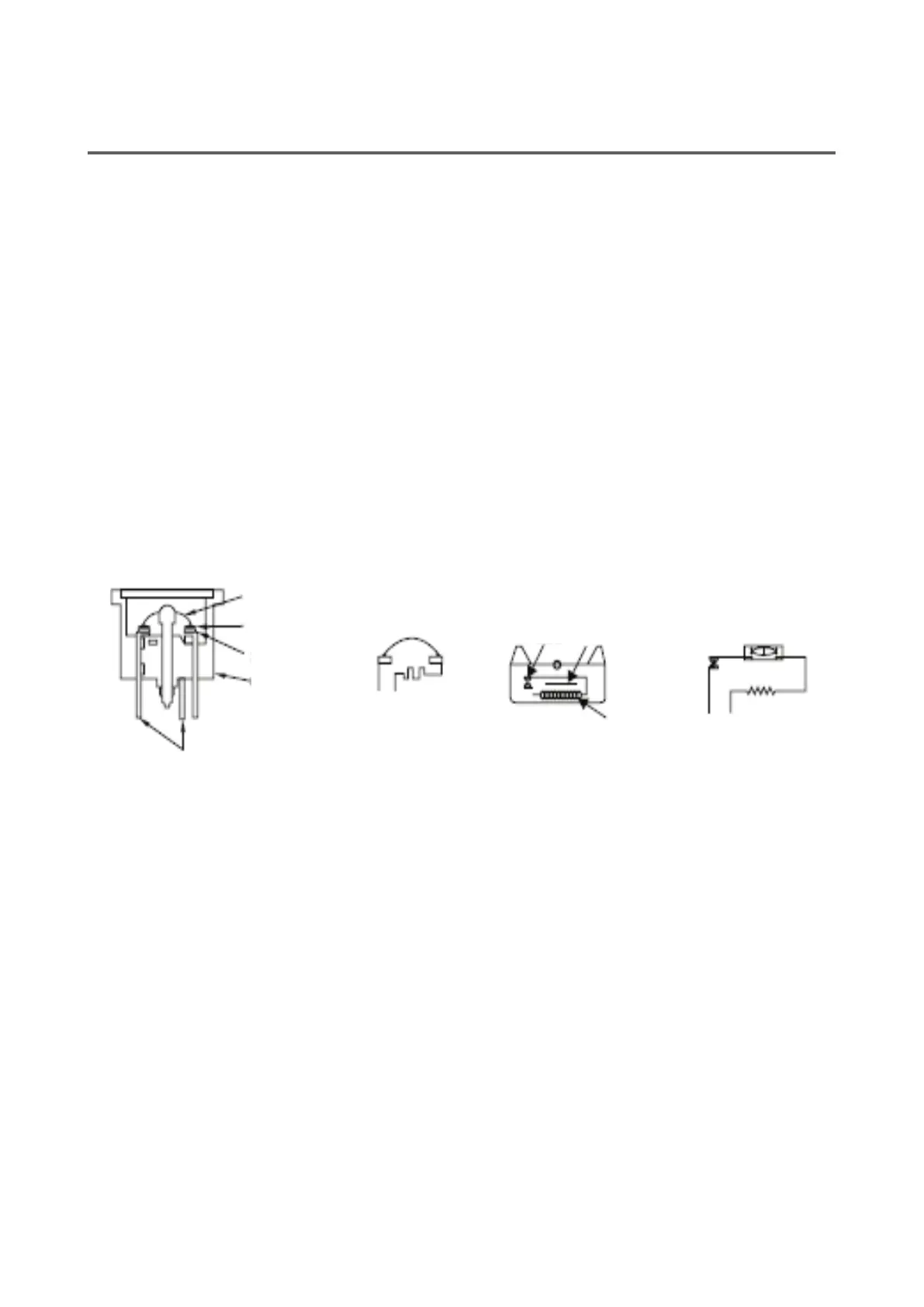
7-2. Structure and Function of Overload Protection (O.L.P) Relay
• Overload protection relay blocks the power that is supplied to the motor and protects the motor wiring
when the temperature of compressor rises abnormally or overcurrent is applied to the compressor mo-
tor.
• Overload protection relay consists of a bimetal element that responds to high temperature and a heater
that is heated when overcurrent is applied, detecting the high temperature of the compressor. Its circuit
is connected to the compressor motor in a series.
• The overload protection relay produces a clicking sound and the contact point of the bimetal element
is detached when high temperature is detected. As the heater is cooled or the temperature is lowered
after 3 - 5 minutes, the contact point of the bimetal element is connected again, making a clicking
sound, and the compressor operates again.
Caution
▶
Overload protection relay detects both temperature and current at the same time. In other
words, the relay operates when the temperature of the compressor is high even if the current
is not applied. It also operates when overcurrent is applied even if the temperature of the com-
pressor is low. In other words, it operates when the temperature of the compressor reaches a
certain level or overcurrent is supplied to the compressor. (However, overcurrent has stronger
eect on the overload protection relay than the temperature.)
▶
If 3 - 5 minutes have passed after the operation of the relay and the heater temperature was
lowered enough, the compressor returns to the normal condition. However, if the tempera-
ture is still high or overcurrent is present, the overload protection relay operates again. In other
words, the overload protection relay may operate repeatedly when the compressor does not
cool down. This may result in a customer claim. In this case, cool o the compressor suciently
and supply the power again. In some cases, the relay returns to its original state immediately
after it operates, repeating the process. In this case, you need to replace the relay.
Bimetal
Moving contact
Stationery contact
Base (phenol)
(a) Internal structure
Moving
contact
Bimetal
Heater
(a) Internal structure (b) Electric circuit diagram(b) Electric circuit dia-
gram
Terminal
Overload Relay Structure for DD51
Overload Relay Structure for MTE82 and NS836


 To Next Page