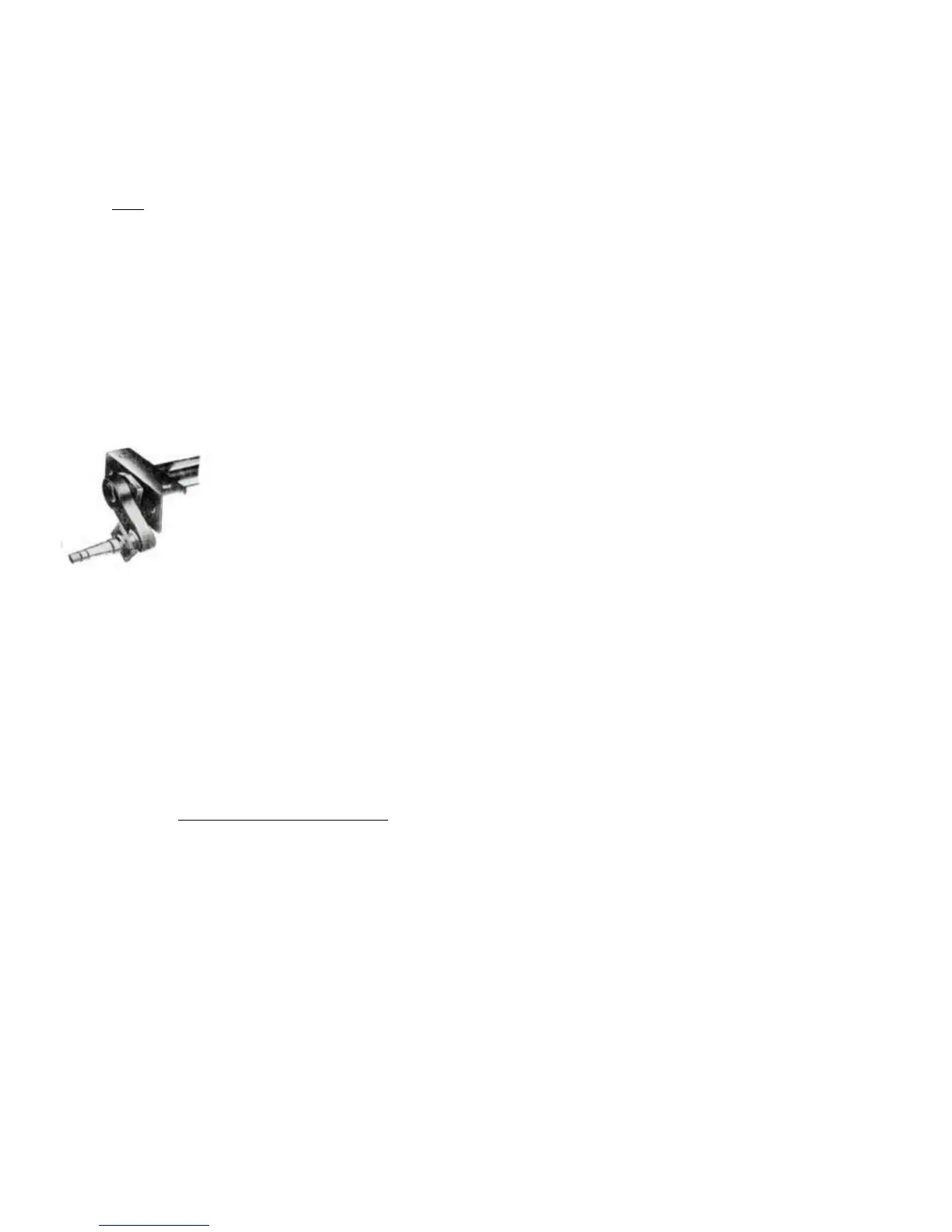
Axle
**Follow all safety and specific operating instructions supplied by the Axle manufacturer.** All models use rubber torsion axles
which offer greater dampening than conventional spring suspensions and allow each tire to move independently. This feature gives
a smoother ride and improved tracking and cornering over rough road conditions. In addition, this type of axle has no metal to metal
contact or springs, shackles, hangers, or U-bolts to wear out.
Sizes
Rascal / 4x7 Joey / 4-Wide / 4x8
1500#
5x7 Joey / 5-Wide / RT / 5x8 / 5x10 / 6-Wide
2000#
6-Wide Sport / 6x10 / 6x10 RT / Rough Rider (electric brakes)
2500#
T@B – Hydraulic Surge brakes
3500#
Electric Brakes
The electric brake option (standard on the Rough Rider) on your camper is similar to the brakes on your towing vehicle, with the
exception that the camper’s brakes are electromagnetic, while your towing vehicle’s brakes are hydraulic. Keep in mind that you
must have a controller installed in your tow vehicle in order to enjoy the intended benefits of electric brakes. When the brakes in the
towing vehicle are activated, your controller determines how hard they are being pressed, and sends the appropriate current
through the hitch wire to the brake assembly. As you depress the brake pedal, the controller sends more current to the
electromagnet, and the brake shoes press harder into the brake drums, forcing the wheel to resist rotation. Releasing the brake
pedal decreases the current to the brake assembly, allowing the wheel to spin freely. The brakes are self-adjusting, but will need an
initial manual adjustment after the first 200 miles. The brakes should be inspected every 3000 miles. Contact your dealer unless you
have the tools and experience to do a brake inspection, adjustment, and replacement.
Brake Adjustment (SEEK PROFESSIONAL ASSISTANCE):
• Elevate the camper by positioning jacks under the frame 12” to 20” behind the axle. Use the jack stands under the frame
to support the camper any time it is elevated.
• NEVER PLACE THE JACKS UNDER THE FLOOR OR USE THE STABILIZERS TO ELEVATE THE CAMPER.
• Do not remove the wheels or hub/drum assembly.
• Locate the adjusting slot at the bottom of the backing plate and remove the protective cover.
• While spinning the wheel, use a blade screwdriver to rotate the star wheel until there is a heavy brake drag.
• Loosen until the wheel turns freely.
• Replace the protective plug.
• Repeat adjustment steps for the other wheel.
• Never adjust just one brake.
Brake Inspection:
The brake linings and magnets are subject to wear and require inspection every 6,000 miles or annually. Replacement is necessary if
the linings are worn (to within 1/16” or less), contaminated with grease or oil, or abnormally scored or gouged. It is important to
replace all linings (both wheels) at the same time to maintain even braking action across the axle. Annually inspect the wires under
the trailer and on the axle for broken insulation or faulty connections. Repair or replace as necessary.



 To Next Page