
 Need help?
Do you have a question about the Lochinvar CREST 102 Series and is the answer not in the manual?
The provided document is a supplemental manual for the Lochinvar CREST Condensing Boiler, specifically for Dual Fuel models FBD 751 - 6001, Series 102 & 112. This manual outlines the operation, installation, and maintenance procedures when using the boiler with dual fuel capabilities (natural gas and propane). It emphasizes safety, proper installation, and the use of qualified technicians for all procedures.
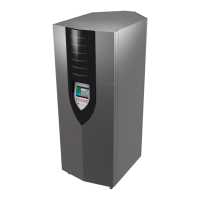
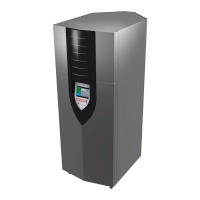
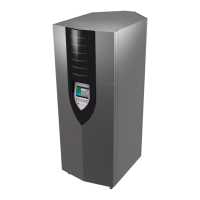
The Lochinvar CREST Condensing Boiler is a high-efficiency heating appliance designed to provide space heating and/or domestic hot water. This particular manual focuses on its dual fuel capability, allowing the boiler to operate on either natural gas or propane. The boiler uses a sophisticated control system, including a SMART TOUCH control module, to manage combustion, fuel selection, and overall operation. It features an ignition device that automatically lights the burner, eliminating the need for a manual pilot light. The boiler's design incorporates safety features such as gas valves that sense negative pressure created by blowers, ensuring gas flow only when the valves are powered and combustion air is flowing. This design aims to optimize efficiency and safety in heating applications.
The dual fuel CREST boiler offers flexibility in fuel choice, allowing users to switch between natural gas and propane. This feature is particularly useful in areas where one fuel type might be more readily available or cost-effective at different times.
Fuel Selection: The boiler is equipped with a fuel selection switch, clearly marked for "Natural" and "Propane" operation. Indicator lights (green for natural gas, red for propane) confirm the selected fuel type. This switch allows for easy transition between the two fuel sources.
Automatic Ignition: The boiler features an automatic ignition system, meaning there is no pilot light to manually light. This enhances user convenience and safety.
SMART TOUCH Control Module: The boiler is controlled via a SMART TOUCH control module, which allows for setting temperature, accessing service modes, and monitoring various operational parameters. This module provides a user-friendly interface for managing the boiler's functions.
Combustion Monitoring: The manual details procedures for checking flame and combustion, including measuring CO2 and O2 levels to ensure optimal and safe operation. This is a critical usage feature for maintaining efficiency and compliance with safety standards.
Gas Valve Operation: The gas shutoff valves are designed for straightforward operation, with clear "ON" and "OFF" positions indicated by the handle's orientation (parallel to pipe for ON, perpendicular for OFF).
High Altitude Operation: Specific models are equipped for high altitude operation (up to 12,000 feet), with de-rating considerations outlined in the manual. A high altitude label is affixed to units designed for such conditions.
The manual places a strong emphasis on professional maintenance and provides detailed instructions for qualified technicians.
Annual Servicing: It is recommended that the boiler be serviced and inspected by a qualified service technician at least annually to ensure safe and efficient operation.
Gas Supply Checks: Detailed steps are provided for checking the inlet gas supply pressure for both natural gas and propane. This involves using a manometer to measure pressure at specific taps on the gas manifold or gas valve flange. The manual specifies acceptable pressure ranges for both static and dynamic modes.
Combustion Analysis: A key maintenance feature is the procedure for measuring combustion parameters (CO2 and O2 levels) using a combustion analyzer. This allows technicians to verify that the boiler is operating within recommended ranges and to identify any issues that might affect efficiency or safety. CO levels should be less than 200 ppm for a properly installed unit.
Gas Valve Replacement: The manual explicitly states that gas valves must only be replaced with conventional gas valves from the manufacturer, highlighting the importance of using approved parts for safety and proper function. The gas valves have flanged connections to the venturis and blowers, which is a design feature that simplifies replacement while maintaining safety.
Leak Detection: Instructions for checking for gas leaks using a bubble test are provided, with a strict warning against using an open flame. This is a fundamental safety procedure during maintenance.
Vent and Air Piping Inspection: Regular inspection of vent piping and air piping for signs of deterioration, physical damage, or sagging is crucial. Ensuring gastight seals at all connections is vital to prevent flue gas spillage and carbon monoxide emissions.
Water Piping Checks: Technicians are instructed to check system piping for leaks and to vent any remaining air from the system, as air can interfere with circulation and heat distribution.
Troubleshooting: The manual refers to the Crest Service Manual for troubleshooting common issues if the boiler does not start correctly, such as loose connections, blown fuses, external limit control status, call for heat, and gas pressure.
Documentation: The manual stresses the importance of having the boiler model and serial number available when calling for service, facilitating efficient support. It also advises saving the manual for future reference.
 General
| Model | CREST 102 Series |
|---|---|
| Category | Boiler |
| Input BTU/hr | 102, 000 |
| Efficiency | 95% |
| Fuel Type | Natural Gas or Propane |
| Type | Condensing |


 To Next Page