www.longer3d.com info@longer3d.com
within this range; beyond this range, this laser engravers will be
unable to achieve the best engraving results.
(8) Below a list of some of the most known hazardous materials that
the user SHOULD NOT attempt to engrave or cut on. If a material
is not in this list, do not consider it to be safe to use. Obtain the
Safety Data Sheet (SDS) from the material’s manufacturer when
handling unknown materials.
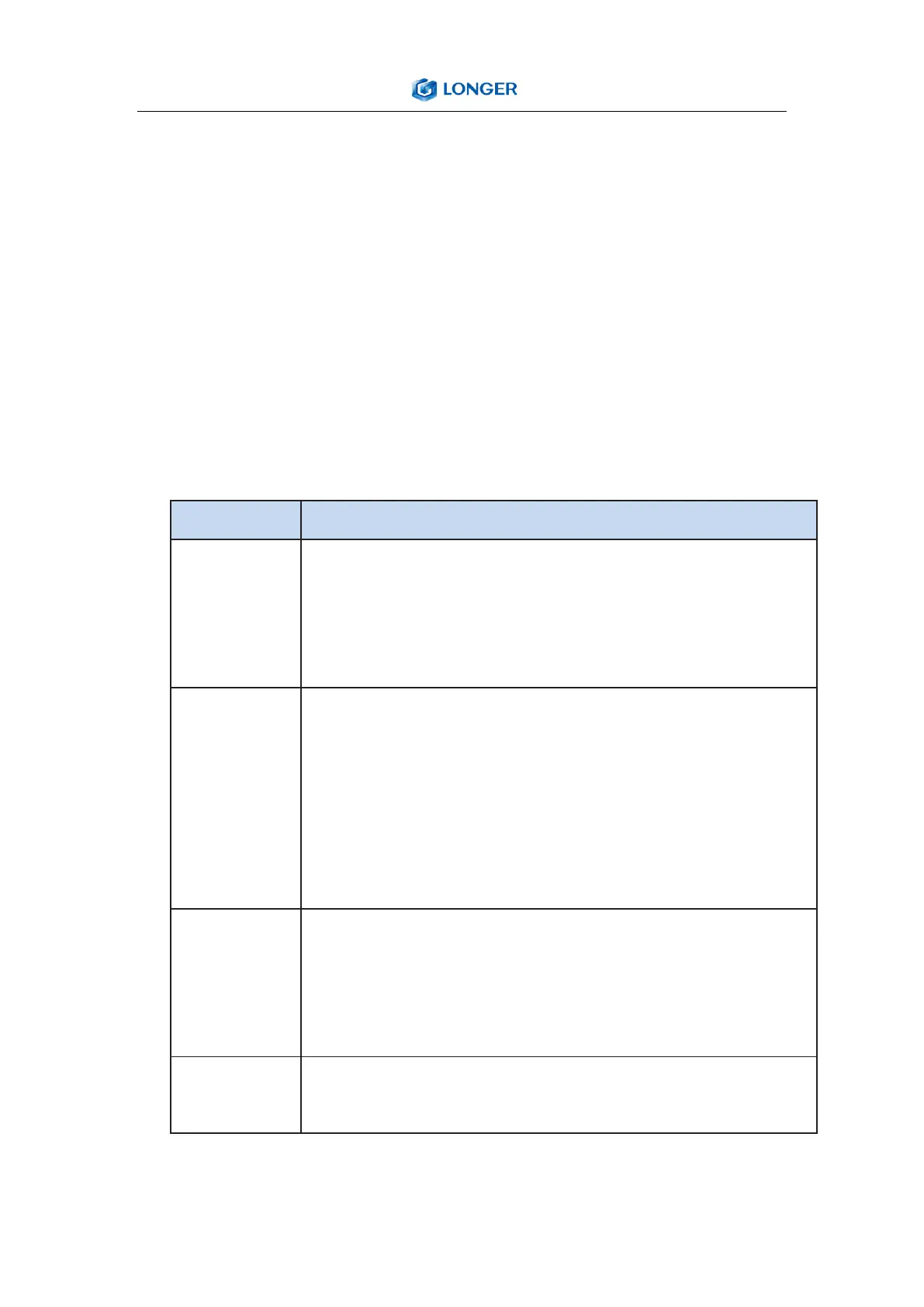
Reason to avoid engraving / cutting it
PVC (Poly
Vinyl
Chloride)
PVC will emit Chlorine gas when laser cut, or laser engraved. This
toxic gas can ruin the optics and motion control system of the
laser engraver, in fact, engraving or cutting PVC is a sure way of
voiding the warranty of your laser engraver
Lexan / Thick
Poly-
carbonate
Lexan not only cuts poorly but it also catches on fire very easily.
The window of the laser engraving machine is usually made from
polycarbonate because it does a very good job of attracting
infrared radiation., which is the frequency of light the engraver
uses when cutting and engraving materials. This makes the laser
cutter quite ineffective in cutting polycarbonate materials
ABS melts upon exposure to a laser beam as opposed to
vaporizing which would be the ideal reaction needed for laser
engraving. Instead of leaving a crisp image, ABS will melt and
leave a gooey deposit on the surface.
HDPE melts and catches on fire easily upon exposure to a laser
beam.


 To Next Page
 Loading...