Takeoff & Landing Areas:
It is important to note the Lucid C1 drone requires a flat and level surface sufficient for takeoff. While not all job
sites will provide a perfectly level takeoff area, it is up to the LCP to determine the best area for takeoff and
landings. Taking off from an uneven surface, or landing from an uneven surface can cause the drone to
become unstable, difficult to control and could lead to a crash. During the bidding process, consider the
operations area for the Lucid C1 drone. Identify potential areas for takeoff and landing. If there is no
appropriate location for the takeoff and landing zone, the drone may not be suitable for the job.
Pilots should also consider any potential obstructions or obstacles. Conder trees, flagpoles, access areas,
traffic areas, pedestrian traffic and distance from tall buildings. Consider any logistic issues that may present
themselves when operating the Lucid C1 drone. Should parking spaces be cordoned off to create a safe area?
If so plan for this and communicate with the building manager to plan appropriately for any actions that need to
take place to create a safe operating environment.
Airspace and FAA Regulations.
Remember the Pilot or LCP is ultimately responsible to comply with all Federal regulations set forth by the
FAA. Pilots should always consider airspace when planning for a drone operation.
Pilots can access airspace maps in a variety of methods.
Desktop:
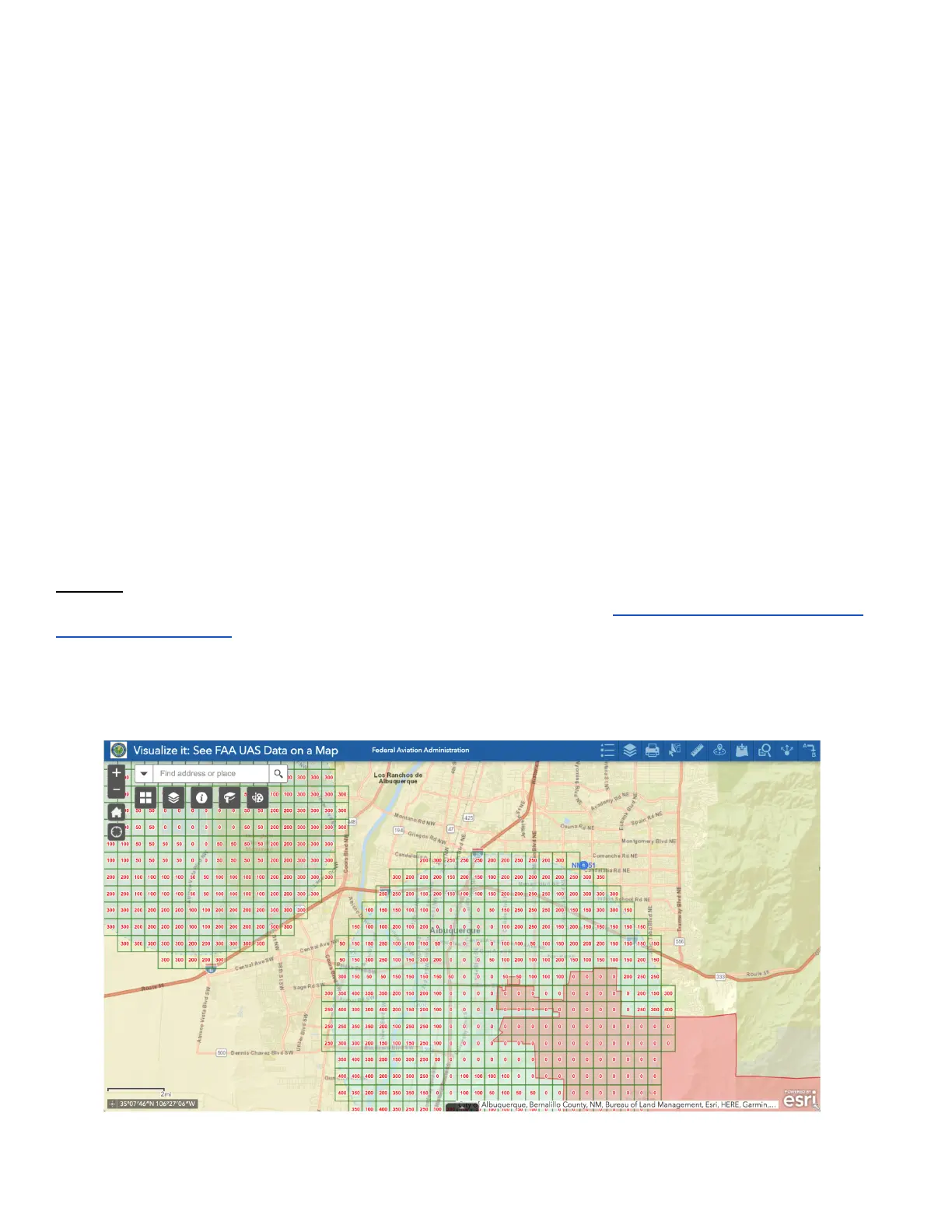
The FAA provides an online registry of all LAANC activated airports. The FAA’s UASFM (Unmanned Aerial
Systems Facility Maps) Map will display a comprehensive map of all airspace across the country. These maps
will showcase airspace specific to UAS or drones. The maps will also showcase the maximum allowed altitude
in a given area. Pilots can fly in these grids, and gain autonomous airspace authorization if they fly below the
given altitude limit. If pilots need to fly higher than the prescribed limit, they will have to apply for an airspace
authorization through the FAA’s online portal (discussed on the next page)



 To Next Page