4
HOW TO USE YOUR METER TO MEASURE FERTILITY
1. Remove the top 2” of the surface soil. Break up & crumble the soil underneath to a depth of 5”. Remove any stones or organic debris
such as leaves and twigs because they can affect the final result.
2. Thoroughly wet the soil with water (ideally rain or distilled water) to a mud consistency.
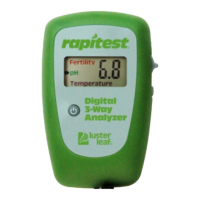
3. Use the toggle switch to move the indicator arrow to point to Fertility.
4. Wipe the meter probe clean with a tissue or paper towel. Insert probe into soil up to the probe base.
5. Wait 10 seconds and take reading.
In order to obtain an even more accurate result when measuring soil fertility with your unit, the following procedure
may be adopted. Take the sample of soil to be tested from the ground and remove stones and organic debris. Prepare
the sample by crumbling the soil into small particles. Measure two cups of soil from the prepared sample. Fill a clean
glass or plastic container with two cups of distilled or de-ionized water and add the measured soil sample. Ensure the soil
and water is thoroughly mixed and compact the sample firmly. Drain off any excess water. Proceed to step 3 of “How to
Use Your Meter to Measure pH.
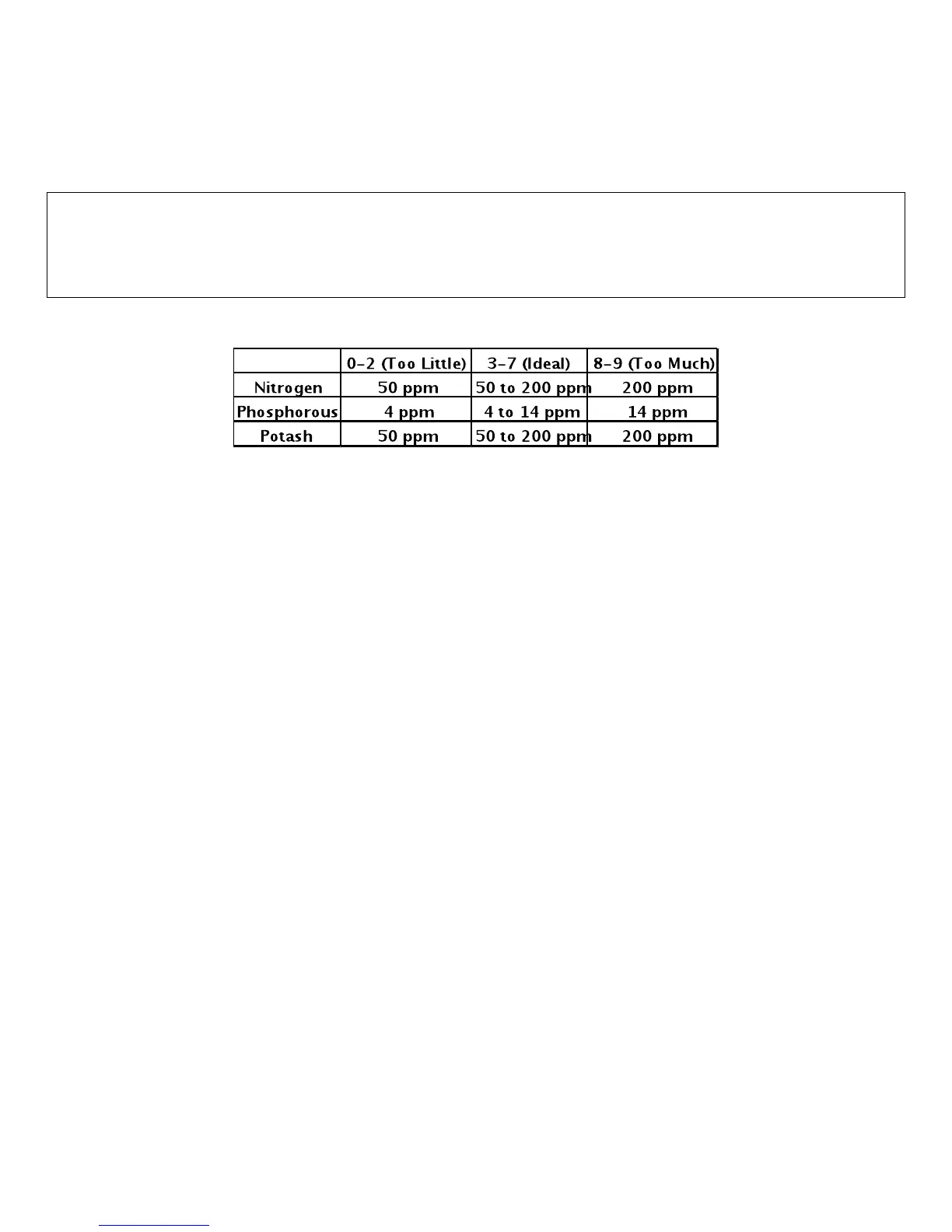
The standards by which the instrument is calibrated are as follows:
IF THE TESTER READS “TOO LITTLE”
1. Liquid feed with a brand of soluble fertilizer that is recommended for the plants you intend to grow.
2. Liquid feed within 3 weeks after planting or potting and do this every month whenever you water your plants.
IF THE TESTER READS “IDEAL”
Water once a month with a soluble fertilizer that is recommended for the plants you are growing.
IF THE TESTER READS “TOO MUCH“
1. Water thoroughly to leach out the excess fertilizer from the soil.
2. For potted plants, repot with new soil.
3. For greenhouse plants water thoroughly to leach excess fertilizer from the soil.
4. Do not add any fertilizer. You can add manure, compost, clippings, plant wastes, residues, leaves and any other organic matter to the soil.
HOW TO INCREASE SOIL FERTILITY
There are many ways to increase and maintain the valuable nutrients of your soil which contribute to its fertility. Just as some plants need a rather acid
soil, while others need a slightly alkaline soil, they also need varying amounts of nitrogen, phosphorous and potash known as NPK. Each plant brings about
changes in the soil and has soil needs different from other plants. You won’t need to worry much about having exactly the right amount of each element
for each plant you grow. As long as your soil is well balanced and rich in organic matter your plants will not suffer.
FERTILIZER
Fertilizer is a substance added to the soil to improve fertility. Since a variety of elements contribute to the fertility of the soil, many individual elements
and combinations of elements are considered fertilizers.
THE VALUE OF NITROGEN
Nitrogen is synonymous with plant nutrition. It is directly responsible for producing leaf growth and green leaves. A deficiency causes yellow leaves and
stunted growth. Too much nitrogen causes overabundant foliage with delayed flowering; the plant becomes subject to disease and its fruit is of poor
quality. Soil deficient in nitrogen can be corrected by adding compost, manure or other nitrogen-rich fertilizers such as dried blood, tankage, cottonseed
meal and peanut shells. Grass clippings, weeds and garden wastes returned to the soil will increase its humus and nitrogen content.
THE VALUE OF PHOSPHOROUS
Growing plants need phosphorous. It is the major constituent of plant genetics and seed development. A deficiency causes stunted growth and seed
sterility. Phosphorous aids plant maturity, increases the seed yield, increases fruit development, increases vitamin content and aids the plant‘s resistance
to disease and winterkill. The best source of phosphorous is phosphate rock, when it is finely ground. Bacteria that thrive in pH 6.5 to pH 7 help
breakdown the phosphorous making it available to plants. Other sources of phosphate are bone meal, cottonseed meal and activated sludge. Barring any
great deficiencies, a pound of phosphate rock for every ten square feet of your garden space is a goodly amount to apply once every two or three years.
Phosphorous has the tendency to “grab” hold of the soil. In this manner, phosphorous is not easily leached from the soil as is nitrogen and potash.
THE VALUE OF POTASSIUM (POTASH)
Potash strengthens the plant. It helps form carbohydrates and promotes protein synthesis. It further aids early growth, stem strength and cold hardiness.
Plants deficient in potash are usually stunted and have poorly developed root systems. Leaves are spotted, curled and appear dried out at the edges.
Yields for potash deficiency are low. Sources for potash are plant residues, manures, composts and natural sources like granite dust, basalt rock or
greensand, wood ashes, leaves and seaweed.


 To Next Page
 Loading...