EasyManua.ls Logo

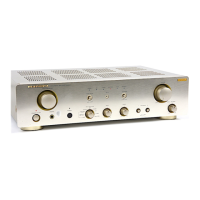
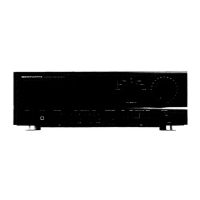
Marantz PM400 - 1. Introduction; 2. Pre-Amplifier; 3. Main Amplifier; Troubleshooting Analysis

Marantz PM400
27 pages
Print Icon
To Next Page IconTo Next Page
To Previous Page IconTo Previous Page
Loading...
PK
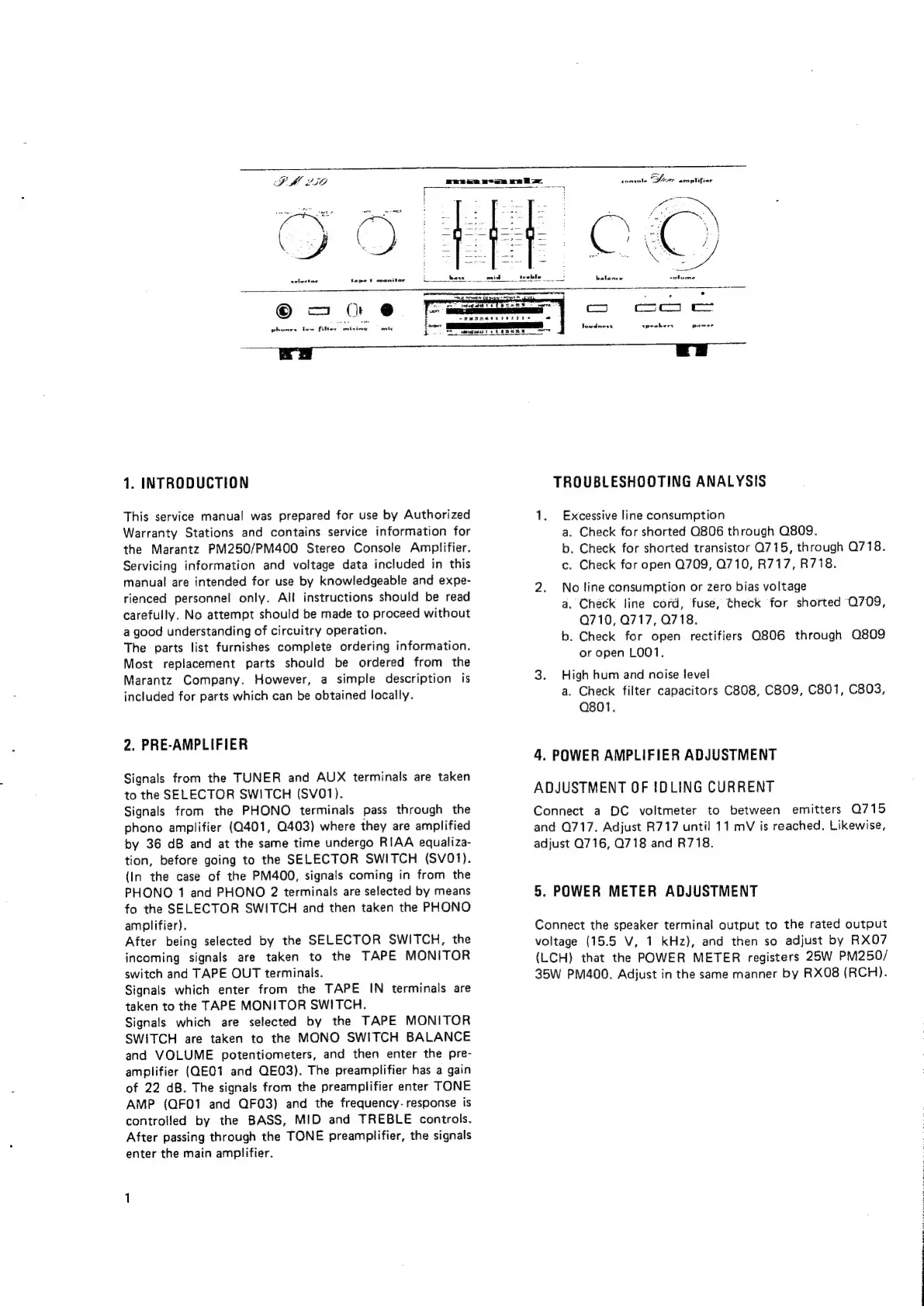
250
phones
low
fillee
mising
—
mic
inne
1.
Dow
araplifier
smunnarererzase
ET
LEY
el
1.
INTRODUCTION
This
service
manual
was
prepared
for
use
by
Authorized
Warranty
Stations
and
contains
service
information
for
the
Marantz
PM250/PM400
Stereo
Console
Amplifier.
Servicing
information
and
voltage
data
included
in
this
manual
are
intended
for
use
by
knowledgeable
and
expe-
rienced
personnel
only.
All
instructions
should
be
read
carefully.
No
attempt
should
be
made
to
proceed
without
a
good
understanding
of
circuitry
operation.
The
parts
list
furnishes
complete
ordering
information.
Most
replacement
parts
should
be
ordered
from
the
Marantz
Company.
However,
a
simple
description
is
included
for
parts
which
can
be
obtained
locally.
2.
PRE-AMPLIFIER
Signals
from
the
TUNER
and
AUX
terminalis
are
taken
to
the
SELECTOR
SWITCH
(SV01).
Signals
from
the
PHONO
terminals
pass
through
the
phono
amplifier
(Q401,
Q403)
where
they
are
amplified
by
36
dB
and
at
the
same
time
undergo
RIAA
equaliza-
tion,
before
going
to
the
SELECTOR
SWITCH
(SVO1).
(In
the
case
of
the
PM400,
signals
coming
in
from
the
PHONO
1
and
PHONO
2
terminals
are
selected
by
means
fo
the
SELECTOR
SWITCH
and
then
taken
the
PHONO
amplifier).
After
being
selected
by
the
SELECTOR
SWITCH,
the
incoming
signals
are
taken
to
the
TAPE
MONITOR
switch
and
TAPE
OUT
terminals.
Signals
which
enter
from
the
TAPE
IN
terminals
are
taken
to
the
TAPE
MONITOR
SWITCH.
Signals
which
are
selected
by
the
TAPE
MONITOR
SWITCH
are
taken
to
the
MONO
SWITCH
BALANCE
and
VOLUME
potentiometers,
and
then
enter
the
pre-
amplifier
(QEOQ1
and
QEO3).
The
preamplifier
has
a
gain
of
22
dB.
The
signals
from
the
preamplifier
enter
TONE
AMP
(QFO1
and
QFO3)
and
the
frequency-
response
is
controlled
by
the
BASS,
MID
and
TREBLE
controls.
After
passing
through
the
TONE
preamplifier,
the
signals
enter
the
main
amplifier.
TROUBLESHOOTING
ANALYSIS
1.
Excessive
line
consumption
a.
Check
for
shorted
Q806
through
Q809.
b.
Check
for
shorted
transistor
Q715,
through
Q718.
c.
Check
for
open
Q709,
0710,
R717,
R718.
2.
No
line
consumption
or
zero
bias
voltage
a.
Check
line
cord,
fuse,
theck
for
shorted
0709,
Q710,
Q717,
0718.
b.
Check
for
open
rectifiers
Q806
through
O809
or
open
LO0O1.
3.
High
hum
and
noise
level
a.
Check
filter
capacitors
C808,
C809,
C801,
C803,
Q801.
4.
POWER
AMPLIFIER
ADJUSTMENT
ADJUSTMENT
OF
IDLING
CURRENT
Connect
a
DC
voltmeter
to
between
emitters
Q715
and
Q717.
Adjust
R717
until
11
mV
is
reached,
Likewise,
adjust
0716,
0718
and
R718.
5.
POWER
METER
ADJUSTMENT
Connect
the
speaker
terminal
output
to
the
rated
output
voltage
(15.5
V,
1
kHz),
and
then
so
adjust
by
RX07
(LCH)
that
the
POWER
METER
registers
25W
PM250/
35W
PM400.
Adjust
in
the
same
manner
by
RX08
(RCH).
j

Related product manuals