
 To Next Page

A
Amanda BoydSep 9, 2025
How to get rid of odors in my Maytag Washer?
- Jjames90Sep 9, 2025
If you are experiencing odors with your Maytag washer, run the Clean Washer with affresh® cycle after every 30 washes.

How to get rid of odors in my Maytag Washer?
If you are experiencing odors with your Maytag washer, run the Clean Washer with affresh® cycle after every 30 washes.
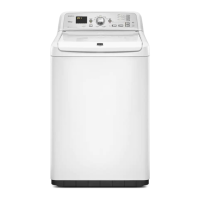
Why won't my Maytag MVWB766FW run or fill?
If your Maytag washer won’t run or fill, ensure both hoses are attached and have water flowing to the inlet valve. Check that both hot and cold water faucets are turned on. Also, inspect the inlet valve screens for clogs and check the inlet hoses for any kinks that might be restricting water flow.
Why is my Maytag Washer not cleaning well?
If your Maytag washer is not cleaning or removing stains effectively, it could be due to several factors. The washer senses the load size and adds the correct amount of water, so it's normal for the wash load not to be completely covered in water. Avoid adding more water, as this can lift the laundry off the agitator, reducing cleaning effectiveness. Also, avoid tightly packing the washer and ensure you add detergent, Oxi products, and color-safe bleach to the bottom of the basket before adding the load items.
How to stop my Maytag MVWB766FW from vibrating?
If your Maytag washer is vibrating, rocking, or “walking”, the feet may not be in contact with the floor or locked, or the washer may not be level. Ensure the front and rear feet are in firm contact with the floor and that the washer is level. Check the floor for flexing or sagging; if uneven, placing a ¾" (19 mm) piece of plywood under the washer can reduce sound.
Why does my Maytag Washer have the wrong temperature?
If your Maytag washer has incorrect or wrong wash or rinse temperatures, make sure the hot and cold inlet hoses are not reversed. Ensure both hoses are attached to both the washer and faucet, and that both hot and cold water are flowing to the inlet valve. Also, check that the inlet valve screens are not clogged and remove any kinks in the hoses.
Why is my Maytag MVWB766FW Washer load not rinsed?
If your Maytag washer load is not rinsed properly, make sure the hot and cold inlet hoses are not reversed. Ensure both hoses are attached and have water flowing to the inlet valve, and that both hot and cold water faucets are on. Also, check if the inlet valve screens on the washer are clogged and remove any kinks in the inlet hose.
Why is my Maytag MVWB766FW humming?
You may hear the hum of the sensing spins after you have started your Maytag washer. This is normal.
Why is my Maytag Washer whirring?
You may hear the whirring sound of the basket decelerating in your Maytag washer. This is normal.
Why is my Maytag Washer damaging clothes?
If you notice fabric damage after washing in your Maytag washer, it may be due to sharp items in pockets during the wash cycle. Empty pockets, zip zippers, and snap or hook fasteners before washing to avoid snags and tears. Tie all strings and straps before starting the wash load, and mend any rips or broken threads in seams before washing.
Why are there dry spots on my load after a Maytag Washer cycle?
If you find dry spots on your load after a cycle in your Maytag washer, it is normal. The high spin speeds combined with air flow during the final spin can cause items near the top of the load to develop dry spots.
Explains the safety alert symbol, DANGER, and WARNING messages used in the manual.
Basic precautions for using the washer to reduce risks of fire, electric shock, or injury.
Warnings about chemicals known to cause cancer or reproductive harm in California.
Explains how the washer senses load size and determines water level automatically.
Advises using only High Efficiency (HE) detergents and explains why.
Describes typical sounds during different stages of the wash cycle.
Explains the function of each control element on the washer's panel.
Details settings like temperature, soil level, spin speed, Oxi, Extra Rinse, and Deep Clean.
Introduces the lights indicating cycle progress, including sensing and lid lock.
Describes the sounds and actions during the main phases of a wash cycle.
Explains the lid locking mechanism and Deep Fill/Auto Sensing water level lights.
Instructions for adding HE liquid or powder detergent to the correct dispenser tray.
Details on using dispensers for liquid fabric softener and liquid chlorine bleach.
Information on using the dispenser for Oxi boosters or color-safe bleach.
Details for Power Wash (heavily soiled) and Colors (darks, mixed loads) cycles.
Guidance for Bedding (large items) and Normal (cottons, mixed loads) cycles.
Information on cycles like Sanitize, Cold Wash, Delicates, Rapid Wash, and Clean Washer.
Steps for sorting clothes, emptying pockets, and preparing items for washing.
Guidance on adding detergents, boosters, and fabric softeners to dispensers or basket.
Instructions on how to load the washer for optimal performance and to prevent tangling.
Detailed instructions for adding HE detergent to the correct tray, including notes on powder vs. liquid.
How to use the dispensers for liquid chlorine bleach and liquid fabric softener/Oxi boosters.
Instructions for turning the washer on using the POWER button after loading.
Steps for selecting the wash cycle, water temperature, and soil level for the load.
How to adjust spin speed and add options like Extra Rinse or Deep Fill.
Instructions for starting the wash cycle by touching and holding the START/PAUSE button.
Information on inspecting and replacing water inlet hoses to prevent failure.
Recommendations for keeping the washer clean and performing well, including detergent use.
Steps for cleaning the washer's interior, dispensers, and exterior surfaces.
Steps to take when not using the washer for a period, including unplugging and turning off water.
Step-by-step guide to remove, clean, and reinsert the dispenser drawer.
Instructions for safely moving the washer, including draining and securing it.
Steps for setting up the washer again after moving or storage.
Procedure to protect the washer from freezing damage during winter storage.
Solutions for washer rocking, walking, or excessive vibration during operation.
Explains normal sounds like clicking, gurgling, humming, and whirring.
Troubleshooting steps for identifying and fixing water leaks from the washer.
Addresses problems like not enough water or loads not being completely covered.
Solutions for when the washer fails to start, fill, or stops unexpectedly during a cycle.
Addresses problems caused by not using HE detergent or using too much.
Solutions for issues with draining, spinning, or loads remaining wet.
Addresses problems related to incorrect wash or rinse temperatures and loads not being rinsed.
Solutions for sand, lint, or tangling issues on washed clothes.
Addresses problems with stain removal, cleaning effectiveness, and dispenser operation.
Solutions for preventing fabric damage and eliminating washer odors.
Addresses issues with the lid lock light and detergent not dissolving properly.
Steps to take and information needed when contacting Maytag for service.
Outlines what is covered (parts, labor) and not covered by the limited warranty.
Explains limitations on implied warranties and exclusion of incidental/consequential damages.
 General
| Brand | Maytag |
|---|---|
| Model | MVWB766FW |
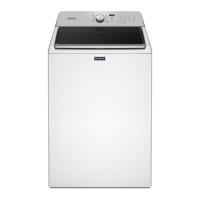
| Type | Top Load Washer |
| Capacity | 4.7 cu. ft. |
| Color | White |
| Energy Star Certified | Yes |
| Wash Cycles | 12 |
| Agitator | Yes |
| Steam Function | No |
| Sanitize Cycle | Yes |
| Deep Fill Option | Yes |
| Power Source | Electric |
| Voltage | 120 V |