EasyManua.ls Logo

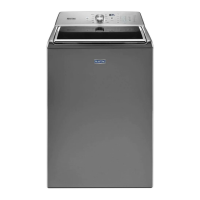
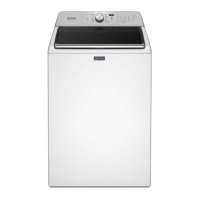
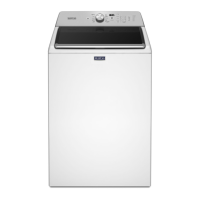
Maytag MVWB835DW - User Manual

Maytag MVWB835DW
35 pages
Print Icon
To Next Page IconTo Next Page
Loading...
Washer
Service Manual
MVWB835DW

Table of Contents

Other manuals for Maytag MVWB835DW

Questions and Answers

  • R
    Richard HaleyNov 22, 2025
    What to do if my Maytag MVWB835DW Washer is not draining or spinning properly?
    • M
      Matthew WiseNov 22, 2025
      If your Maytag Washer is not draining or spinning and your loads are still wet, it could be due to several reasons. Small items might be caught in the pump or between the basket and tub, slowing the draining process; empty pockets and use garment bags for small items to prevent this. Also, cycles with lower spin speeds remove less water; use the recommended cycle/spin speed or select DRAIN & SPIN to remove extra water. Ensure that the washer isn't too tightly packed or unbalanced. Check the plumbing for correct drain hose installation, making sure it doesn't extend too far into the standpipe or is clogged. If you're using too much detergent, it can cause excessive suds, slowing draining and spinning; use only HE detergent and follow the directions, or select RINSE & SPIN to remove extra su...
  • J
    jimcollierAug 25, 2025
    Why Maytag MVWB835DW won't run - check proper electrical supply?
    • S
      smithjosephAug 26, 2025
      If your Maytag Washer won’t run or fill, check the power cord is plugged into a grounded 3-prong outlet and avoid using an extension cord. Ensure there is power to the outlet. Reset a tripped circuit breaker or replace any blown fuses. If problems continue, contact an electrician.
  • B
    batesbrianAug 26, 2025
    Why is my Maytag MVWB835DW Washer leaking water?
    • R
      Rachel KnightAug 27, 2025
      If you notice water leaks from your Maytag Washer, it could be due to the washer not being level, causing water to splash. Make sure that the fill hoses are tightly connected and that all four fill hose flat washers are properly seated. Also, check the drain hose connection and ensure it is properly secured to the drainpipe or laundry tub, without any tape over the drain opening. Inspect household plumbing for leaks or clogs in the sink or drainpipe. Unbalanced loading can also cause leaks, so refer to the 'Using Your Washer' section for correct loading instructions.
  • E
    Elaine BurchAug 27, 2025
    Why is my Maytag Washer vibrating or off-balance?
    • E
      Elizabeth ShepherdAug 27, 2025
      Your Maytag washer might be vibrating or off-balance due to several reasons. The feet may not be in contact with the floor or locked; ensure the front and rear feet are firmly touching the floor and that the washer is level. An unbalanced load can also cause this issue; load items in loose heaps evenly around the washplate, and avoid adding wet items or extra water. Also, check if the floor is flexing or sagging; if so, place a 3/4" (19 mm) piece of plywood under the washer.
  • C
    Clinton JohnsonAug 28, 2025
    Why is my Maytag MVWB835DW Washer making clicking or metallic noises?
    • B
      Brett WernerAug 28, 2025
      If you hear clicking or metallic noises from your Maytag Washer, objects may be caught in the washer drain system. Empty pockets before washing, as loose items like coins could fall between the basket and tub or block the pump. It may be necessary to call for service to remove the items. It is also normal to hear metal items on clothing, such as metal snaps, buckles, or zippers, touch against the stainless steel basket.
  • A
    Amy GuerraSep 18, 2025
    Why are there dry spots on my clothes after using my Maytag MVWB835DW?
    • S
      stephensondavidSep 18, 2025
      If you notice dry spots on your load after a cycle in your Maytag Washer, it is normal. The high spin speeds combined with air flow during the final spin can cause items near the top of the load to develop dry spots.
  • B
    Brian DavisSep 15, 2025
    How to remove sand, pet hair, and lint from clothes in my Maytag MVWB835DW?
    • A
      Amy MorenoSep 15, 2025
      If you find sand, pet hair, lint, etc. on your load after washing in your Maytag Washer, it may be due to heavy residues. Add an Extra Rinse to the selected cycle to help remove these residues.
  • L
    Laurie MillerSep 16, 2025
    Why is the dispenser not working correctly in my Maytag Washer?
    • K
      Keith WoodsSep 16, 2025
      If you are experiencing incorrect dispenser operation with your Maytag Washer, do not overfill the dispenser, as this causes immediate dispensing. Load dispensers before starting a cycle. Small amounts of water may remain in the dispenser at the end of the cycle, which is normal. If you have low water pressure, select a warmer wash temperature if possible, depending on your load, to avoid residual powder in the dispenser. Clean the dispenser nozzle and ensure the drawer is properly seated.
  • C
    Candace HicksSep 7, 2025
    Why is my Maytag Washer vibrating?
    • T
      Tracy HillSep 7, 2025
      To stop your Maytag Washer from vibrating, rocking, or “walking”, ensure the front and rear feet are in firm contact with the floor, and that the washer is level. You may need to check the floor for flexing or sagging. If the flooring is uneven, placing a ¾" (19 mm) piece of plywood under the washer can help reduce the noise and movement.
  • J
    Joseph DavisSep 4, 2025
    Why does my Maytag MVWB835DW make a humming sound?
    • S
      salazarmarySep 4, 2025
      The humming sound you hear in your Maytag washer may be due to load sensing. It is normal to hear the hum of the sensing spins after you have started the washer.

Summary

Maytag Washer Service Manual

General Safety Information

Electrical Shock Hazards

Warnings regarding electrical shock during servicing.

Voltage Measurement Safety

Precautions for performing voltage measurements safely.

Electrostatic Discharge (ESD) Safety

Guidelines for handling sensitive electronic components.

Important Safety Notice

General safety notice for technicians and users.

Diagnostic Guide and LED Status

Diagnostic LED - Main Control (ACU)

Information about the diagnostic LED on the main control board.

Service Diagnostic Mode Activation

Activating Service Diagnostic Mode

Steps to enter the service diagnostic mode for testing.

Key Activation and Encoder Test

Test Procedure

Steps for performing the Key Activation & Encoder Test.

Service Test Mode Operation

Load and Test Cycle Selection

Procedure for selecting and running test cycles in service mode.

Commanding Functions

How to turn functions on and off within service test mode.

Service Test Mode Function Details

Valve Operations

Tests for cold, hot, oxi, and fabric softener valves.

Spin and Agitate Functions

Tests for lid lock, spin speeds, and agitate functions.

Other System Tests

Tests for lid lock, heater, and calibration cycles.

Verification Cycle Execution

Execution and Chart

Details on running the verification cycle and its steps.

Fault Detection

How faults stop the cycle and what is displayed.

Exiting Mode

Procedure for exiting the verification cycle mode.

Software Version Display

Entry and Exit Procedures

Steps to view and exit software version display mode.

Fault and Error Codes Overview

Display Method

How fault codes are displayed and interpreted.

Navigating and Clearing Codes

Procedures for advancing through and clearing stored codes.

Exiting Diagnostic Mode

Methods to exit the diagnostic mode.

Fault Codes F0 E2-F5 E1

F0 E2-F1 E2 Codes

Explanations and recommended procedures for specific fault codes.

F2 E1-F5 E1 Codes

Explanations and recommended procedures for specific fault codes.

Fault Codes F5 E2-F7 E7

F5 E2-F6 E3 Codes

Explanations and recommended procedures for specific fault codes.

F7 E0-F7 E7 Codes

Explanations and recommended procedures for specific fault codes.

Fault Codes F7 E8-F9 E2

F7 E8-F8 E6 Codes

Explanations and recommended procedures for specific fault codes.

F9 E1-F9 E2 Codes

Explanations and recommended procedures for specific fault codes.

Troubleshooting: Power, Start, Fill Issues

Power and Cycle Start Issues

Problems with power-up, cycle start, and button response.

Filling and Overfill Issues

Issues related to water filling and overfilling.

Dispensing and Temperature Issues

Problems with dispenser use and incorrect water temperature.

Troubleshooting: Agitation, Spin, Drain Issues

Agitation and Spin Problems

Issues with the washer not agitating or spinning.

Drain and Cycle Time Issues

Problems with draining and excessively long cycle times.

Troubleshooting: Wash Performance

Poor Wash Performance

Issues related to wash quality, tangling, and load rinsing.

Troubleshooting: Wash Quality Details

Wash Performance Issues

Oversuds, tangling, incorrect water level, and fabric damage.

Troubleshooting Tests: Main Control and Connectors

Test #1: Main Control (ACU)

Checks incoming/outgoing power to the main control board.

Main Control Board Connectors

Pinout diagram for the main control board connectors.

Troubleshooting Tests: Valves and Shifter

Test #2: Valves

Checks electrical connections and resistance of water inlet valves.

Test #3 a: Drive System - Shifter

Checks shifter connections, coil, and harness for proper operation.

Troubleshooting Tests: Motor and UI Inputs

Test #3 b: Drive System - Motor

Tests wiring to the motor and the motor itself for functionality.

Test #4: Keys and Encoders

Diagnoses issues with UI indicators, button response, and audio feedback.

Troubleshooting Tests: Temperature Thermistor

Test #5: Temperature Thermistor

Checks valves, main control, temperature thermistor, and wiring.

Troubleshooting Tests: Water Level and Drain Pump

Test #6: Water Level

Checks water level sensing components and pressure transducer.

Test #7: Drain Pump

Checks drain and recirc. pump operation and continuity.

Troubleshooting Tests: Lid Lock and Heater

Test #8: Lid Lock

Performs checks on the lid lock mechanism for proper function.

Test #9: Heater Element

Checks the heater element for proper function and resistance.

Component Locations: Console, Valves, Drive, Pump

Console and Valves

Diagrams showing the location of console electronics and valves.

Drive System and Drain Pump

Diagrams showing the location of drive system and drain pump parts.

Wiring Diagram: Schematic

Electrical Schematic

Detailed wiring schematic of the washer's electrical system.

Wiring Diagram: Electrical Connections

Electrical Schematic

Detailed wiring schematic of the washer's electrical system.

Service Pointer: Tub Ring Removal Intro

Tub Ring Removal Procedure

Procedure for removing the tub ring from the washer.

Service Pointer: Tub Ring Removal Steps

Tub Ring Removal Steps

Detailed steps and illustrations for removing the tub ring.

Service Pointer: Pressure System Faults

Pressure System Faults

Addresses error codes related to pressure system, long fill, and overfill.

Top and Cabinet Parts: Exploded View

Exploded View

Diagram showing the assembly of top and cabinet components.

Top and Cabinet Parts: List

Part List

Detailed list of part numbers for top and cabinet components.

Console and Dispenser Parts: Exploded View

Exploded View

Diagram showing the assembly of console and dispenser components.

Console and Dispenser Parts: List

Part List

Detailed list of part numbers for console and dispenser components.

Motor, Basket, Tub Parts: Exploded View

Exploded View

Diagram showing the assembly of motor, basket, and tub components.

Motor, Basket, Tub Parts: List

Part List

Detailed list of part numbers for motor, basket, and tub components.

Pump Parts: Exploded View

Exploded View

Diagram showing the assembly of pump components.

Pump Parts: List

Part List

Detailed list of part numbers for pump components.

Optional Parts: Paint, Sealant, Water Systems, Accessories

Paint and Sealant

Includes touch-up paint, spray paint, bulk paint, and sealer.

Water System Parts

Components like drain hose extension and standpipe adapter.

Accessory Parts

Items such as cleaner, odor remover, and various inlet hoses.

Maytag MVWB835DW Specifications

General IconGeneral
StyleTop-Loading
ColorWhite
Washer Capacity5.3 cu ft
Dryer Capactity-
Max Spin Speed850 RPM
Spin Speeds5
Spin ClassD
Number of Cycles11
Cycle SelectionsNormal and Light Soil)
Hand Wash-
WashSpin Only
OptionsAudio Signal
No spin and No heatRinse+Spin
HoursSmart Care
Noise level-
Temperature Selections5
Cold)Eco Warm
Internal Heateryes
Control Paneldial, button
Delay Start / Endyes
Child Lockno
Cycle Signalyes
Interior Lightyes
Steamno
Dispensersingle load
Energy Class
Annual Energy Consumption187 kWh
Annual Water Consumption-
Water Consumption Per Cycle-
Voltage120 V
Frequency
Current15 A
Temperature Settings5
Soil Levelsextra light, light, medium, heavy, extra heavy
Smart Homeno
Weight and Dimensions IconWeight and Dimensions
Depth27-7/8 in
Height43 in
Width27-5/8 in
Net Weight150 lb

Related product manuals