LEOPARD OPERATING INSTRUCTIONS
10
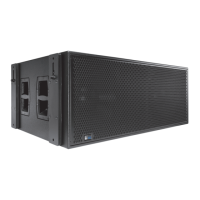
In addition to working as a standalone system, LEOPARD can
also be used as a supplemental fill loudspeaker in LEO-M and
LYON systems. Applications that require more low-
frequency headroom can use MeyerSound’s 1100-LFC,
which also integrates with LEOPARD systems.
Meyer Sound recommends driving LEOPARD systems with
the Galileo®GALAXYNetwork Platform, which provides
24 bit, 96kHz audio, matrix routing, alignment, and
processing for array components. To guarantee optimum
performance, use Meyer Sound’s MAPP™ System Design
Tool to design LEOPARD systems, as this tool effectively
anticipates system SPL and coverage requirements, and also
helps verify rigging load ratings.
LEOPARD and 900-LFC loudspeakers work with Meyer
Sound’s RMS™ remote monitoring system, which provides
comprehensive monitoring of system parameters from a
Mac® or Windows®-based computer.
LEOPARD loudspeakers include Meyer Sound’s QuickFly®
rigging with captive GuideALinks™ that facilitate easy setting
of splay angles from 0.5° to 15°. Rigging options include the
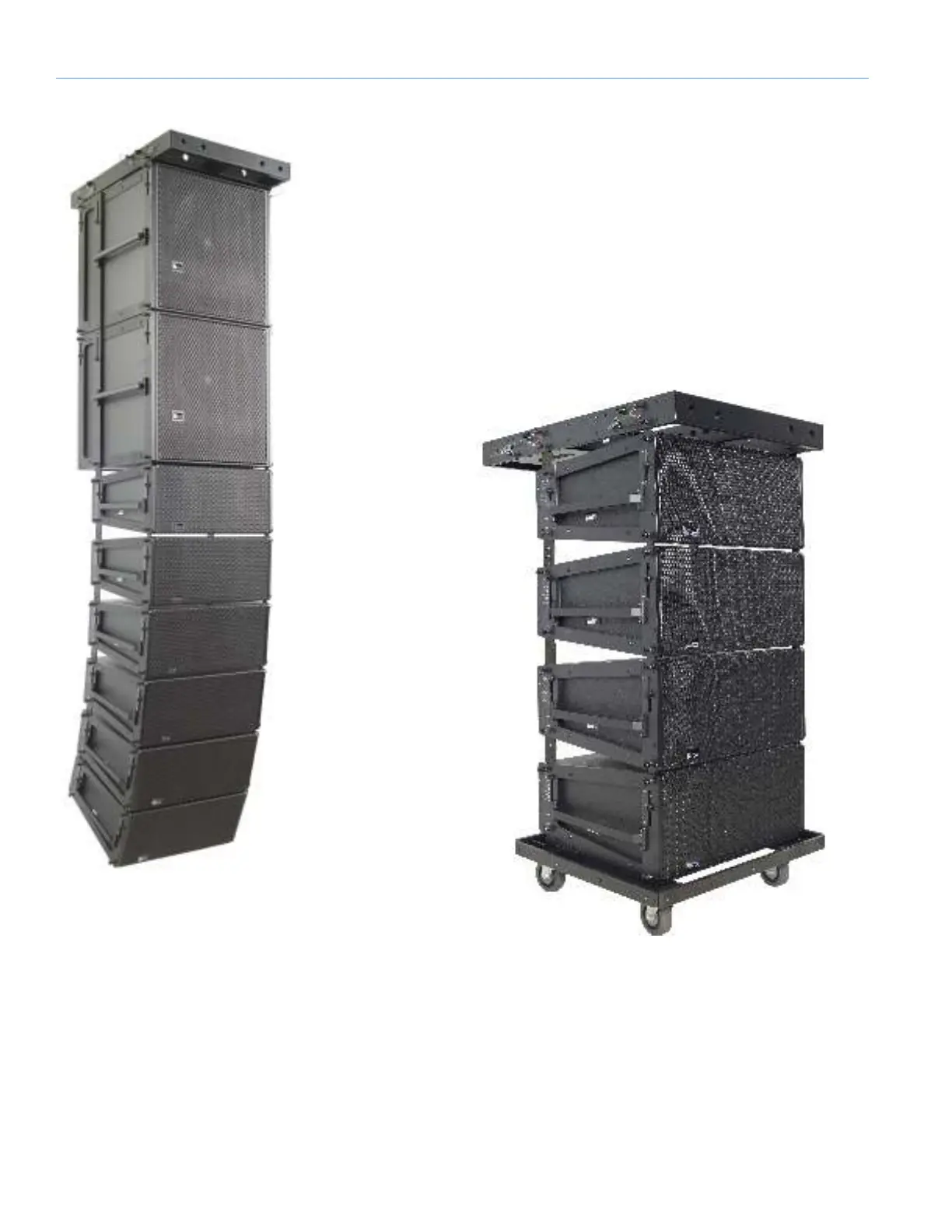
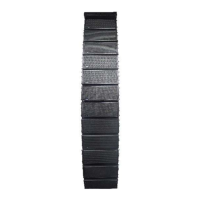
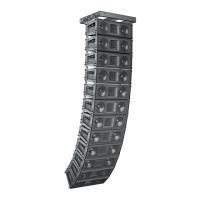
MG-LEOPARD/900 multipurpose grid (Figure 1),
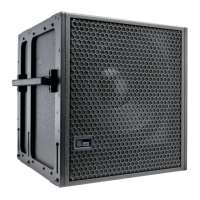
MCF-LEOPARD caster frame (Figure 2), PBF-LEOPARD pull-
back frame, and MTF-LYON/LEOPARD transition frame.
Figure 1: MG-LEOPARD/900 Multipurpose Grid with Mixed Array
Figure 2: MCF-LEOPARD Caster Frame with LEOPARD Stack



 To Next Page