6
Small Tinderbox
Multifuel
Medium Tinderbox
Multifuel
Large Tinderbox
Multifuel
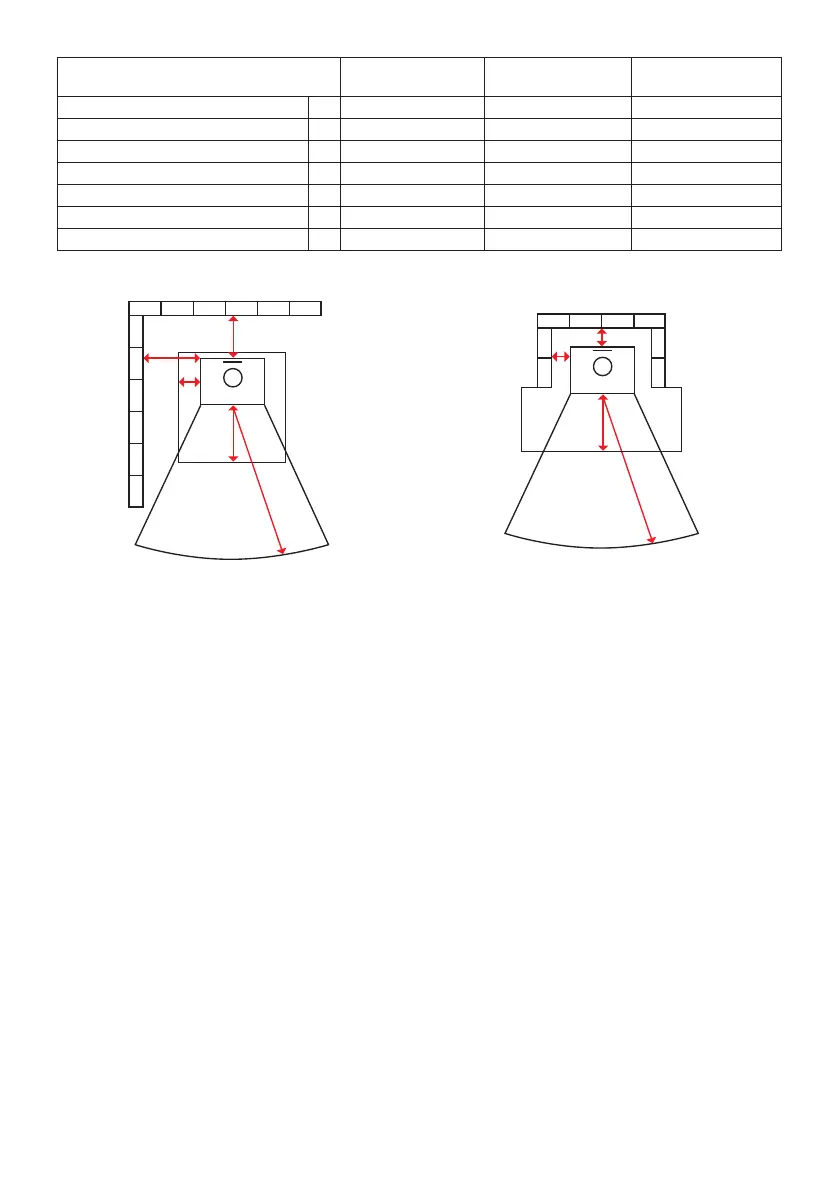
Back wall (Combustibles) A 350mm 450mm 500mm
Side Wall (Combustibles) B 600mm 600mm 600mm
Hearth Projection front C 300mm 400mm 400mm
Hearth Projection Side D 150mm 150mm 150mm
Back Wall (Non-Combustibles) E 50mm 50mm 50mm
Side Wall (Non-Combustibles) F 75mm 75mm 75mm
Distance to furniture (front) G 1075mm 1075mm 1075mm
Recommended distances to combustibles Recommended distances to non-combustibles
2.3 FLUE REQUIREMENTS
Please ensure that all local rules and regulations
are complied with, including CE marking of the
flue pipe. Additionally, distance requirements
to flammable material for the pipe must be
respected.
The optimum combustion is achieved at a constant
chimney draft of 10-14 Pascal (Pa) measured in the
flue pipe above the stove. However, with natural
draft the draft in the chimney will be between 18-
25 Pa when conditions are optimum.
There are many factors that affect the chimney
draft, including the outside temperature, wind
strength, and surrounding buildings.
The minimum flue height requirement is 4.5
metres, if this cannot be achieved you will have
to seek the advice of a flue and chimney specialist
to carry out a BS EN13384 Chimney Calculation to
see if the chimney will work.
If the stove is being fitted into a brick chimney or
clay / concrete chimney it must be swept before
installation and checked for soundness and
suitability.
A
B
D
C
G
C
G
F
E
The chimney must also be free from cracks and
blockages. We advise you take the advice of a
registered chimney sweep on this matter.
In all cases we recommend the use of a stainless
steel MI-Flex liner when retro fitting into an
existing fire place, as this will help give you the
optimal flue draft required to operate your stove
correctly.
If the stove is fitted in place of an open fire and
no flue liner is fitted then the chimney should be
swept one month after installation to clear any
soot falls which may have occurred due to the
difference in combustion between the stove and
the open fire.
The connection to the existing chimney can be
made with CE marked BS EN 1856-2 connecting
pipe made from vitreous enamel or 316 stainless
steel with a minimum thickness of 0.6mm.
If no chimney is present the use of an EN1856-part
1 chimney system is required. Example:- MI-Flues
TWPro.
The chimney and connecting flue pipe must not
narrow to less than the size of the outlet socket of
the stove at any point.


 To Next Page