–
Where ducting is horizontal, it must
be laid to slope away at at least 1 cm
per metre. This is to ensure that
condensate cannot drain back into
the rangehood.
–
If the exhaust air is to be ducted into
the open air, the installation of a
telescopic wall vent or roof vent
(available as an optional accessory)
is recommended.
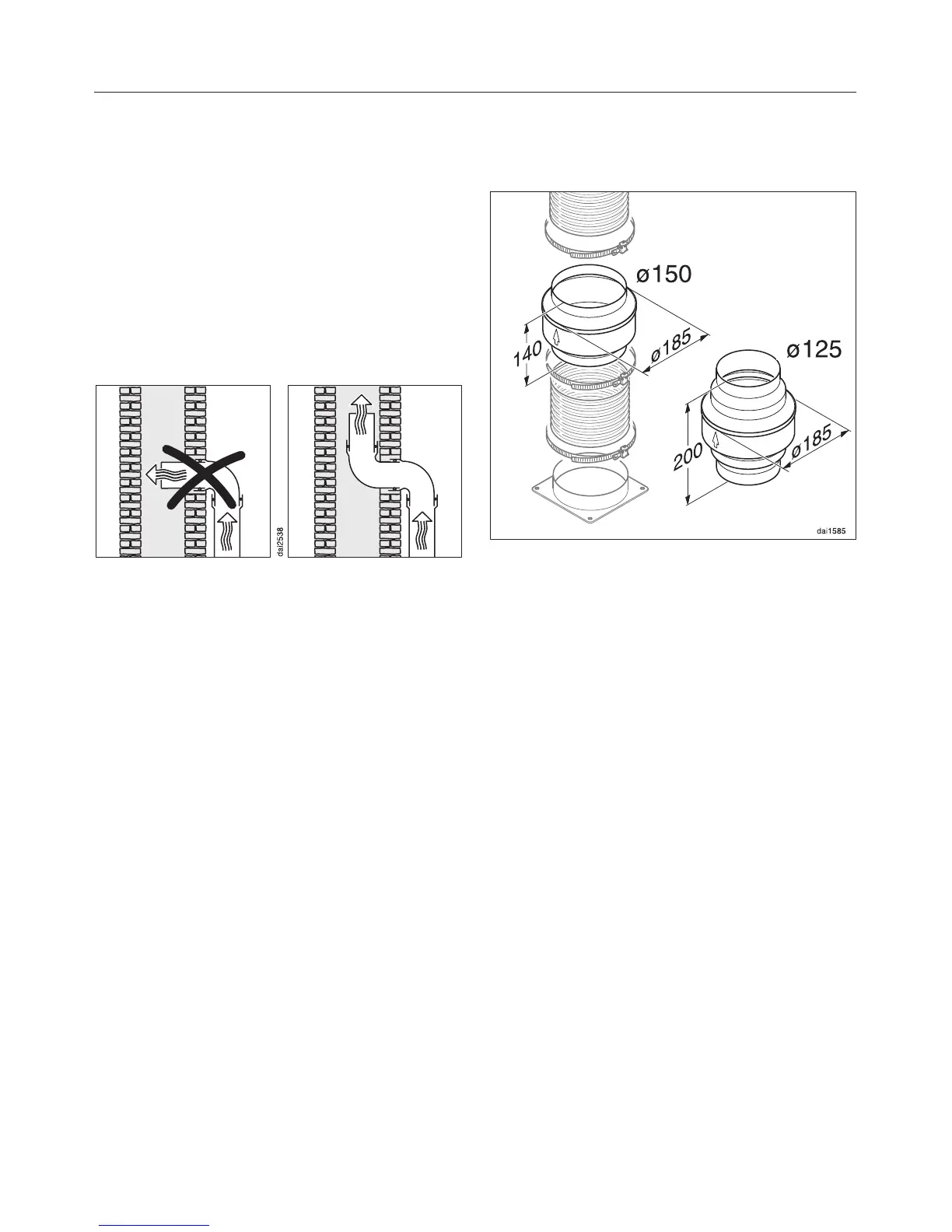
– If the exhaust air is to be ducted into
a vent flue, the ducting must be
directed in the flow direction of the
flue.
Important:
If the exhaust ducting is to run through
rooms, ceiling space etc. where there
may be great variations in temperature
between the different areas, the
problem of condensation will need to
be addressed. The exhaust ducting will
need to be suitably insulated.
Condensate trap
(optional accessory)
For installations in areas where the
exhaust ducting is exposed to cold
temperatures, we recommend
insulating the exhaust ducting and
installing a condensate trap to collect
and evaporate any condensate which
may occur. Condensate traps are
available for C 125 mm or C 150 mm
ducting.
When installing a condensate trap,
ensure that it is positioned vertically
and, if possible, directly above the
exhaust connection. The arrow on the
housing indicates the direction of
air-flow.
rangehoods designed for use with an
external motor (...EXT models) have an
integrated condensate trap.
Connection for air extraction
28


 To Next Page