EasyManua.ls Logo

Miller Electric 185 - User Manual

Miller Electric 185
56 pages
Print Icon
To Next Page IconTo Next Page
Loading...
ESPAÑOL
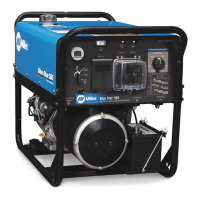
Blue Star 185
Blue Star 185 DX
Processes
Description
Stick (SMAW) Welding
Engine Driven Welding Generator
OM-4415 209 416F
200705
File: Engine Drive
Visit our website at
www.MillerWelds.com
ENGLISH

Table of Contents

Questions and Answers

  • J
    Jonathan GlassAug 20, 2025
    What to do if I have no weld output or generator power at AC receptacles with my Miller Electric 185 Welding Accessories?
    • A
      Anthony GeorgeAug 20, 2025
      First, ensure all equipment is disconnected from the receptacles when starting the unit. If the issue persists, it is recommended to have a Factory Authorized Service Agent inspect components such as brushes, slip rings, rotor, stator, integrated rectifier SR2, and Weld Output control R1.
  • A
    Alyssa YatesAug 22, 2025
    What to do if I have erratic output at generator power AC receptacles with my Miller Electric 185 Welding Accessories?
    • A
      Aaron MurphyAug 22, 2025
      First, check the fuel level. Also, inspect the receptacle supplementary protector(s), wiring, and connections. Ensure the throttle linkage operates smoothly without binding. Service the air cleaner as detailed in the engine manual. Finally, verify and adjust the engine speed if needed.
  • J
    Joel EatonAug 25, 2025
    Why is the engine stopping during normal operation of my Miller Electric 185?
    • M
      Michael RamirezAug 25, 2025
      The engine may stop during normal operation due to a low fuel level or low oil level. Check the fuel level and add fuel as needed. Also, check the oil level, as the engine will stop if it's too low.
  • S
    Sabrina DickersonAug 26, 2025
    What to do if I have erratic weld output with my Miller Electric 185?
    • D
      Dr. Terry GordonAug 26, 2025
      First, check the Weld Output control setting. Ensure connections to the electrode and workpiece are tight and clean. If Stick welding, use dry, properly-stored electrodes. Remove any excessive coils from the weld cables. Clean and tighten connections both inside and outside the welding generator. Check the engine speed and adjust if necessary. Lastly, inspect the throttle/governor linkage for smooth operation.
  • M
    Max BrewerAug 28, 2025
    Why won't the engine start on my Miller Electric Welding Accessories?
    • R
      Ryan IngramAug 28, 2025
      The engine may fail to start due to several reasons. Begin by checking the fuel level. Ensure the choke control is in the correct position and the fuel valve is open. If it is a DX model, check the battery voltage and connections. Also, verify the oil level, as the engine will not start if it is too low.
  • S
    Steven Scott MDAug 30, 2025
    What to do if I have low weld output on my Miller Electric 185 Welding Accessories?
    • M
      Miss Maria MartinezAug 30, 2025
      First, check the Weld Output control setting. Next, verify the engine speed and adjust it if needed. Service the engine air cleaner. Check the weld cable size and length. If problems persist, have a Factory Authorized Service Agent check the Weld Output control R1, stator, integrated rectifier SR2, stabilizer DC-Z, main rectifier SR1, and reactor AC-Z.
  • Y
    ycowanSep 1, 2025
    What to do if I have no weld output but generator power is okay at AC receptacles with my Miller Electric Welding Accessories?
    • M
      Michelle GordonSep 1, 2025
      Check the Weld Output control setting and the weld connections. If the issue persists, have a Factory Authorized Service Agent check the Weld Output control R1, stator, integrated rectifier SR2, stabilizer DC-Z, main rectifier SR1, and reactor AC-Z.
  • I
    isaacreedSep 3, 2025
    What to do if I have unstable or sluggish engine speeds with my Miller Electric 185?
    • A
      Amy SchroederSep 3, 2025
      Check the engine speed and adjust if necessary. Also, check the throttle/governor linkage for smooth, non-binding operation. Finally, tune-up the engine according to the engine manual.
  • D
    Dr. William KaneSep 4, 2025
    What causes high weld output in Miller Electric 185?
    • R
      Robert HernandezSep 5, 2025
      High weld output can be caused by incorrect settings. Check the Weld Output control setting and the engine speed, adjusting as necessary.
  • E
    Elizabeth GomezSep 7, 2025
    What to do if I have high output at generator power AC receptacles on my Miller Electric Welding Accessories?
    • E
      Earl BrownSep 7, 2025
      Check the engine speed, and adjust if necessary.

Summary

Safety Precautions

Symbol Usage

Explains symbols used to indicate hazards and precautions within the manual.

Arc Welding Hazards

Covers electric shock and contact hazards associated with arc welding processes.

Fumes and Gases Hazards

Warns about welding fumes/gases, emphasizing ventilation and respiratory protection.

Gas Buildup Hazards

Alerts to dangers of gas buildup, requiring ventilation or respirators.

Arc Rays Hazards

Describes risks of arc rays causing burns to eyes/skin, and the need for protective gear.

Fire and Explosion Hazards

Details fire/explosion risks from welding, flammables, and containers.

Noise Hazards

Notes that noise can damage hearing and advises ear protection.

Magnetic Fields and Medical Devices

Warns about magnetic fields affecting implanted medical devices.

Cylinder Explosion Hazards

Details risks associated with compressed gas cylinders.

Engine Hazards

Covers battery, fuel, moving parts, hot parts, steam, and exhaust hazards.

Generator Indoor Use Hazard

Crucial warning against deadly carbon monoxide from indoor generator use.

Compressed Air Hazards

Addresses breathing, injury, and pressure risks from compressed air.

Installation, Operation, Maintenance Hazards

Covers fire, falling unit, overheating, sparks, moving parts, static, and trailer hazards.

HF Radiation and Arc Welding Interference

Explains HF interference with electronics and arc welding interference.

California Proposition 65 Warnings

Warns about engine exhaust and battery components causing cancer/birth defects.

Principal Safety Standards

Lists key safety standards and organizations for welding and cutting.

EMF Information

Discusses electromagnetic fields (EMF) and advice for minimizing exposure.

Definitions and Specifications

Symbol Definitions

Defines symbols used for controls and indicators within the manual.

Weld, Power, and Engine Specifications

Details welding output, generator power, and engine specifications.

Dimensions, Weights, and Angles

Provides physical specifications and safe operating angle limits for the equipment.

Duty Cycle Information

Explains duty cycle percentages and warns against exceeding limits.

Volt-Ampere Curves

Illustrates generator voltage/amperage output capabilities.

Fuel Consumption Curves

Shows fuel usage rates for welding and auxiliary power based on load.

Generator Power Curves

Displays AC generator power availability at different voltage settings.

Installation

Installing the Welding Generator

Covers unit placement, airflow clearance, and secure fastening for transport.

Grounding the Generator Frame

Details grounding the generator frame to the vehicle for safety.

Grounding for Building Systems

Explains grounding procedures for supplying power to buildings according to codes.

Engine Prestart Checks (Standard Model)

Lists essential daily checks for engine fluids and fuel valve operation.

Engine Prestart Checks (DX Model)

Outlines prestart checks specific to the DX model, including fuel and oil.

Connecting the Battery (DX Models)

Provides instructions and safety warnings for connecting the battery on DX models.

Weld Cable Connections

Details correct weld cable connection to prevent damage and hazards.

Selecting Weld Cable Sizes

Guide for choosing appropriate weld cable sizes based on amperage and length.

Operation

Controls Overview (Standard Models)

Identifies and illustrates the main controls for the standard model generator.

Standard Model Control Descriptions

Explains the function of each control on the standard model, including starting.

Controls Overview (DX Models)

Identifies and illustrates the main controls for the DX model generator.

DX Model Control Descriptions

Details functions of controls specific to the DX model, including run/idle switch.

Auxiliary Equipment Operation

Generator Power Panel Receptacles

Describes power panel receptacles, ratings, and protective devices.

Maintenance

Routine Maintenance Schedule

Outlines a schedule for routine maintenance tasks based on operating hours.

Servicing the Air Cleaner

Provides instructions for cleaning and maintaining the air cleaner element.

Adjusting Engine Speed (Honda)

Explains how to adjust engine speed for weld/power and idle on Honda engines.

Adjusting Engine Speed (Kohler)

Explains how to adjust engine speed for weld/power and idle on Kohler engines.

Troubleshooting

Welding Output Troubleshooting

Lists common welding output problems and their remedies.

Generator Power Troubleshooting

Addresses issues with generator power output and their solutions.

Engine Troubleshooting

Covers engine starting, running, and battery problems with fixes.

Parts List

Recommended Spare Parts

Lists essential spare parts for maintenance and common replacements.

Electrical Diagrams

Generator Power Guidelines

Selecting Equipment for Generator Use

Guides on choosing equipment and understanding grounding requirements.

Grounding Generator to Vehicle Frame

Details proper grounding procedures for generators mounted on vehicles.

Grounding for Building Systems

Explains grounding procedures for supplying power to buildings.

Equipment Power Requirements

How to calculate power needs for various electrical equipment.

Industrial Motor Power Requirements

Lists power needs for various industrial motors.

Farm;Home Equipment Power Needs

Lists power needs for common farm and home equipment.

Contractor Equipment Power Needs

Lists power needs for various contractor tools and equipment.

Motor Starting Power Requirements

Explains how to calculate starting amperage for single-phase motors.

Generator Power Supply Limits

Manages generator load limits, especially for motor starting.

Standby Power Connections

Shows typical connections for supplying standby power to buildings.

Selecting Extension Cords

Provides guidelines for choosing appropriate extension cords.

Stick Welding Guidelines

Stick Welding Procedure

Details the steps and safety precautions for performing stick welding.

Electrode and Amperage Selection

Chart for choosing electrodes and amperage settings for various welding conditions.

Arc Starting Techniques

Explains scratch start and tapping techniques for initiating a welding arc.

Weld Bead Characteristics

Groups poor and good weld bead characteristics, and shape factors.

Weld Joint Types

Illustrates and describes different types of butt, lap, and tee joints.

Weld Troubleshooting

Groups issues like porosity, spatter, fusion, penetration, and burn-through.

Weld Troubleshooting (Continued)

Covers troubleshooting for incomplete fusion, lack of penetration, and excessive penetration.

Weld Troubleshooting (Final)

Addresses troubleshooting for burn-through, waviness, and distortion.

Warranty Information

Miller True Blue Limited Warranty

Details the terms, conditions, and exclusions of the limited warranty.

Miller Electric 185 Specifications

General IconGeneral
BrandMiller Electric
Model185
CategoryWelding Accessories
LanguageEnglish

Related product manuals