User Instructions - English
9
5.3 Cleaning and Storage
Basic care of all Miller Fall Protection equipment will prolong the durable life of the unit and will
contribute toward the performance of its vital safety function. Proper storage and maintenance after
use are as important as cleansing the equipment of dirt, corrosives, or contaminants. Storage areas
should be clean, dry and free of exposure to fumes or corrosive elements. Wipe off all surface dirt
with a sponge dampened in plain water. Squeeze the sponge dry. Dip the sponge in a mild solution
of water and commercial soap or detergent. Work up a thick lather, with a vigorous back and forth
motion. Then wipe dry with a clean cloth. Hang freely to dry, but away from excessive heat, steam,
or long periods of sunlight.
5.4 Life Expectancy of Miller Brand Lanyards
ItisthepositionofMillerFallProtection(MFP)tousea5-yearlifeexpectancyfromdateofrst
use as a guideline on all lanyards. MFP provides this recommendation as a general guideline,
and is not to be used in lieu of the lanyard inspection section of this manual. This guideline only
applies to product exhibiting no visual damage and that has not been exposed to chemicals,
abnormal heat, or excessive ultra-violet light. It is possible that the equipment will last longer
depending on the care and use the equipment may see.
Following these instructions may still necessitate removing the lanyard from service prior to the
expirationoftheve-yearlifeexpectancyguideline.Likewise,properadherencetotheinspection
andmaintenancecriteriamayextendtheusefullifebeyondveyears.Ultimately,itisthe
responsibilityoftheauthorizedperson/usertodeterminewhenalanyardisuntforuseandshould
be removed from service. Products removed from service should be disposed of in a manner that
prevents inadvertent further use.
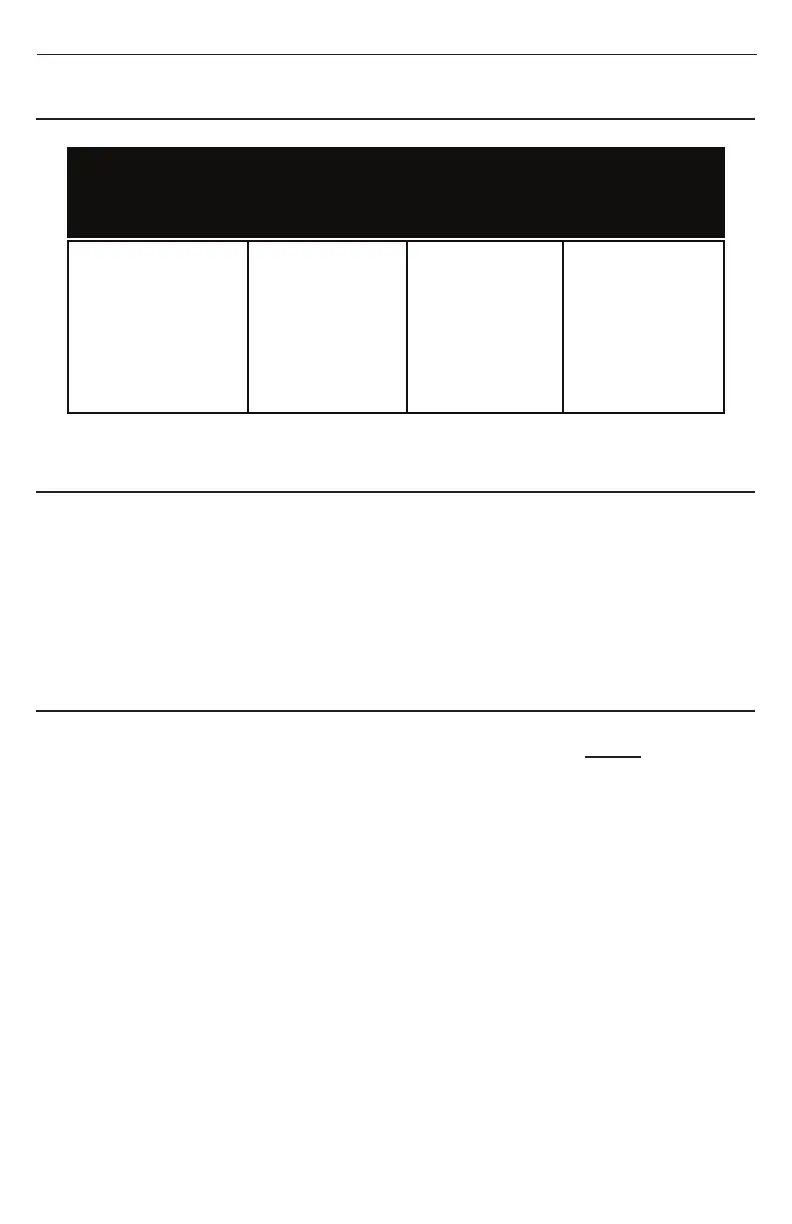
HEAT
CHEMICAL
MOLTEN
METAL OR
FLAME
PAINTS AND
SOLVENTS
Paint which penetrates
and dries restricts
movementofbers.
Drying agents and
solvents in some
paints will appear as
chemical damage.
In excessive heat, rope/
webbing becomes brittle
and has a shriveled
brownish appearance.
Fibers will break when
exed.Shouldnotbe
used above 180°F.
Change in color
usually appearing as
a brownish smear or
smudge. Transverse
cracks when rope/
webbing is bent over
a mandrel. Loss of
elasticity in rope/
webbing.
Rope/webbing strands
fuse together. Hard
shiny spots. Hard and
brittle feel.
Contact Miller Technical Service Department at 800-873-5242 if you have any questions about the above chart.
5.2 Types of Material Damage


 To Next Page