page 8
Everyone in the area must wear protective
clothing and safety goggles or face shields.
Fatigued wires and residue will fly off the
brush with considerable force, causing the
potential for serious injuries.
WARNING!
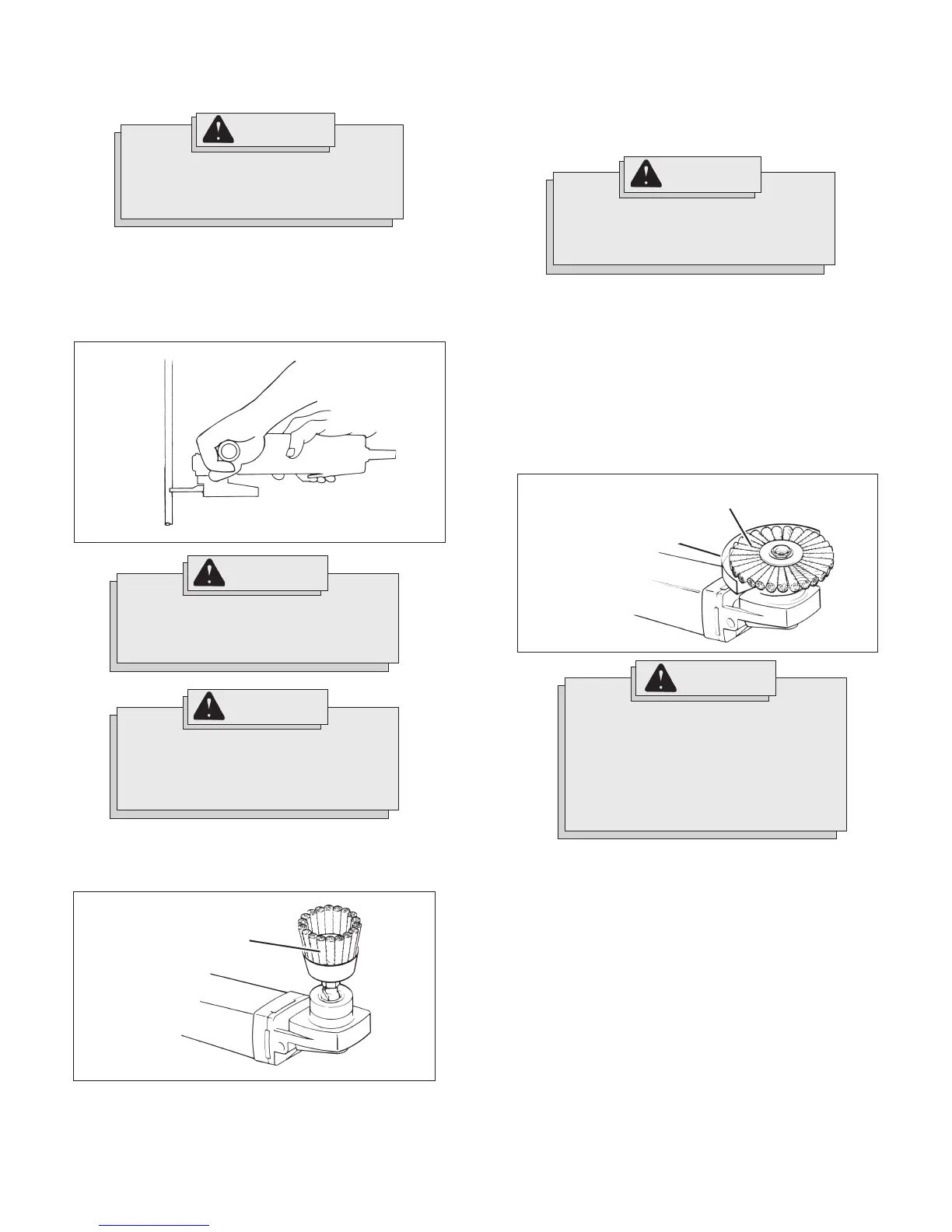
Using Cut-Off Wheels (Fig. 9)
Type “1” cut-off wheels are suited for small cut-off and shallow notch-
ing operations only.
Installing Wire Cup Brushes (Fig. 10)
1. Unplug tool and place it upside down on a level surface as shown.
Remove any accessories from spindle.
1. Firmly grasp body of tool and side handle before starting and while
using tool. Allow wheel to come to full speed before starting.
2. When using a cut-off wheel, hold sander/grinder as shown, using
only the edge of the wheel.
3. Control pressure and surface contact between disc and workpiece.
Too much pressure slows cutting speed.
Fig. 9
2. To install, thread wire cup brush onto spindle. Press the spindle lock
button while tightening brush with a 7/8" open end wrench (not
provided with tool).
3. To remove wire cup brush, unplug tool and reverse procedure.
Using Wire Wheel Brushes (Fig. 11)
Never exceed Maximum Safe Operating
Speed of brush. Do not use a damaged
brush or one which is functioning
improperly (throwing wires, out-of-
balance, etc.). These conditions
increase the possibility of further brush
failure and possible injury. Discard and
replace damaged brushes immediately.
WARNING!
Wire wheel brushes are useful for removing rust, scale, burrs, weld
slag, etc. A wide variety of wire brushes are available for many applica-
tions.
Test wire wheel brush for balance and loose or damaged wires by
running tool at no load speed for at least one minute before applying it to
your work. During this time, no one should stand in front of or in line with
it. When applying brush to work, avoid using too much pressure. This
causes over-bending of wires and heat build-up resulting in premature
wire breakage, rapid dulling and reduced brush life. Instead of using
more pressure, try a wire wheel brush with more aggressive cutting
action (increased wire size, decreased wire length or different brush
type, i.e., knot type instead of crimped wire type).
Using the face of a cut-off wheel (as in
grinding) will cause the wheel to crack
and break, resulting in serious personal
injury.
WARNING!
A Type “1” guard must be installed when
using a cut-off wheel to provide
maximum protection for the operator if
the wheel should break.
WARNING!
Because the wires on wire wheel
brushes are directed towards the op-
erator, a guard must be used to protect
the operator when fatigued wires break.
WARNING!
Wire wheel brush
Fig. 11
guard
Fig. 10
Wire cup brush


 To Next Page