page 6
Controlling Trigger Speed
Pressing the trigger will produce various speeds from 0 to 3 100 strokes
per minute. The further the trigger is pressed, the greater the speed.
Locking Trigger
The trigger lock button allows tool to run continuously at maximum preset
speed.
1. To engage the lock button, squeeze the trigger as far as possible,
and push in the lock button.
2. While holding in the lock button, release the trigger. The trigger will
lock in place.
3. To release the lock button, squeeze the trigger until the lock button
pops out.
Cutting from Edge
1. Hold saw firmly, allowing shoe to rest on workpiece without making
blade contact.
2. Line up blade with line of cut, squeeze trigger and advance saw.
3. For best results, maintain firm, downward pressure, keeping shoe
on workpiece. Use just enough forward pressure to advance blade
into work. Forcing cut will not increase cutting speed and may dam-
age blade or tool.
Blind Cutting
Blind cutting is done where the back of the surface is not visible. Always
check for hidden hazards such as electrical wiring or water pipes that
may cause fire or electrical shock. Either have these hazards removed
by a qualified person or avoid the area. Always hold your tool by insulated
surfaces.
Pocket Cutting
Pocket cuts are made in the middle of a workpiece.
1. Use the same precautions as in blind cutting.
2. Drill starting hole in scrap area. Insert the blade through the hole and
begin the cut.
An alternate method to pocket cutting is plunge cutting.
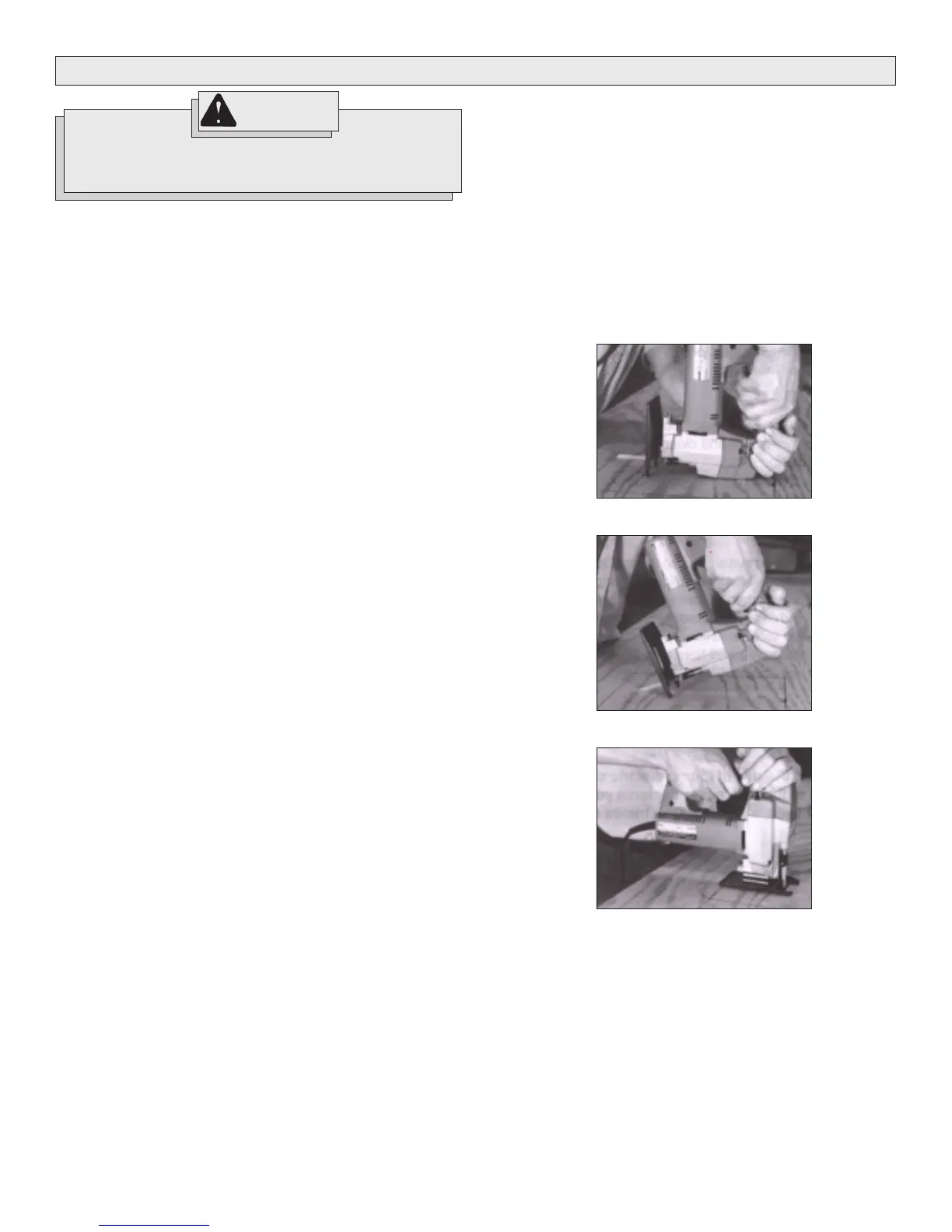
Plunge Cutting (Fig. 3, 4, 5)
Plunge cuts are only made in wood and are begun in the middle of
workpiece without a starting hole. Use same precautions as in blind
cutting.
1. Keep power cord out of cutting area. Hold tool firmly by insulated
surfaces.
2. Place front edge of shoe solidly on workpiece with blade above
scrap or cut-out area (Fig. 3).
3. Using front edge of shoe as pivot, squeeze trigger and gradually
lower blade into workpiece (Fig. 4).
4. When blade has completely penetrated material, complete cut in
usual manner (Fig. 5).
Fig. 3
Fig. 4
Fig. 5
OPERATION
WARNING!
To reduce the risk of injury, wear safety goggles or glasses
with side shields. Unplug the tool before changing accesso-
ries or making adjustments.


 To Next Page