6
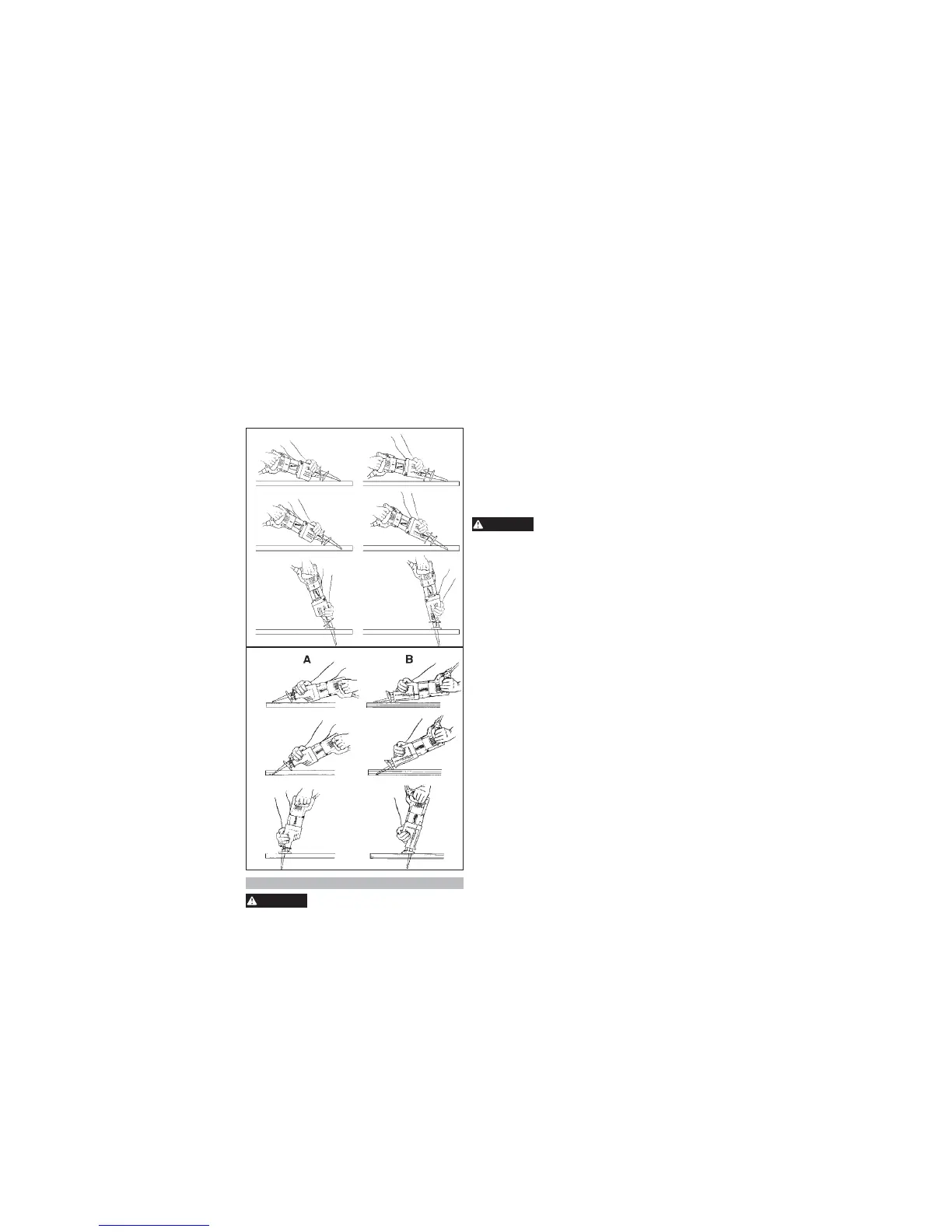
ward, hold the tool as shown in Column A, resting
the edge of the shoe on the workpiece.
If you inserted the blade with the teeth facing upward,
hold the tool as shown in Column B, resting the edge
of the shoe on the workpiece as shown.
2. With the blade just above the workpiece, pull the
trigger. Using the edge of the shoe as a pivot, lower
the blade into the workpiece as shown.
3. As the blade starts cutting, raise the handle of the
tool slowly until the shoe rests fi rmly on the work-
piece. Then guide the tool along your cutting line to
acquire the desired cut.
NOTE: To make plunge cutting easier, use a heavy
gauge blade and install the blade with the teeth facing
upward as shown in Column B.
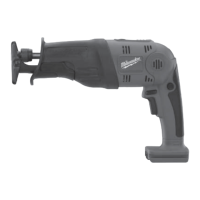
Cat. No.
6523-21
A
B
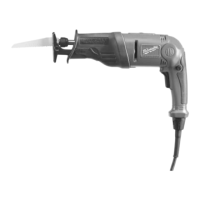
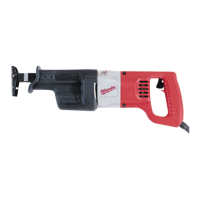
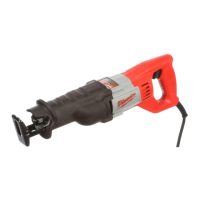
Cat. No.
6520-21
6536-21
6538-21
MAINTENANCE
WARNING
To reduce the risk of injury, always
unplug the tool before attaching or
removing accessories. Use only specifi cally recom-
mended accessories. Others may be hazardous.
Maintaining Tools
Keep your tool in good repair by adopting a regular
maintenance program. Before use, examine the gen-
eral condition of your tool. Inspect guards, switches,
tool cord set and extension cord for damage. Check
for loose screws, misalignment, binding of moving
parts, improper mounting, broken parts and any other
condition that may affect its safe operation. If abnormal
noise or vibration occurs, turn the tool off immediately
and have the problem corrected before further use. Do
not use a damaged tool. Tag damaged tools “DO NOT
USE” until repaired (see “Repairs”).
Under normal conditions, relubrication is not necessary
until the motor brushes need to be replaced. After six
months to one year, depending on use, return your
tool to the nearest MILWAUKEE service facility for
the following:
• Lubrication
• Brush inspection and replacement
• Mechanical inspection and cleaning (gears, spindles,
bearings, housing, etc.)
• Electrical inspection (switch, cord, armature, etc.)
• Testing to assure proper mechanical and electrical
operation
WARNING
To reduce the risk of personal injury,
electric shock and damage, never
immerse your tool in liquid or allow a liquid to fl ow
inside them.
Cleaning
Clean dust and debris from vents. Keep handles
clean, dry and free of oil or grease. Use only mild
soap and a damp cloth to clean, since certain clean-
ing agents and solvents are harmful to plastics and
other insulated parts. Some of these include gasoline,
turpentine, lacquer thinner, paint thinner, chlorinated
cleaning solvents, ammonia and household deter-
gents containing ammonia. Never use fl ammable or
combustible solvents around tools.
Repairs
If your tool is damaged, return the entire tool to the
nearest service center.
Rely only on high-grade power tools on our virtual shelves.




 To Previous Page