EasyManua.ls Logo

Mitsubishi Electric FR-E520S - User Manual

Mitsubishi Electric FR-E520S
248 pages
Print Icon
To Next Page IconTo Next Page
Loading...
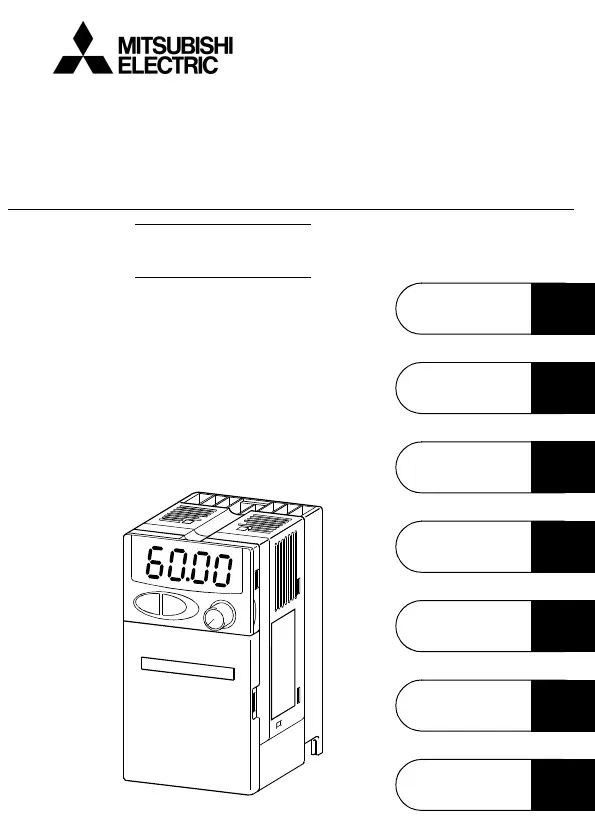
TRANSISTORIZED INVERTER
FR-E
500
INSTRUCTION MANUAL
HEAD OFFICE:MITSUBISHI DENKI BLDG MARUNOUCHI TOKYO 100-8310
FR-E
500
TRANSISTORIZED INVERTER
INSTRUCTION MANUAL
OUTLINE
Chapter 1
INSTALLATION
AND WIRING
Chapter 2
OPERATION/
CONTROL
Chapter 3
PARAMETERS
Chapter 4
PROTECTIVE
FUNCTIONS
Chapter 5
MAINTENANCE/
INSPECTION
Chapter 6
SPECIFICATONS
Chapter 7
FR-E520-0.1K to 7.5K(C)
FR-E540-0.4K to 7.5K(C)
FR-E520S-0.1K to 0.75K
FR-E510W-0.1K to 0.75K
HIGH PERFORMANCE
&
HIGH FUNCTION
IB(NA) 66813-F (0307) MDOC Printed in Japan Specifications subject to change without notice.

Table of Contents

Questions and Answers

Summary

CHAPTER 1 OUTLINE

1.1 Pre-Operation Information

Provides essential information and checks before operating the inverter.

1.2 Basic Configuration

Overview of essential devices for inverter operation and their roles.

1.3 Structure

Detailed view of the inverter's physical components and layout.

CHAPTER 2 INSTALLATION AND WIRING

2.1 Installation

Guidelines for physically installing the inverter in its operating environment.

2.2 Wiring

Instructions for connecting the power supply, motor, and control signals.

2.3 Other Wiring

Additional wiring considerations like harmonics, noise, and leakage currents.

CHAPTER 3 OPERATION;CONTROL

3.1 Pre-Operation Information

Essential information and checks before starting inverter operation.

3.2 About the Operation Panel

Explanation of the operation panel's keys, indicators, and display functions.

3.3 Operation

Details on different operation modes and how to perform them.

CHAPTER 4 PARAMETERS

4.1 Parameter List

Comprehensive list of parameters classified by function and purpose.

4.2 Parameter Function Details

Detailed explanation of individual parameter functions and their settings.

CHAPTER 5 PROTECTIVE FUNCTIONS

5.1 Errors (Alarms)

Information on inverter errors, alarm indications, and definitions.

5.2 Troubleshooting

Guidance on diagnosing and resolving common inverter operational issues.

CHAPTER 6 MAINTENANCE;INSPECTION

6.1 Precautions for Maintenance and Inspection

Essential safety precautions and guidelines before performing maintenance.

6.1.2 Check items

Daily and periodic checks for maintaining inverter performance and safety.

6.1.4 Insulation resistance test using megger

Procedure for testing insulation resistance of the inverter's main circuit.

6.1.6 Daily and periodic inspection

Detailed inspection checklist for routine maintenance and periodic checks.

6.1.7 Replacement of parts

Guidelines and procedures for replacing user-replaceable components like cooling fans.

CHAPTER 7 SPECIFICATIONS

7.1 Standard Specifications

Technical data and specifications for different inverter models.

7.1.2 Common specifications

General specifications applicable across various inverter models.

APPENDIX

APPENDIX 1 Instruction Code List

Reference list of instruction codes used for computer link communication.

APPENDIX 2 When using the communication option. (400 V class only)

Supplementary information for using communication options with 400V class inverters.

Summary

CHAPTER 1 OUTLINE

1.1 Pre-Operation Information

Provides essential information and checks before operating the inverter.

1.2 Basic Configuration

Overview of essential devices for inverter operation and their roles.

1.3 Structure

Detailed view of the inverter's physical components and layout.

CHAPTER 2 INSTALLATION AND WIRING

2.1 Installation

Guidelines for physically installing the inverter in its operating environment.

2.2 Wiring

Instructions for connecting the power supply, motor, and control signals.

2.3 Other Wiring

Additional wiring considerations like harmonics, noise, and leakage currents.

CHAPTER 3 OPERATION;CONTROL

3.1 Pre-Operation Information

Essential information and checks before starting inverter operation.

3.2 About the Operation Panel

Explanation of the operation panel's keys, indicators, and display functions.

3.3 Operation

Details on different operation modes and how to perform them.

CHAPTER 4 PARAMETERS

4.1 Parameter List

Comprehensive list of parameters classified by function and purpose.

4.2 Parameter Function Details

Detailed explanation of individual parameter functions and their settings.

CHAPTER 5 PROTECTIVE FUNCTIONS

5.1 Errors (Alarms)

Information on inverter errors, alarm indications, and definitions.

5.2 Troubleshooting

Guidance on diagnosing and resolving common inverter operational issues.

CHAPTER 6 MAINTENANCE;INSPECTION

6.1 Precautions for Maintenance and Inspection

Essential safety precautions and guidelines before performing maintenance.

6.1.2 Check items

Daily and periodic checks for maintaining inverter performance and safety.

6.1.4 Insulation resistance test using megger

Procedure for testing insulation resistance of the inverter's main circuit.

6.1.6 Daily and periodic inspection

Detailed inspection checklist for routine maintenance and periodic checks.

6.1.7 Replacement of parts

Guidelines and procedures for replacing user-replaceable components like cooling fans.

CHAPTER 7 SPECIFICATIONS

7.1 Standard Specifications

Technical data and specifications for different inverter models.

7.1.2 Common specifications

General specifications applicable across various inverter models.

APPENDIX

APPENDIX 1 Instruction Code List

Reference list of instruction codes used for computer link communication.

APPENDIX 2 When using the communication option. (400 V class only)

Supplementary information for using communication options with 400V class inverters.

Mitsubishi Electric FR-E520S Specifications

General IconGeneral
SeriesFR-E500
Overload Capacity150% for 60 seconds
Enclosure RatingIP20
TypeGeneral-purpose inverter
Output Voltage200-240V AC, 3-phase
Control MethodV/F control
Frequency Range400 Hz
Communication OptionsRS-485
ProtectionOvervoltage, undervoltage, overcurrent, overload
Cooling MethodFan cooling
Operating Temperature-10 to +50°C
Storage Temperature-20 to +65 °C
Humidity5 to 95% (non-condensing)
AltitudeUp to 1000 m (3300 ft) above sea level

Related product manuals