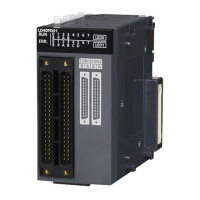
The MELSEC-L CC-Link System Master/Local Module, including models L26CPU-BT, L26CPU-PBT, and LJ61BT11, is a programmable controller component designed for high-speed, distributed control systems. It enables communication between a CPU module and various distributed modules such as I/O modules and intelligent function modules via dedicated CC-Link cables.
Function Description:
The module serves as either a master or local station within a CC-Link network, supporting both Ver.1 and Ver.2 compatible device stations. It facilitates two primary types of data transmission:
-
Cyclic Transmission: This function allows for the periodic exchange of data among stations using link devices (RX, RY, RWw, and RWr).
- Remote I/O Station Communication: Handles bit data (ON/OFF information) using remote input (RX) and remote output (RY).
- Remote Device Station Communication: Manages both bit and word data. Handshaking signals (e.g., initial request, error flags) are communicated via RX and RY, while setting data (e.g., positioning start number, present feed value) uses remote registers (RWw and RWr).
- Local Station Communication: Enables N:N mode data communication between programmable controller CPUs using bit data (RX, RY) and word data (RWw, RWr).
- Intelligent Device Station Communication: Exchanges bit and word data, with handshaking signals using RX and RY, and numeric data using RWw and RWr.
-
Transient Transmission: This function allows for on-demand, one-to-one communication between a master station and device stations (local or intelligent device stations). It supports reading (G(P).RIRD) and writing (G(P).RIWT) operations to the buffer memory or CPU devices at any timing. Dedicated instructions (G(P).RIRCV, G(P).RISEND, G(P).RIFR, G(P).RITO, G(P).RLPASET, G(P).RDMSG) simplify programming for these transient transmissions.
System Reliability Features:
The module incorporates several features to enhance system reliability:
- Device Station Cut-off Function: Automatically disconnects faulty device stations (e.g., due to power off) to maintain data link among normal stations.
- Automatic Return Function: Reconnects device stations that recover from a data link disconnection.
- Data Link Status Setting: Allows configuration of data link behavior (stop/continue) in case of a master station CPU failure.
- Input Data Status Setting: Determines whether input data (RX) from a faulty station is cleared or held.
- Device Station Refresh/Compulsory Clear Setting: Configures whether output data (RY) to device stations is refreshed or forcibly cleared when the CPU module stops.
- Standby Master Function: Enables data link continuity by switching control to a standby master station if the primary master station fails. This also supports a master station duplex function.
- Block Guarantee of Cyclic Data: Ensures consistency of cyclic data for each device station, preventing separation of new and old data in 2-word units.
- Secured 32-bit Data: Guarantees the integrity of 32-bit data in remote registers (RWr/RWw) between the CPU and master/local station, provided access starts from an even address and is made in even points.
Handy Functions:
- Remote Device Station Initialization Procedure Registration: Simplifies initial settings for remote device stations, allowing them to be registered via programming tools or dedicated instructions.
- Event Issuance for Interrupt Program: Generates events for interrupt programs based on specified conditions (e.g., ON/OFF status of RX, RY, SB devices; match/mismatch of RWr, SW data; link scan completion), enabling high-speed processing.
- Automatic CC-Link Startup: Initiates CC-Link startup and data refresh automatically upon power-up, without requiring a program.
- Reserved Station Function: Prevents unconnected future device stations from being detected as faulty.
- Error Invalid Station Setting Function: Temporarily prevents powered-off device stations from being treated as faulty, allowing online module replacement without error detection.
- Scan Synchronous Function: Offers synchronous and asynchronous modes for link scan synchronization with the sequence scan, optimizing data transmission speed.
- Remote I/O Station Points Setting: Allows setting I/O points for remote I/O stations to 8, 16, or 32 points, saving refresh device points and link refresh time.
- Master Station Duplication Error Cancel Function: Cancels master station duplication errors without power cycling or CPU reset.
Technical Specifications:
- Transmission Speed: Selectable from 156 kbps, 625 kbps, 2.5 Mbps, 5 Mbps, and 10 Mbps.
- Maximum Overall Cable Distance: Varies with transmission speed (e.g., 1200m at 156kbps, 100m at 10Mbps).
- Connection Cable: Requires Ver.1.10 compatible CC-Link dedicated cables.
- Maximum Connected Stations (Master Station): Up to 64 stations.
- Number of Occupied Stations (Local Station): 1 to 4 stations, configurable via GX Works2.
- Maximum Link Points (Ver.1 mode): 2048 RX/RY points, 256 RWw/RWr points.
- Maximum Link Points (Ver.2 mode): 8192 RX/RY points, 2048 RWw/RWr points.
- Link Points per Station (Ver.1 mode): 32 RX/RY points (30 for local), 4 RWw/RWr points.
- Link Points per Station (Ver.2 mode): Up to 128 RX/RY points (126 for local), up to 32 RWw/RWr points.
- Communication Method: Broadcast polling.
- Encoding Method: NRZI.
- Transmission Path: Bus (RS-485).
- Error Control System: CRC (X16 + X12 + X5 + 1).
- I/O Points: 32 points (Intelligent 32 points assignment).
- 5V DC Internal Current Consumption: 0.46A (for LJ61BT11).
- Weight: 0.15kg (for LJ61BT11).
Usage Features:
- Parameter Setting: Parameters can be set via a programming tool (GX Works2) or dedicated instructions (G(P).RLPASET).
- System Configuration: Supports various configurations, including master/local modules, remote I/O stations, remote device stations, and intelligent device stations.
- T-Branch Connection: Allows flexible network topologies with specific cable length and station limits.
- Loop Test: Verifies correct cable connection and data linking status for all or specified device stations.
- CC-Link Diagnostics: Provides tools for host monitoring, other station monitoring, loop tests, transmission speed acquisition, status logging, and check sheet creation for troubleshooting.
- Buffer Memory: Stores data exchanged between the L series master/local module and the CPU, accessible via parameter settings or dedicated instructions.
Maintenance Features:
- LED Indicators: Provide visual status of data link, errors, and transmission speed for quick diagnosis.
- Error Codes: Detailed error codes are provided, accessible via GX Works2, to identify the cause of malfunctions.
- Status Logging: Records data link status of all stations, aiding in identifying causes and locations of intermittent problems.
- Check Sheet Creation: Generates check sheets for systematic troubleshooting using CC-Link troubleshooting guidance.
- H/W Information: Displays operating and setting states of modules, including function version and serial number.
- Data Backup/Restoration: Setting data of device stations can be backed up to and restored from the CPU module's SD memory card.

 Need help?
 General



 To Next Page