EasyManua.ls Logo

Mitsubishi Electric PAC-SIF051B-E - User Manual

Mitsubishi Electric PAC-SIF051B-E
70 pages
Print Icon
To Next Page IconTo Next Page
Loading...
English
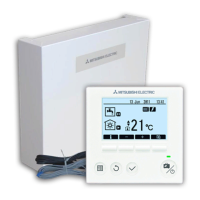
FLOW TEMP. CONTROLLER [MASTER] (Cased)
PAC-IF061B-E
PAC-IF062B-E
PAC-IF063B-E
FLOW TEMP. CONTROLLER [SLAVE] (Cased)
PAC-SIF051B-E
OPERATION MANUAL
For safe and correct use, please read this operation manual thoroughly before operating the FTC unit.
FOR USER
INSTALLATION MANUAL
For safe and correct use, read this manual thoroughly before installing the FTC unit.
FOR INSTALLER

Table of Contents

Other manuals for Mitsubishi Electric PAC-SIF051B-E

Questions and Answers

  • L
    Lisa StephensSep 15, 2025
    Why is my Mitsubishi Electric Temperature Controller water heating taking longer?
    • M
      Maurice ManningSep 15, 2025
      If water heating is taking longer than usual with your Mitsubishi Electric Temperature Controller, consider these possibilities: The heat pump may not be working. Check the heat pump – consult the outdoor unit service manual. The booster heater cut-out might have tripped. Check the booster heater thermostat and press the reset button if safe. The reset button is located on the side of the booster heater, covered with a white rubber cap. Also, the booster heater breaker could be tripped. Check the cause and reset if safe. Additionally, the immersion heater cut-out might have been triggered. Check the immersion heater thermostat and press the reset button located on the immersion heater boss, if safe. Finally, the immersion heater breaker could be tripped. Check the cause and reset if safe.
  • S
    Shawn MillerAug 25, 2025
    Why is my Mitsubishi Electric Controller heating system not reaching the set temperature?
    • K
      Kelly MyersAug 26, 2025
      If the heating system isn't reaching the set temperature, several factors could be at play. Check if 'Prohibit', a schedule timer, or holiday mode is active, and adjust settings accordingly. Ensure the temperature sensor is in a representative location. The heat pump may not be working. The booster heater cut-out may have tripped. The booster heater breaker (ECB1) may have tripped. The booster heater thermal cut-out may have tripped and cannot be reset using the manual reset button. The heat emitter may be incorrectly sized. There may be a 3-way valve failure. There may be a battery problem (*wireless control only). If a mixing tank is installed, the flow rate between the mixing tank and the heat exchanger may be less than that between the mixing tank and the local system.
  • C
    Courtney HamiltonAug 26, 2025
    Why has the water temperature in my Mitsubishi Electric Controller DHW tank dropped?
    • P
      pamelagriffinAug 26, 2025
      If the temperature of the DHW tank water has dropped, it could be due to water leakage in the pipes connecting to the DHW tank, loose or missing insulation, or a 3-way valve failure. Retighten the nuts holding the pipes onto the DHW tank, replace seal materials, or replace the pipes. Fix any loose insulation. Check the plumbing/wiring to the 3-way valve. Manually override 3-way valve using the main remote controller. Replace 3-way valve coil. Replace 3-way valve.
  • R
    robert11Sep 16, 2025
    What causes water to discharge from the pressure relief valve on a Mitsubishi Electric Temperature Controller?
    • A
      Annette WilliamsSep 16, 2025
      Water discharging from the pressure relief valve (primary circuit) on your Mitsubishi Electric Temperature Controller can indicate a few issues. If it's continual, the pressure relief valve itself might be damaged; turn the handle on the valve to check for foreign objects. If the problem persists, replace the valve. If the discharge is intermittent, the expansion vessel charge may have reduced or the bladder might be damaged; check the pressure in the expansion vessel and recharge to 1 bar if necessary. If the bladder is damaged, replace the expansion vessel.
  • C
    Christopher BeardSep 23, 2025
    Why does the heating mode on my Mitsubishi Electric Temperature Controller stay on standby for too long?
    • D
      Daniel LopezSep 23, 2025
      If the heating mode on your Mitsubishi Electric Temperature Controller remains on standby for an extended period and doesn't start smoothly, the “Delay” time set in the “Economy settings for pump” might be too short. Try increasing the time of “Delay” in the “Economy settings for pump”.
  • P
    perezmarkSep 8, 2025
    Why is the heat pump on my Mitsubishi Electric PAC-SIF051B-E turning on and off repeatedly?
    • E
      Eric PalmerSep 8, 2025
      If the heat pump is forced to turn ON and OFF, it is because the smart grid ready input (IN11 and IN12) is used, and switch-on and off commands are input.
  • E
    Elaine HarrisSep 8, 2025
    Why does error L6 occur frequently during DHW or LP mode after cooling on my Mitsubishi Electric PAC-SIF051B-E Controller?
    • J
      Jose BarnesSep 9, 2025
      If during DHW or LP mode following the cooling mode, error L6 (circulation water freeze protection) occurs and operation stops frequently, it is because the preset temperature below which the freeze stat. function is activated is low, error L6 is more likely to occur interruption operation before the freeze stat. function is activated. Adjust the preset temperature below which the freeze stat. function is activated.
  • S
    Steven BakerNov 23, 2025
    What to do if 'Please Wait' remains displayed on my Mitsubishi Electric PAC-SIF051B-E?
    • N
      Nancy ParksNov 23, 2025
      If the Mitsubishi Electric Controller displays 'Please Wait' for longer than 6 minutes, it indicates a potential communication failure. This could be between the main remote controller and the FTC (Main), or between the FTC (Main) and the outdoor unit. If “0%” or “50-99%” is displayed below 'Please Wait', there is a communication error between the main remote controller and the FTC (Main) control board. Check the wiring connections on the main remote controller. Consider replacing the main remote controller or the FTC (Main) control board. If “1-49%” is displayed there is a communication error between the outdoor unit's and FTC (Main) control boards. Check the wiring connections on the outdoor unit control board and the FTC (Main) control board, ensuring S1 and S2 are not cross-wired and S...
  • K
    keith30Sep 1, 2025
    In 2-zone temperature control, why does only Zone2 not reach the set temperature on my Mitsubishi Electric PAC-SIF051B-E Controller?
    • J
      jasonkimSep 1, 2025
      In 2-zone temperature control, if only Zone2 does not reach the set temperature, it could be due to several reasons. When Zone1 and Zone2 are both in heating mode, the hot water temperature in Zone2 does not exceed that in Zone1. There may be faulty wiring of the motorized mixing valve, faulty installation of motorized mixing valve, incorrect setting of Running time, or motorized mixing valve failure. There is no action necessary.
  • C
    codybishopSep 3, 2025
    Why does the room temperature rise during DHW operation with my Mitsubishi Electric PAC-SIF051B-E Controller?
    • C
      Christopher MeltonSep 3, 2025
      If the room temperature rises during DHW operation, it is likely due to a 3-way valve failure. Check the 3-way valve.

Summary

Safety Precautions

General Safety Precautions

Covers warnings and cautions for installation, handling, and operation to prevent injury or damage.

Test Run Precautions

Essential checks and warnings to be observed before starting system operation after installation.

Booster and Immersion Heater Safety

Highlights safety warnings and requirements when connecting booster or immersion heaters to the unit.

Abbreviations and Glossary

Provides definitions for technical terms and abbreviations used throughout the manual.

Installing the FTC Unit

Installation Location Selection

Provides guidance on choosing the optimal and safe location for installing the FTC unit.

FTC Unit Installation Procedure

Details the step-by-step process for physically mounting and installing the FTC unit.

System Configuration

First Step: Electrical Work

Outlines the initial electrical connections required for system setup.

Second Step: Outdoor Unit Type

Explains how to identify and configure the outdoor unit type within the system.

Third Step: Function Settings

Details the function settings for various system components like DHW tanks and heaters.

Fourth Step: System Design Requirements

Covers essential components and requirements for designing a safe and effective system.

Local System Setup

Describes configurations for local systems, including 1-zone and 2-zone controls.

Piping Diagram for 2-Zone Control

Provides a diagram and component list for 2-zone temperature control piping.

Energy Monitoring Function

Explains how to monitor energy consumption and heat delivery through the system.

Electrical Work

Main Electrical Connections

Details electrical connection procedures, wiring diagrams, and specifications.

Main Remote Controller Connection

Covers the wiring, installation, and mounting of the main remote controller.

Main Remote Controller Options

Describes various configurations and options for the main remote controller.

Thermistor Cable Connections

Explains the connection procedures for various thermistor types used in the system.

Connecting Inputs and Outputs

Details how to connect input signals and output terminals for system control.

Heater Wiring

Provides specific wiring instructions for connecting booster and immersion heaters.

2-Zone Temperature Control Wiring

Covers wiring specifics for implementing 2-zone temperature control.

Smart Grid Ready Setup

Explains how to configure the system for smart grid ready functions.

DHW Tank Installation Procedure

Details the installation steps, wiring, and precautions for a DHW tank.

Using the SD Memory Card

Describes how to use an SD memory card for settings and logging operations.

Dip Switch Settings

DIP Switch Functions Overview

Explains the purpose and location of DIP switches for system configuration.

Outdoor Unit Type Settings

Details DIP switch settings for specifying the outdoor unit type.

Function Setting Configurations

Explains DIP switch settings for various system functions like DHW, heaters, and mixing tanks.

Operation Settings

Covers DIP switch settings related to operational modes and heating.

Emergency and Indoor Unit Only Operations

Explains DIP switch settings for emergency modes and indoor unit-only operation.

Before Test Run

Pre-operation Checks

Lists essential checks to perform after installation and before system test run.

Self-Check and Error Reset

Describes how to perform self-checks and reset error codes displayed by the system.

Main Remote Controller Operation

User Safety Precautions

Provides essential safety guidelines for users operating the main remote controller.

Main Remote Controller Interface

Explains the components, screen layout, and icons of the main remote controller.

Initial System Settings

Guides on performing initial system setup and configuration via the remote controller.

Remote Controller Menu Tree Navigation

Explains how to navigate through the various menus and functions of the remote controller.

General Operation Modes

Describes the basic operation modes and information displayed on the main screen.

Option Screen and Main Settings Menu

Explains the option screen and access to the main settings menu.

Room Sensor Configuration

Details how to select and configure room sensors for temperature monitoring.

DHW and Legionella Prevention Settings

Explains settings for domestic hot water heating and legionella prevention.

Heating and Cooling Modes

Describes various heating/cooling modes like auto-adaptation, flow temp., and compensation curve.

Holiday Mode Setup

Covers how to configure holiday mode for energy saving during unoccupied periods.

Schedule Timer Configuration

Explains how to set up heating/cooling and DHW schedules for different periods.

Service Menu Operations

Details functions available in the service menu for installer-specific settings.

Operation Settings and Functions

Covers operation settings like flow temperature range, freeze stat, and floor dry up functions.

Password Protection and System Reset

Explains how to manage password protection and perform manual system resets.

Engineers Field Settings Record

A form for recording field settings and commissioning data for future reference.

Troubleshooting

Troubleshooting by Fault Symptom

Lists common fault symptoms, their possible causes, and recommended solutions.

Multiple Outdoor Units Control

Wiring Requirements for Multiple Units

Outlines the requirements for connecting multiple outdoor units in a system.

Pipe Work for Multiple Units

Describes pipe work configurations for multi-unit systems, including system examples.

Electrical Connections for Multi-Unit Systems

Details electrical connection procedures for master and slave units in multi-unit systems.

Remote Controller Wiring for Multi-Units

Explains how to wire the main remote controller in multi-unit setups using daisy-chaining.

Thermistor Connections for Slave Units

Details thermistor connections specifically for slave controllers in multi-unit systems.

Dip Switch Settings for Multi-Unit Systems

Covers DIP switch configurations required for controlling multiple outdoor units.

Connecting Inputs and Outputs for Multi-Units

Explains input/output connections for slave controllers in multi-unit systems.

Troubleshooting Multi-Unit Systems

Provides troubleshooting guidance for common issues in multiple outdoor unit systems.

Supplementary Information

Boiler Back-up Operation

Explains how the boiler functions as a back-up for heating operations.

Local Application Factors

Heat Exchanger Specifications

Details specifications, performance, and maintenance for the heat exchanger.

Mitsubishi Electric PAC-SIF051B-E Specifications

General IconGeneral
BrandMitsubishi Electric
ModelPAC-SIF051B-E
CategoryController
LanguageEnglish

Related product manuals