Need help?
Do you have a question about the Mitsubishi S4Q2 and is the answer not in the manual?
Explains numbering, inspection indicators, assembly sequences, and safety marks for manual comprehension.
This document serves as a comprehensive service manual for the Mitsubishi S4Q2 Diesel Engine, specifically designed for use in Mitsubishi Forklift Trucks. It provides detailed instructions and information necessary for the maintenance and repair of these engines, aiming to ensure their long and productive life. The manual is structured to facilitate easy reference, with information grouped by system.
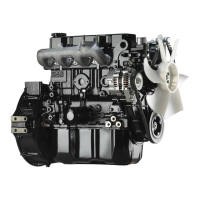
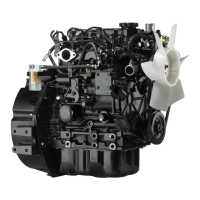
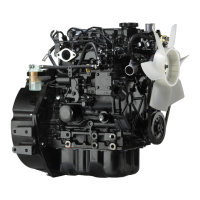
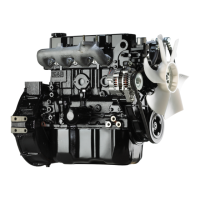
The Mitsubishi S4Q2 Diesel Engine is a power unit designed for heavy-duty applications, primarily in forklift trucks. Its core function is to convert the chemical energy of diesel fuel into mechanical energy, which then drives the forklift's various operations, including propulsion and hydraulic functions for lifting and tilting. The engine is engineered for reliability and efficiency, providing the necessary power output for demanding industrial environments. The manual covers all aspects of the engine's operation, from its fundamental components to its complex systems, ensuring that technicians can effectively diagnose, repair, and maintain the engine to optimal performance standards. Key systems covered include the engine's main parts (cylinder heads, valve mechanism, flywheel, timing gears, camshaft, oil pan, pistons, connecting rods, crankshaft, and crankcase), the inlet and exhaust system, cooling system, fuel system, oil system, and electrical system. Each of these systems plays a critical role in the engine's overall function, and the manual provides the necessary guidance to keep them operating correctly.
The service manual is designed for ease of use by service technicians. It begins with a "How to Use This Manual" section, which outlines the structure and conventions used throughout the document. Parts in illustrations are numbered to correspond with the disassembly sequence, simplifying the identification of components. Inspections to be conducted during disassembly are clearly indicated, ensuring that critical checks are not missed. Maintenance standards for inspection and repair are integrated into the text where relevant and are also summarized in a dedicated "Maintenance Standard" group. The assembly sequence for parts is summarized below each assembled view, providing a quick reference for reassembly.
The manual employs specific marks to emphasize important safety cautions: "WARNING" indicates potentially hazardous situations that could result in death or serious injury, "CAUTION" indicates situations that could result in minor or moderate injury, and "NOTE" provides important or useful information for engine operation or maintenance. These distinctions are crucial for ensuring the safety of personnel working on the engine and for preventing damage to the equipment.
Tightening torques are specified, with "wet" conditions (requiring engine oil application to threads) clearly indicated. This attention to detail ensures that fasteners are secured correctly, preventing loosening or over-tightening, which can lead to component failure. The manual also includes a section on "Terms Used in This Manual," defining key concepts like "Nominal value," "Standard," and "Limit," which are essential for understanding measurement and repair criteria. A list of abbreviations, standards (such as BTDC, ATDC, API, ASTM, JIS, LLC, MIL, MSDS, and SAE), and units of measurement (based on the International System of Units with metric conversions) is provided to ensure clarity and consistency in terminology and values.
The "GROUP INDEX" provides a quick overview of the manual's contents, allowing technicians to quickly navigate to relevant sections. This includes groups for general information, general instructions, engine main parts, inlet and exhaust system, cooling system, fuel system, oil system, electrical system, testing and adjusting, troubleshooting, maintenance standard, and special tools. This logical organization enhances the manual's utility as a practical reference tool.
The manual places a strong emphasis on comprehensive maintenance, which is critical for the longevity and performance of the S4Q2 Diesel Engine. It includes detailed instructions for various maintenance tasks, from routine checks to complex repairs. The "GENERAL INSTRUCTIONS" group covers essential topics such as determining engine overhaul timing, testing compression pressure, and providing tips and precautions for disassembly and reassembly. This foundational knowledge is vital for technicians to approach engine servicing systematically and safely.
Specific maintenance procedures are outlined for each major engine system. For example, the "COOLING SYSTEM" section details the maintenance of the water pump, fan, and thermostat, ensuring the engine operates within optimal temperature ranges. The "FUEL SYSTEM" group provides guidance on fuel system bleeding, disassembly, and maintenance of the fuel filter and fuel injection nozzles, which are crucial for efficient fuel delivery and combustion. Similarly, the "OIL SYSTEM" section covers the oil pump, oil filter, and pressure relief valve, ensuring proper lubrication and protection of internal engine components.
The "TESTING AND ADJUSTING" group is particularly important for maintaining engine performance. It includes procedures for bench testing, adjusting idling speed and maximum speed settings, and conducting performance tests. These adjustments are essential for ensuring the engine meets its operational specifications and delivers consistent power.
A dedicated "TROUBLESHOOTING" section provides a systematic approach to identifying and resolving common engine problems. This section lists potential causes of engine issues and their corresponding remedies, enabling technicians to efficiently diagnose and repair malfunctions. This proactive approach to problem-solving minimizes downtime and extends the engine's service life.
The "MAINTENANCE STANDARD" group is a critical resource, featuring a table of maintenance standards, tightening torques for various fasteners, information on thread sealants, and a comprehensive maintenance schedule. Adhering to these standards and schedules is paramount for preventive maintenance, helping to identify and address potential issues before they escalate into major failures. The inclusion of a "SPECIAL TOOL" list ensures that technicians have access to the correct tools for specific tasks, which is essential for performing repairs accurately and safely.
Overall, the service manual is designed to be an indispensable guide for anyone involved in the maintenance and repair of the Mitsubishi S4Q2 Diesel Engine in Mitsubishi Forklift Trucks. Its detailed instructions, safety warnings, and comprehensive coverage of all engine systems ensure that technicians can perform their duties effectively, contributing to the reliable and efficient operation of the forklifts.
 General
| Engine Model | S4Q2 |
|---|---|
| Cylinders | 4 |
| Fuel Type | Diesel |
| Cooling System | Water-cooled |
| Ignition System | Compression ignition |
| Starter System | Electric starter |
| Torque | 160 Nm at 1, 600 RPM |
| Fuel System | Direct injection |
| Lubrication System | Forced lubrication |

 To Next Page