31
SECTION 2 — DRIVING & SAFETY
CAMELOT 2007
Never allow anyone to go under a
motorhome while it is being lifted by
towing equipment unless the disabled
motorhome is adequately supported by
safety stands.
DO NOT tow the motorhome from the
rear. Towing from the rear will severely
overload the front tires and suspension,
possibly resulting in tire and/or front
suspension failure. Rear frame extensions
are not designed to support weight loads
imposed by lifting the motorhome from
the rear.
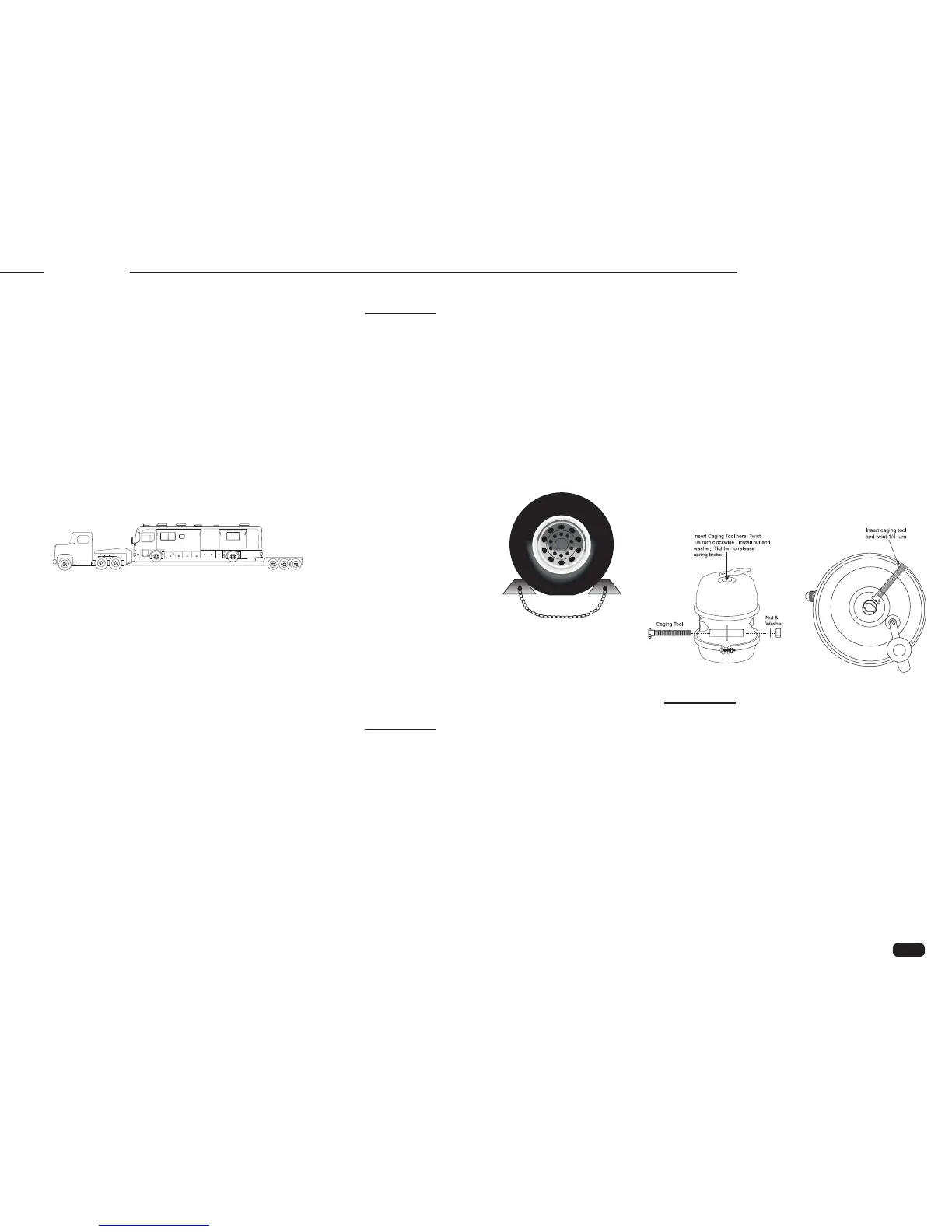
If the rear wheels are disabled, place the
motorhome on a at bed trailer, or use a
heavy duty dolly under the rear wheels
and tow the motorhome from the front.
The drive shaft must be removed to
prevent damage to the transmission.
Secure end caps to prevent losing or
contaminating the needle bearings.
The mud ap may need to be removed
to prevent damage due to limited ground
clearance.
When towing a motorhome equipped
with the Air-Leveling System, the
ignition
MUST be left in the ON position
and the Travel indicator lamp on the
panel must be lit for the air suspension
to operate. If the ignition system is not
functioning, or if chassis voltage is below
specication, the motorhome must be
placed on a lowboy/landall trailer to
prevent suspension damage.
WARNING
In case the motorhome requires towing,
ensure all precautions are followed. The
drive shaft must be disconnected and the
mud flap may need to be removed. The
manufacturer WILL NOT cover damage
to the motorhome caused by a towing
company.
Disabling Parking Brake
The park/emergency
brakes apply to the drive
axle only. The brakes
can be manually released
if the air system will
not build sufcient air
pressure to release them.
This emergency procedure
is to be used by trained
technicians or towing
personnel to move the
motorhome to a safe
location or repair facility.
WARNING
Only trained personnel should perform
this procedure. Brake chamber spring
is under high pressure. Removal of
retaining band could result in serious
injury or death.
Disabling Brakes:
Place wheel chocks rmly against the
wheel before performing this procedure.
Remove the plug from the center of rear
brake chamber on the drive axle.
Remove the caging tool from its holder
on the brake chamber and insert the tool
into hole. Turn clockwise to engage.
Screw nut and washer onto caging
tool. Use a wrench to tighten the nut,
compressing the internal spring to release
the brake.
Repeat procedure for the other side.
Enabling Brakes:
After towing, or when air pressure is
again available, loosen the nut and
remove the tool. Return the caging tool to
its original location and replace the plug.
Repeat for the other side.
WARNING
Failure to securely chock the wheels can
result in the motorhome rolling when the
spring brakes are released. Severe injury
or death can occur.
TIRES
Tires designed for the motorhome are a
technically engineered product. Since the tire is
the only contact the motorhome has with road
surface, it is critical that proper air pressure
be maintained. Improper pressure will lead to
abnormal wear or sudden tire failure.
020228b
090368
Example of a properly
chocked wheel.
090369
090456
Brake Camber



 To Next Page