41
SECTION 2 — DRIVING & SAFETY
CAMELOT 2007
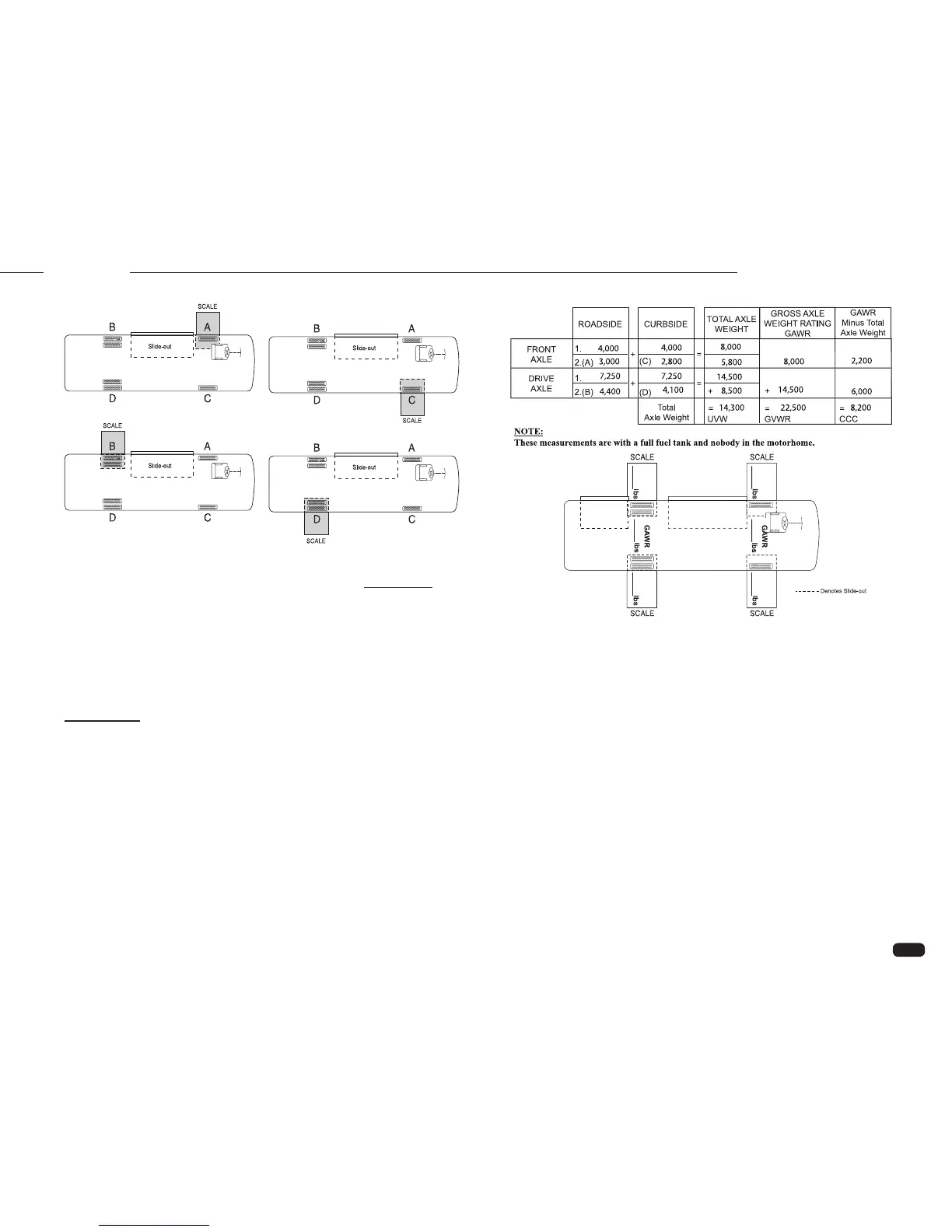
Refer to the Example Tire Chart
(Tire size 295/80R22.5). Use the highest
actual weight, Scale B or D, line 2.
Example 4,400 lbs. Determine the proper
tire pressure for each tire using the Load
Ination chart. Example: 95 psi or stamp
on the sidewall of the tire.
Repeat above procedures to determine
front axle Scale A and C, tire pressures.
WARNING
Improperly inflated or overloaded tires
can cause a blowout. An overloaded
axle can cause a component failure of
the suspension system. Tire blowout
or broken suspension components can
lead to loss of vehicle control resulting
in property damage, personal injury or
death.
CAUTION
If actual weight
carried by any tire
is below the tire
chart weight specification minimum
tire pressure, the minimum inflation
pressure must be maintained. Tire
pressure below the minimum inflation
pressure can overheat and damage the
tire casing leading to premature tire
failure or blowout.
Load and Ination Table:
The load and ination table helps to determine
the correct ination for the motorhome tire, after
properly weighing the motorhome. All pressures
are rated at a cold psi. Cold conditions are
dened as early in the morning before the day’s
ambient temperature, sun’s radiant heat or the
heat generated while driving have caused the tire
pressure to temporarily increase. This means that
the pressure should be checked early and when
the motorhome has not been driven more
than one mile. The check interval should be in
the morning, before the “drive” trip and every
morning on extended trips. A quality truck tire
gauge with a multiple angle airhead is needed
to ensure access to both dual wheel positions of
the drive axle. Ensure the valve cap is replaced
on the stem after the ination is checked. This
guarantees the valve core will remain free of dirt
and foreign material. Material lodged between
the valve core and internal stem can cause slow
leaks resulting in tire failure.
020152b
020255b conv



 To Next Page