This document outlines the calibration process for the Mono2 build platform, specifically focusing on leveling, to ensure optimal print quality and prevent failed prints. The calibration procedure is essential for maintaining the parallelism between the build platform surface and the vat bottom, which is critical for the first layer formation in 3D printing.
Function Description:
The Mono2 is a 3D printer that requires precise build platform calibration, also known as leveling, to ensure successful prints. The calibration process involves adjusting the build platform's position and orientation relative to the resin vat to achieve a perfectly parallel alignment. This parallelism is crucial for the initial layer of resin to adhere correctly to the build platform, forming a strong foundation for the subsequent layers. Without proper calibration, the first layer may not stick, leading to print failures. The device utilizes MonoWare software for connection and control, allowing users to manage printer settings, monitor status, and execute calibration steps. The build platform itself is equipped with various screws—thumb screws, hex screws, and a central hand screw—each playing a specific role in the adjustment process. The printer is designed to work with resin, which is poured into a tank, and the build platform descends into this resin during printing.
Important Technical Specifications:
- Software: MonoWare is the primary software interface for controlling the Mono2 printer.
- Connectivity: The printer connects to a PC via a COM port, typically identified as USB-SERIAL CH340.
- Baud Rate: The standard baud rate for communication is 115200.
- Firmware Version: The document mentions "mono1mk2v06" as a firmware version, with "mono2mk1v01" being the latest version. This indicates ongoing software development and updates for the device.
- Build Platform Screws:
- 4 x m4 thumb screws (yellow circles in images): Used for initial gentle tightening and fine adjustments.
- 2 x m4 hex screws (blue circles in images): Used for securing the platform's position more firmly.
- 1 x m5 hand screw (red circle in images): Located at the center, used for final tightening and for removing the build platform from the build arm.
- Resin Tank Depth:
- Mono2 resin tank: Requires 2-3 mm deep resin.
- Mono1 resin tank: Requires 5-7 mm deep resin. This suggests compatibility or shared characteristics with a previous model, Mono1.
- Motor Position: The device tracks and displays the motor position, which is updated upon successful connection.
- Projector Bulb Hours: The system can display the actual bulb hours of the projector, indicating a successful connection between the Mono1 (likely the projector unit) and the printer.
Usage Features:
The Mono2 printer is operated through the MonoWare software, which provides a user-friendly interface for various functions.
- Printer Setting: Users can access printer settings to refresh COM ports, select the correct USB-SERIAL CH340 port, and confirm the baud rate (usually 115200).
- Connection: A "Connect" button initiates the connection between MonoWare and the Mono1 (printer unit). Successful connection is indicated by the display of firmware version and motor position updates.
- Projector Connection Check: The "Check projector bulb hours" button serves as a diagnostic tool to confirm a successful connection between the Mono1 (projector) and the printer.
- Build Platform Movement: MonoWare includes controls for moving the build platform:
- "Homing" button: Automatically moves the build platform to its home position, which is crucial for calibration.
- "Move by distance" controls: Allow precise upward or downward movement of the platform in increments (e.g., 0.1, 0.5, 1, 3, 10 mm) or to specific positions (e.g., 50,000, 70,000 units).
- "Stop motor" button: Halts any ongoing motor movement.
- Calibration Process (Leveling):
- Initial Platform Movement: After connecting to the PC, the platform is moved upward by 50 mm or higher using MonoWare controls.
- Screw Manipulation:
- Loosen all thumb screws and hex screws.
- Slightly engage the central hand screw to prevent the platform from falling into the vat.
- Homing: Press the "Homing" button. The platform will descend and touch the FEP film at the bottom of the vat.
- Initial Tightening: Gently tighten the four thumb screws. During this step, it's important to ensure the hex screws remain loose. If they are locked, they must be loosened again before re-tightening the thumb screws.
- Hex Screw Tightening: Once the thumb screws are gently locked and the platform is no longer freely movable, gently tighten the hex screws. Avoid excessive force to prevent scratches on the FEP film.
- Final Tightening: Finally, tighten the central hand screw to firmly fix the build platform.
- Post-Calibration:
- The build platform should be firmly fixed after all screws are tightened.
- The hand screw should be used exclusively for removing the build platform from the build arm after calibration.
- Resin is poured into the tank (2-3 mm for Mono2, 5-7 mm for Mono1).
- The platform is moved upward by 70 mm.
- The "Go Home" button is pressed to bring the platform to the home position, ready for printing.
- Visual Calibration Check: Users can remove the front cover and inspect the vat bottom. A properly calibrated platform will show very little resin between the platform and the vat, allowing the aluminum build plate to be visible through the glass bottom.
Maintenance Features:
- Re-calibration: While calibration can hold for a day or two when using the same build platform and vat, re-calibration can be performed quickly as needed. This suggests that regular checks or re-calibrations might be part of routine maintenance, especially if print quality degrades or components are changed.
- Screw Management: The design of the build platform with distinct thumb, hex, and hand screws facilitates precise adjustments and secure fastening, which are key aspects of maintaining calibration. The caution against fully unscrewing hex screws highlights a critical maintenance consideration to prevent damage or misalignment.
- Firmware Updates: The mention of different firmware versions implies that the device's software can be updated, potentially introducing new features, bug fixes, or improved calibration algorithms, contributing to long-term device performance and maintenance.
- Troubleshooting: The manual provides troubleshooting guidance for common issues related to calibration, such as failed prints due to improper first layer adhesion. This empowers users to diagnose and resolve problems, reducing downtime and extending the lifespan of the device.

 Need help?
 General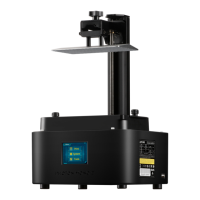

 To Next Page