MOONEY INTERNATIONAL CORPORATION
M20V SERVICE AND MAINTENANCE MANUAL
Page
Date
11
MAR 2017
Rev Date
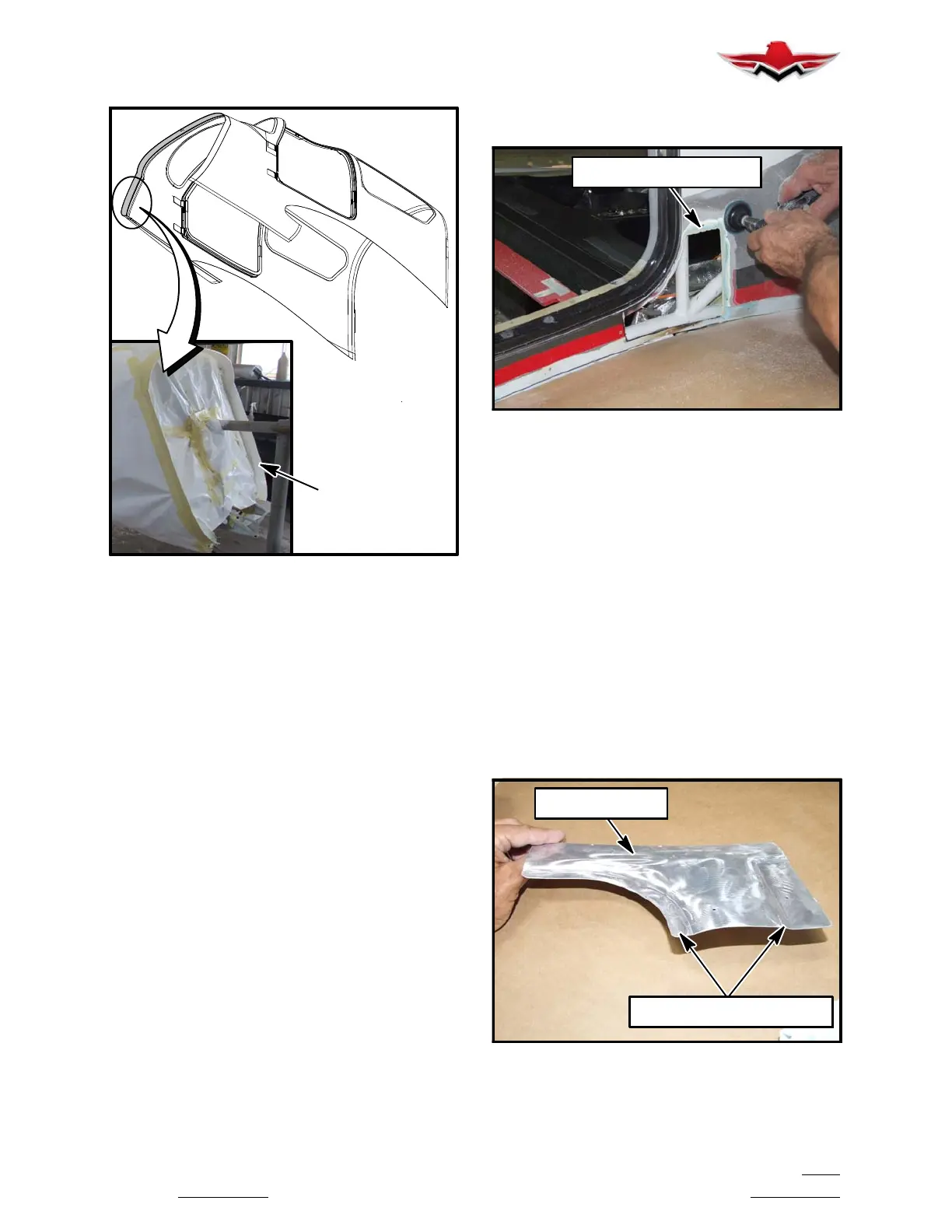
VIEW LOOKING UP
INTUMESCENT
AREA
INTUMESCENT PAINT APPLICATION
FIGURE 20- 4
20-00-05 - LOW PRESSURE SYSTEM HOSES/
LINES
Any low pressure line, (Static, Drain, etc.) may be
spliced to replace a section of damaged line. Short sec-
tions of hose may be spliced together to produce
planned lengths (max. 2 splices for any given length).
Hose couplers may be purchased or manufactured,
barbed or beaded, high density polyethylene, nylon,
plated steel, or aluminum. Locally manufactured cou-
plers are to be made from aluminum tubing (any alloy),
O.D. of tubing to match I.D. of hose, W.T. 0.028/0.035,
bead both ends. Length to be approximately 2.5 in. Use
any type hose clamp to attach hose to coupler.
20-00-06 - REPAIRING PUNCTURES AND HOLES
IN COMPOSITE L AMINATE SHELL USING
ALUMINUM PATCH
When the fiberglass composite laminate shell has sus-
tained a puncture or hole, this procedure can be used to
patch the puncture or hole using an aluminum patch.
1. Determine the extent of the damage and remove
the damaged plies with a sharp knife or by drilling out
the defect if applicable. Use caution not to damage sur-
rounding area.
2. Sand using 180 grit or finer sandpaper around the
damaged portion. Sanding should extend ½” for each
ply removed plus a 1” border for the additional ply that
will be needed. A beveled edge with a very shallow ta-
per should result. See Figure 20-5.
SAND SURFACE TO A BEVEL
SAND DAMAGED PORTION
FIGURE 20- 5
3. Prepare surface surrounding the hole by removing
dust and debris. Wipe with a clean dry piece of cheese-
cloth or blow with compressed air.
4. Apply acetone to a clean wiping cloth until the cloth
is just soaked but not dripping. With a single wipe, apply
an even coat of acetone to the part. Do not allow the
acetone to pool on the work surface. Immediately wipe
the wet surface with a clean dry cheesecloth before the
surface has a chance to dry. If the surface dries before
being wiped, reapply acetone and clean again. Repeat
this step until there is no discoloration on the cheese-
cloth after wiping.
5. Allow surface to dry for at least 5 minutes.
6. Cut a piece of .025 T- 3 aluminum that extends be-
yond the repair area by ½- 1”. Form edges as required
for fitment to damaged area. Clean with acetone. See
Figure 20- 6.
ALUMINUM PATCH
FORMED EDGES AS REQUIRED
CUT ALUMINUM PATCH
FIGURE 20- 6
7. Apply two-part mixture of Hysol A and B around
perimeter of patch. See Figure 20- 7.
20-00-05


 To Next Page
 Loading...