MOONEY INTERNATIONAL CORPORATION
M20V SERVICE AND MAINTENANCE MANUAL
Page
Date
9
MAR 2017
Rev Date
are assembled. Access panels in wing walk area
should be sealed with PRC 1422, Class B filleting com-
pound.
(2) Assemble parts immediately after application
of sealant and tighten screws to obtain as near as pos-
sible a metal- to- metal contact.
(3) Remove extruded sealant from wing surface
after installing fasteners.
28-12-00 - FUEL TANK LEAK REPAIR
1. Leak Description.
It is necessary to periodically inspect the fuel tanks. In-
spection is particularly important in confined areas of
the aircraft that are not exposed to the air stream. Iden-
tification and classification of fuel leaks that occur in
both confined and open areas is necessary to differenti-
ate between those leaks that require repair before flight
and those which do not constitute a flight hazard. The
size of the wetted area around a leak is an indication of
the leak intensity. All fuel leaks must be recorded by de-
scribing location and intensity of leak in the aircraft log
book.
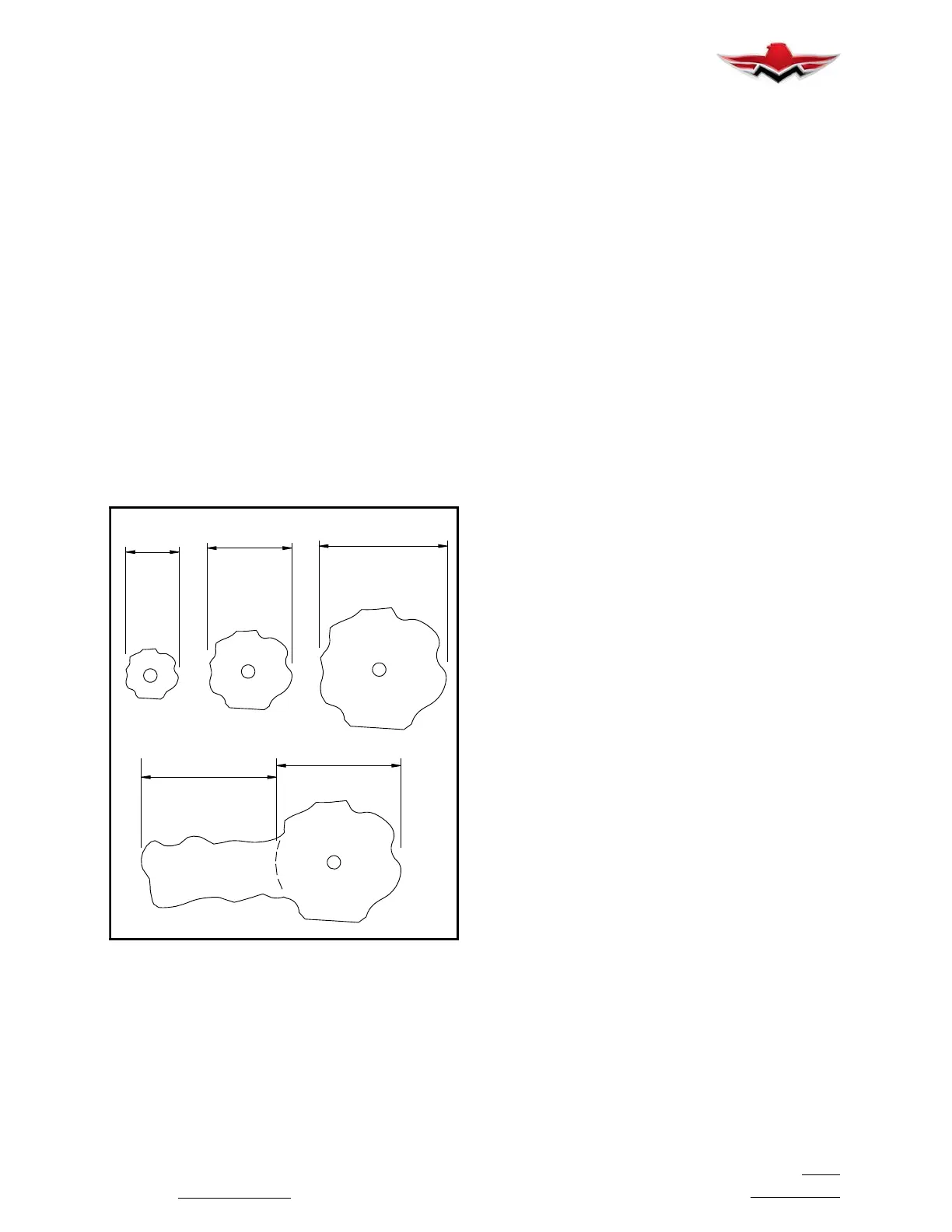
1-1/2 IN.
4TO5IN.
6IN.MAX
RUNNING LEAK
3-1/2 TO 4 IN.
1/2 TO
3/4 IN.
1
2
3
4
FUEL LEAK CLASSIFICATION
FIGURE 28- 4
2. Classification of leaks as to Intensity and Location.
(Refer to Figure 28- 4).
A. Intensity Classification.
(1) Stain - A slow fuel leak that tends to evapo-
rate as soon as it is exposed to air.
(2) Seep - A fuel leak that reappears shortly after
area is wiped clean.
(3) Heavy Seep - A fuel leak that reappears im-
mediately after area is wiped clean.
(4) Running Leak - A fuel leak that flows steadily.
B. Slow- to- heavy seeps occurring in open areas,
such as wing surfaces exposed to the air stream, are
leaks which do not constitute a flight hazard and need
not be repaired prior to flight, providing the condition
causing leak cannot result in a leak of greater intensity
during flight. Seeps considered permissible for flight
must be frequently inspected to insure that no increase
in intensity has occurred.
C. A running leak and any leak in a confined area
that is not exposed to the air stream should be repaired
before the next flight.
3. Leak Detection.
A. External Leak Detection after Refueling. To be
able to trace a leak from where it appears on an outer
tank or wing skin to its true source inside the tank, the
exact point where fuel is escaping from tank, must be
determined.
(1) Use compressed air to blow and evaporate
fuel from seams and crevices of leak area. Attempt to
define exact point where fuel is escaping from tank.
(2) Small seep leaks can be traced with raw
edges of torn paper. The fuzzy edge absorbs fluid and
gives a good visual indication of fuel presence when
brought in contact with suspected leak points.
(3) After tracing leak to its exterior source, mark
location and drain fuel tank.
B. Internal Leak Detection. To make a permanent
repair, it is mandatory that the true source of the interior
leak be located. The fuel tank is a network of seams and
fuel may flow through or along a seam or from one
seam to another. Fuel may channel a few inches or sev-
eral feet to where it appears on external skin surface.
(1) Gain access to tank interior through inspec-
tion access panels and inspect sealant in general area
of outside leak point. Look first for bare seams, rivets,
and bolts in difficult- to- seal areas. Inspect sealant for
blisters, pin holes, cracks, splits, and loss of adhesion.
Mark all suspected flaws with masking tape
(2) Test each suspected flaw from inside tank us-
ing compressed filtered air at 20 to 30 PSI. Hold air
nozzle against flaw and closely check outside leak
point for evidence of fuel.
(3) After testing each suspected flaw from inside
tank as outlined above, and if no leak source can be dis-
covered, apply soapless bubble fluid to exterior and
again apply air pressure to suspected flaw areas from
inside tank.
(4) If above tests fail to locate leak source, apply
air pressure (10 PSI MAX) to external leak point after
removing all traces of fuel from tank and applying soap-
less bubble fluid to tank interior seams per Section
28-13-00.
4. Leak Repair.
28-13-00


 To Next Page
 Loading...