MOONEY INTERNATIONAL CORPORATION
M20V SERVICE AND MAINTENANCE MANUAL
Page
Date
5
MAR 2017
Rev Date
5-00-00 - GENERAL
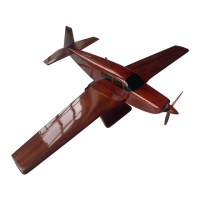
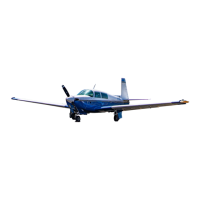
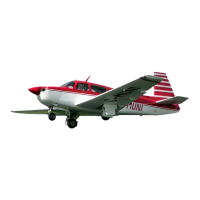
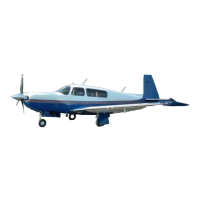
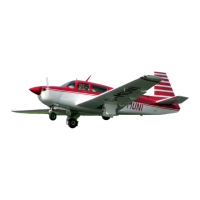
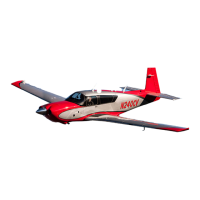
AIRCRAFT DESCRIPTION. The M20V series of air-
craft are two door, four place, high- performance, tur-
bo- normalized, single- engine, low- wing monoplanes.
The all- metal airframe has a tubular- steel cabin frame
covered with nonstructural composite shell, a semi-
monocoque tailcone, and a full- cantilever, laminar-
flow wing. Control surfaces have structural spar
construction with stressed skins riveted to the spars
and ribs. Dual control wheels accompany the conven-
tional flight controls. The pilot’s rudder pedals have toe
brakes linked to individual hydraulic cylinders that sup-
ply pressure to the hydraulic disc brakes on each main
gear wheel. Removable, co- pilot rudder pedals are
standard equipment. The tricycle landing gear, having
a steerable nose wheel controlled by rudder pedal ac-
tion, is fully retractable. The wide- span trailing- edge
wing flaps are electrically operated. For stabilizer trim,
the entire empennage pivots vertically about its attach-
ing points.
5-00-01 - LANDING GEAR SYSTEM
The electric landing gear system has a steerable nose
wheel. Single disc self- adjusting hydraulic brakes are
featured on the main gear. Gear position lights, a warn-
ing horn and a gear position indicator on the floorboard
are standard equipment. Bungee springs that preload
the retraction mechanism in an over- center position
lock the gear down. An air pressure actuated safety re-
lay in the electrical system prevents electric gear re-
traction on takeoff until a safe flying speed is attained. A
“Check Gear” voice alert sounds when the landing gear
remain in the “UP” position, and the pilot retards the
throttle to within “1/4” of idle. The electric gear retrac-
tion system has a manual extension system connected
to the gear actuator that permits manual lowering of the
gear in the event of an electrical malfunction. Landing
gear doors fully enclose the wheel wells to reduce
sound levels and increase performance.
5-00-02 - FLIGHT CONTROL SYSTEMS
The dual flight control systems can be operated from ei-
ther the pilot or co- pilot seat. All flight controls are con-
ventional in operation, using pushpull tubes to link the
control surfaces to the control wheels and rudder ped-
als. Formica guide blocks maintain control tube align-
ment and dampen vibration. An interconnect spring
mechanism links the aileron and rudder systems to as-
sist in control coordination. The standard co- pilot’s
rudder pedals are removable. A dual brake installation
is optional for the co- pilot’s position. The manual or
electric trim system sets the horizontal stabilizer angle
of attack.
5-00-03 - WING FLAP SYSTEM
Wing flaps are electrically actuated and are controlled
by a spring loaded “up- off- down” switch on the center
console.
5-00-04 - ELECTRIC POWER SYSTEM
The Master Switch and power relay control the electri-
cal power system, comprised of a 100 AMP, 28 Volt, al-
ternator and two 11 AMP HR, 24 Volt, batteries. The al-
ternator system has an overvoltage protective relay
and an overvoltage annunciation. Circuit breakers pro-
tect the electrical wiring and equipment from overloads.
Standard electrical equipment includes: 2- 100 watt
landing lights, 2- 100 watt taxi lights, navigation lights,
interior lights, instrument panel/glareshield lights, gear
and stall warning system, an electrical fuel boost pump,
an electric starter, an electric gear retraction/extension
system, with manual extension override, an electric
trim system (optional) and an electrical flap system.
5-00-05 - INSTRUMENTS
The G1000 Integrated Avionics System is a fully inte-
grated flight, engine, communication, navigation and
surveillance instrumentation system. The system con-
sists of a Primary Flight Display (PFD), Multi- Function
Display (MFD), audio panel (GMA), Air Data Computer
(ADC), Attitude and Heading Reference System
(AHRS), engine/airframe processing unit (GEA), and
integrated avionics (GIA) containing VHF communica-
tions, VHS navigation, and GPS navigation. GCU 476
KEYPAD UNIT
5-00-06 - CABIN HEATING & VENTILATING SYS-
TEMS
Heat is extracted from the high pressure/temperature
flow between the compressor and intercooler through
flexible hoses connecting the turbocharger air induc-
tion pipes and the cabin heater box assembly. The air
from the high pressure/temperature flow is regulated
by fixed orifice sonic nozzles. Air routed from the main
heater duct system to nozzles at the windshield base
defrosts the windshield.
Cabin overhead ventilating system works indepen-
dently of cabin heating and ventilating system. Fresh
air enters a NACA duct on dorsal fin and is controlled by
individual outlets above and between each seat. A
master air vent control regulates flow of air through the
individual overhead outlets.
5-00-07 - FUEL SYSTEM
The fuel system has sealed, integral wet wing tanks be-
tween main spar and baffles forward of spar in each
wing. Vents at the aft, outboard top corner of each tank
vent through a NACA scoop on the lower wing surface.
Fuel sump drains are at the lowest point in each tank.
The electric fuel pump is in the bottom left forward sec-
tion of the fuselage, aft of the firewall. The engine- driv-
en fuel pump mounts on the engine crankcase. Two
fuel quantity transmitters in each tank are wired in se-
ries to fuel quantity gauges in the engine cluster gauge.
The Master Switch, left side of the pilot’s panel, acti-
vates the fuel quantity indicating systems. The optional
visual sight gauges are for partial fueling of wing tanks.
A “low fuel” warning annunciation for each tank is acti-
vated (WHITE) when fuel quantity is between 6 to 8 gal-
lons of useable fuel remaining in the respective tank.
5-00-00


 To Next Page
 Loading...