MOONEY INTERNATIONAL CORPORATION
M20V SERVICE AND MAINTENANCE
Page
Date
5
MAR 2017
Rev Date
56- 00- 00 - GENERAL
The windshield for the model M20V is .188 inch thick
acrylic, heat formed to contour. The LH/RH cabin doors
and two rear side windows are .188 inch thick acrylic.
The pilot’s side window has a hole cut out to accommo-
date the .312 inch thick storm window. The storm win-
dow is milled to fit the hole and to be flush with outside
of pilot’s window surface when closed. All windows are
single pane windows.
All windows are heated to approximately 300
F and
placed on a mold to cool while maintaining correct
shape.
The windows are tinted for visual comfort, ultra- violet
filtration and cooling effect for cabin (material tint op-
tions by customer request).
The windows are all sealed to outside skin with
CS3204-B2 (B), or equivalent sealant (reference
Mooney Spec. 20, Section XII). There is a .040” to .050”
carbon fiber bonding rod, used to create a uniform seal-
ant gap and to allow acrylic glass to be flush with the
outer shell.
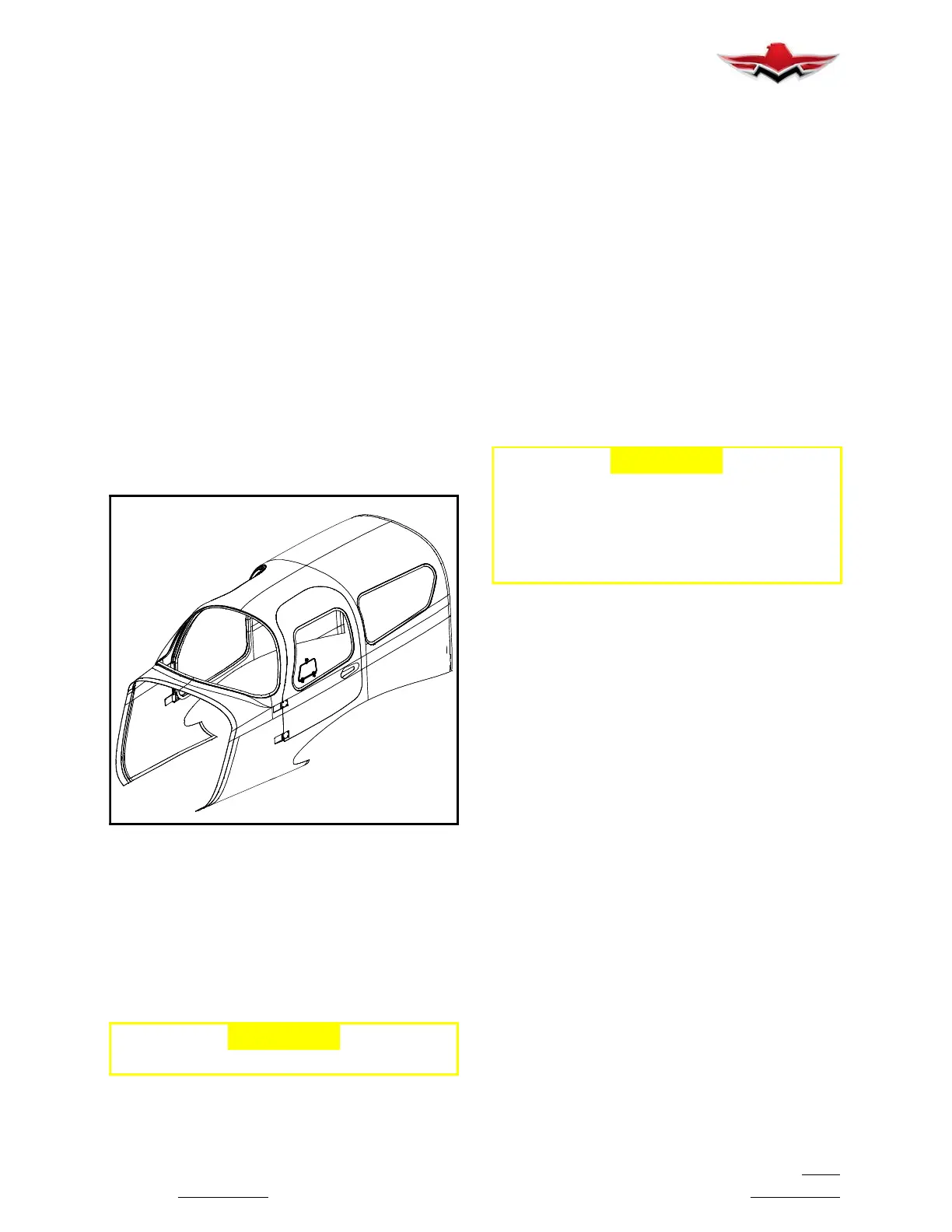
WINDSHIELD INSTALLATION
FIGURE 56- 1
56- 00- 01 - CLEANING ACRYLIC
1. Clean the plastic by washing with plenty of water
and mild soap, using a clean, soft, grit- free cloth,
sponge, or bare hands. Do not use gasoline, alcohol,
benzene, acetone, carbon tetrachloride, fire extin-
guisher or deicing fluids, lacquer thinners, or window
cleaning sprays because they will soften the plastic and
cause crazing.
-CAUTION-
Never wipe windows when dry.
2. Plastics sho uld not be rubbed with a dry cloth
since this is likely to cause scratches, and also build up
an electrostatic charge which attracts dust particles to
the surface. If after removing dirt and grease no great
amount of scratching is visible, finish the plastic with a
good grade of commercial wax. Apply the wax in a thin
even coat and bring to a high polish by rubbing lightly
withasoftcloth.
3. Polishing. Do not attempt hand polishing or buff-
ing until the surface is clean. A soft, open- type cotton
or flannel buffing wheel is suggested. Minor scratches
may be removed by vigorously rubbing the affected
area by hand, using a soft clean cloth dampened with a
mixture of turpentine and chalk, or by applying auto-
mobile cleanser with a damp cloth. Remove the cleaner
and polish with a soft, dry cloth. Acrylic and cellulose
acetate plastics are thermoplastic. Friction created by
buffing or polishing too long in one spot can generate
sufficient heat to soften the surface. This will produce
visual distortion and is to be guarded against. Refer to
AC 43.13- 1B for more detailed information.
-CAUTION-
Never use gasoline, alcohol, benzene, acet-
one, carbon tetrachloride, fire extinguisher or
deicing fluids, lacquer thinners, or window
cleaning sprays or any other questionable
fluid to clean acrylic windows. These sol-
vents will soften or craze the surface.
56- 20- 00 - WINDSHIELD AND CABIN WINDOWS
The removal and installation of windshield and win-
dows are accomplished in the following paragraphs.
56- 21- 00 - WINDSHIELD
56- 21- 01 - WINDSHIELD - REMOVAL
This procedure can be used to replace an existing
windshield with a new windshield or to remove and rein-
stall an existing windshield.
The following supplies are needed:
S Windshield (if replacing current windshield)
S 70-03A elastic bonding/adhesive
S Sealant gun
S Masking tape (or similar)
S Butcher paper (or similar)
S Plexiglass scraper
S Plastic wedges
S Plastic hammer
S Kleanz Easy
S Gauze cloth
S Wooden tongue depressors
S Carbon fiber rods (0.05” diameter, 0.25” length)
S Metal spacers
S Straps, duct tape, or other items to hold windshield in
place as it dries
S Decorative bead
56-00-00


 To Next Page
 Loading...