TAL 0110 (L) Rev. 8 - 10020949
USING THE RESPIRATOR
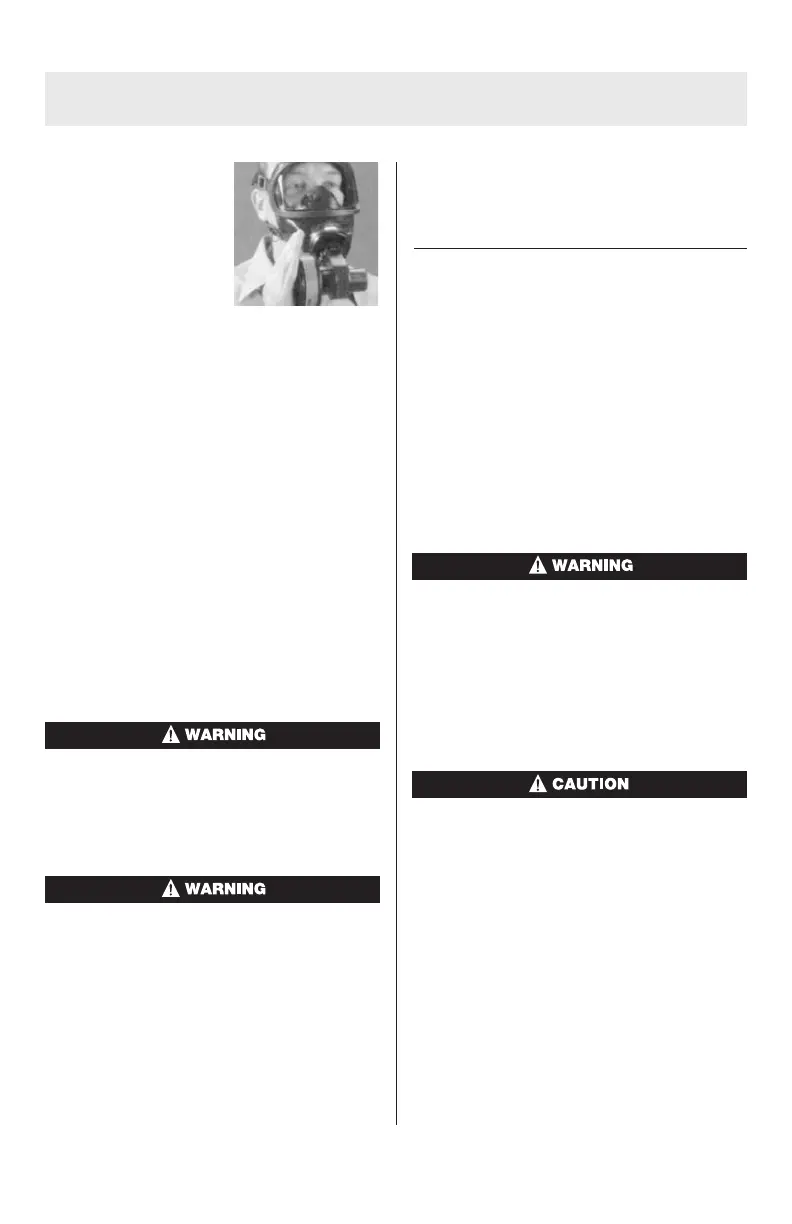
2. Inhale so that the
facepiece collaps-
es against your
face. Hold your
breath for 10 sec-
onds. The face-
piece should
remain collapsed.
3. If the facepiece does not remain
collapsed, readjust the headstraps
and repeat steps 1 and 2.
4. If you cannot get a seal by adjusting
the headstraps, check the facepiece
for leaks. See Maintaining the
Respirator. Locate the problem and
correct it before using the respirator.
Leave the area immediately if any of
the following symptoms occur
• breathing becomes difficult
• dizziness or other distress occurs
• you taste or smell the contaminant
• you experience eye, nose or throat
irritation.
If you bump or impact the cartridges,
leave area immediately and check
the security of the cartridge. Perform
an Air Tightness Test before re-entry.
This device may not seal properly
with your face if you have a mous-
tache, beard, gross sideburns or
other physical characteristics that
interfere with the face-to-facepiece
seal (see ANSI Z88.2). If the face-
piece does not seal against your
face, non-respirable air can leak into
the facepiece, reducing or eliminat-
ing the protection. The face-to-face-
piece seal must be tested before
each use. DO NOT USE A FACE-
PIECE THAT DOES NOT SEAL.
CONNECTING THE BATTERY PACK
1. Line up the key on battery cable
plug with the slot in female connec-
tor on battery pack.
2. Push the plug into female connector
and turn _ turn to secure.
3. Turn the switch located on the bat-
tery pack on.
4. Attach the retaining clip to your shirt
or belt to secure the power cable.
Return to a safe atmosphere and dis-
card the respirator immediately if the
facepiece becomes discolored,
crazed, blistered or cracked, or if
other signs of deterioration of the
facepiece, motor-blower, filter or bat-
tery pack are observed.
You can breathe through the respi-
rator with the motor-blower off, but
breathing resistance may be
noticed, as with a negative-pressure
respirator.
16



 To Next Page