STORAGE & TRANSPORTING
15
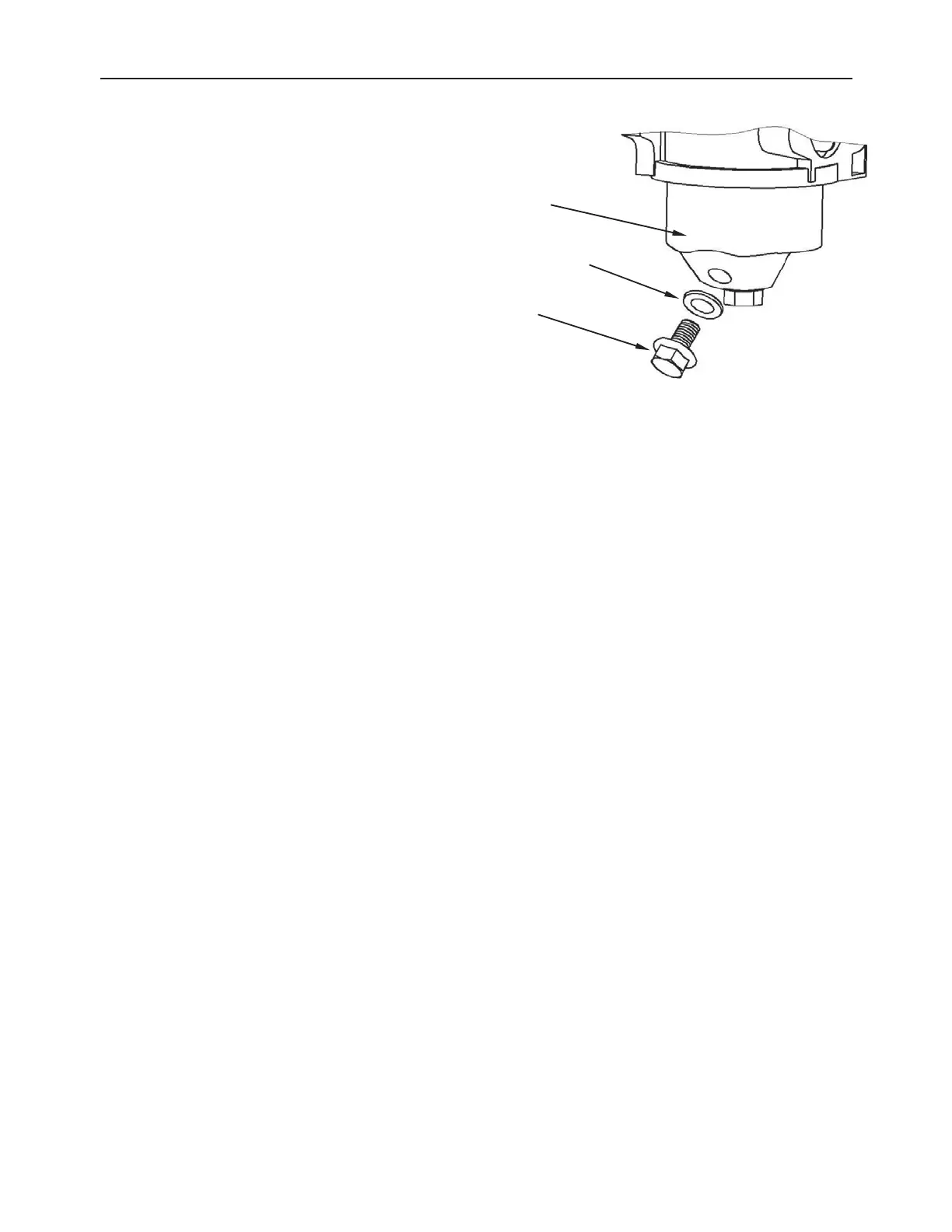
SEALING WASHER
Draining the Fuel Tank and Carburettor
1. Place an approved fuel container below the carburettor, and
use a funnel to avoid spilling fuel.
2. Remove the carburettor drain bolt
and sealing washer.
3. After all the fuel has drained into the
container, reinstall the drain bolt and
sealing washer. Tighten them
securely.
7.1.4 Storage Precautions
1. Change the engine oil.
2. Remove the spark plug.
3. Pour a tablespoon (5-10 cc) of clean engine oil into the cylinder.
4. Pull the starter rope several times to distribute the oil in the cylinder.
5. Reinstall the spark plug.
6. Pull the starter rope slowly until resistance is felt. This will close the valves so moisture
cannot enter the engine cylinder. Return the starter rope gently.
If your engine will be stored with fuel in the fuel tank and carburettor, it is important to reduce
the hazard of fuel vapour ignition. Select a well-ventilated storage area away from any
appliance that operates with a flame, such as a furnace, water heater, or clothes dryer. Also
avoid any area with a spark-producing electric motor, or where power tools are operated.
If possible, avoid storage areas with high humidity, because that promotes rust and corrosion.
Position the equipment so the engine is level. Tilting can cause fuel or oil leakage.
7. With the engine and exhaust system cool, cover the engine to keep out dust. A hot engine
and exhaust system can ignite or melt some materials. Do not use sheet plastic as a dust
cover. A non-porous cover will trap moisture around the engine, promoting rust and corrosion.
If equipped with a battery for an electric starter, recharge the battery once a month while the
engine is in storage. This will help to extend the service life of the battery.
CARBURETTOR
FLOAT BOWL
DRAIN BOLT



 To Next Page