9
FLARE-UPS
• When the fat renders from your food and drips onto the charcoal, it is possible that
flames may flare-up. Should this occur, DO NOT put out the flames with water as ash
will fly up and stick to yourfood.
• The best way to manage flare-ups is to use a Two-Zone fire. Refer to CHARCOAL
CONFIGURATION below for further information.
• When flames flare-up in a Two-Zone fire, using protective grill tools, simply move
the food away from the flames to the indirect heat. When flames subside, move them
back to the direct heat to continue cooking.
EXTINGUISHING
• When you have finished cooking, never pour cold water directly on the coals to
extinguish them, as this may damage your grill. Use old cinders or sand.
• Alternatively, wait for the charcoal to burn out with close supervision.
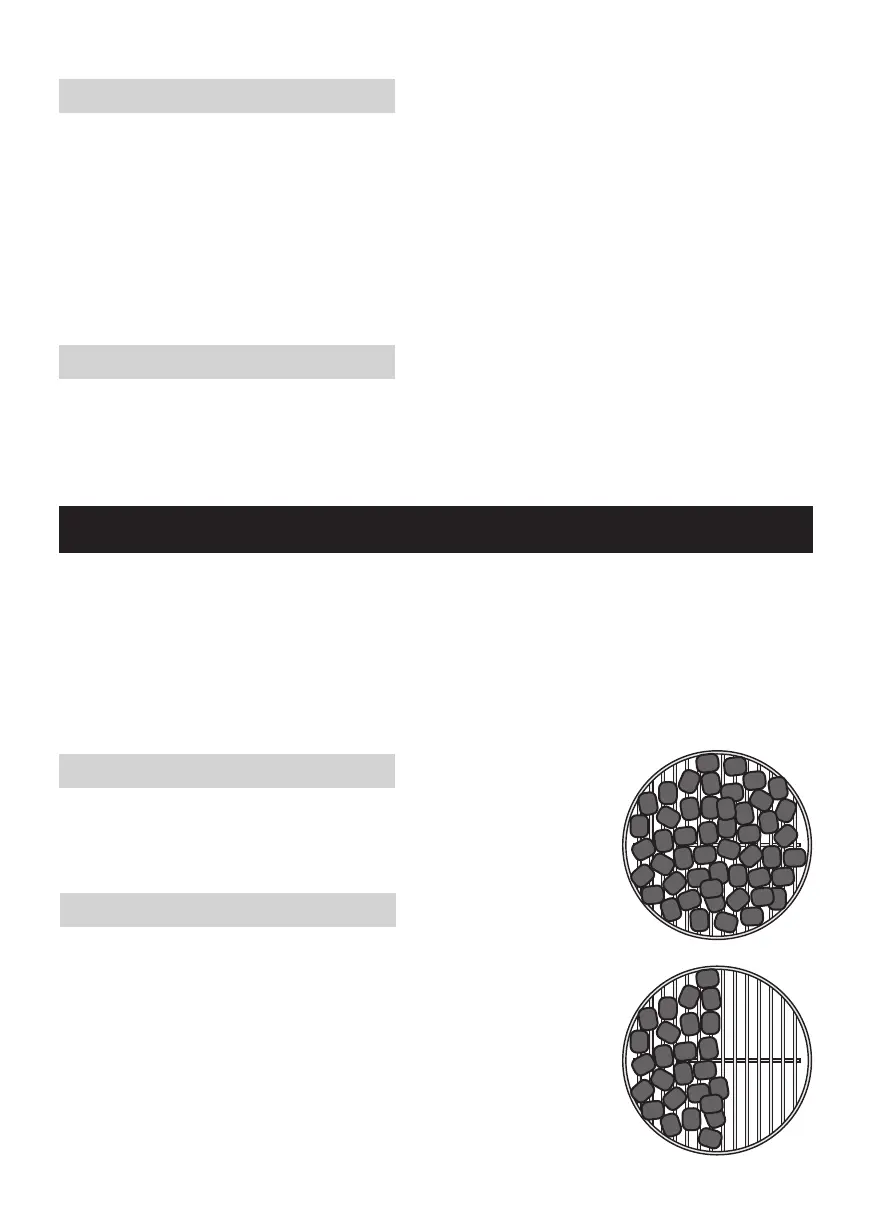
• Move all charcoal to one half of the Charcoal Grill, keeping
the grill stable.
• Direct Heat Side is ideal for searing and to cook small,
tender pieces of food that cook quickly. For example, thin
fillets of steak or chicken, hamburgers, or vegetables.
• Indirect Heat Side is ideal for larger, tougher foods that
require longer cooking times, such as ribs, thicker fillets, or
whole chickens.
Two-Zone Grilling
CHARCOAL CONFIGURATION
The position of your charcoal in the grill can make a tremendous difference in how
your food is cooked. While a large percentage of grilled foods require high heat and
short cooking times, others require a lower heat and a longer cooking time or combi-
nation of both. It is important to configure your charcoal to best suit your needs prior
to cooking.
Arrange the charcoal on your Cooking Grill (4) using a heat resistant tool. Following
are some examples of charcoal configuration.
• Direct heat is created by spreading the charcoal in a single
layer.
• Ideal for high-heat cooking and thin cuts of meat.
One-Zone Grilling


 To Next Page
 Loading...