© Copyright 2023 Mullen Automotive, Inc. All Rights Reserved. 3
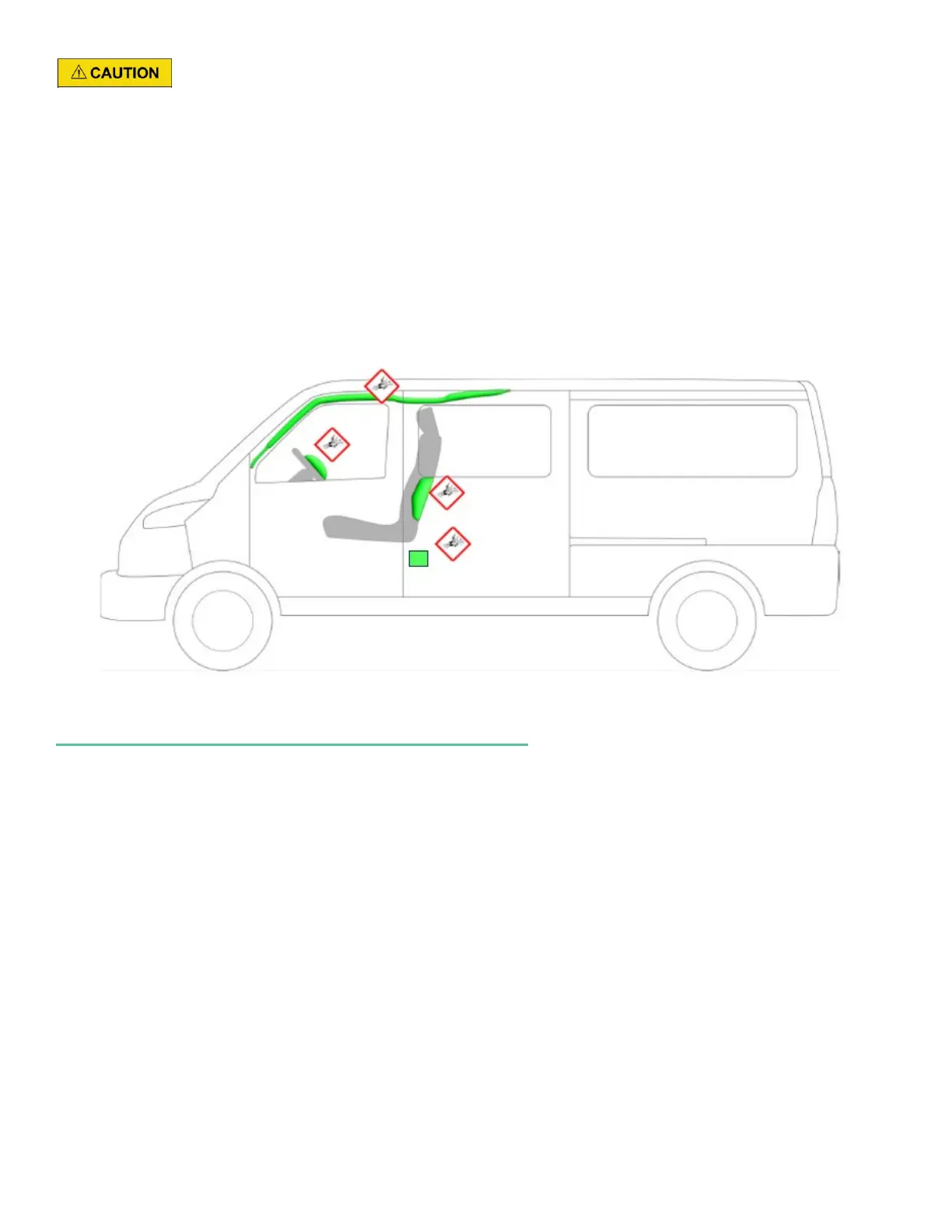
THIS VEHICLE IS EQUIPPED WITH PYROTECHNIC PASSIVE SAFETY RESTRAINTS (AIRBAG/SEATBELT).
Locations as follows:
• Driver’s Side
o Steering Wheel
o Seat Side (outboard)
o Curtain
o Seatbelt Pretensioner
• Passenger Side (only with passenger seating position)
o Instrument Panel
o Seat Side (outboard)
o Curtain
o Seatbelt Pretensioner
High and Low Voltage Battery Hazards
• Removing the MSD from the vehicle does not dissipate
voltage inside the battery, the battery pack remains live and dangerous. This may also be true for
the high-voltage components discussed below.
• There is no way to instantaneously discharge the energy that is stored inside of a battery pack
when a vehicle is in an accident.
• High-voltage battery packs damaged in a traffic accident may emit toxic irritants to eyes, skin,
and lungs as well as emitting combustible gases. Always wear personal protective equipment
(PPE) and self-contained breathing apparatus when working near a damaged electric vehicle.
• Avoid working on a damaged electric vehicle in a confined area, such as a tunnel or garage. Move
the vehicle or ventilate the work area if possible. Ventilate the interior of a damaged vehicle by
opening windows or doors if possible.
• All high-voltage wires and harnesses are wrapped in orange insulation. Treat every battery pack
and high-voltage (orange) cable as if they are “hot”. Never cut a high-voltage (orange) cable or cut
into a battery pack.
• When the 12-volt (low-voltage) cables are cut at the battery, the high-voltage system will be disabled
due to low-voltage actuating the high-voltage contactors inside the high-voltage battery pack.
• The high-voltage battery cells contain a base electrolyte consisting of lithium hexafluorophosphate



 To Next Page