© Copyright 2023 Mullen Automotive, Inc. All Rights Reserved. 7
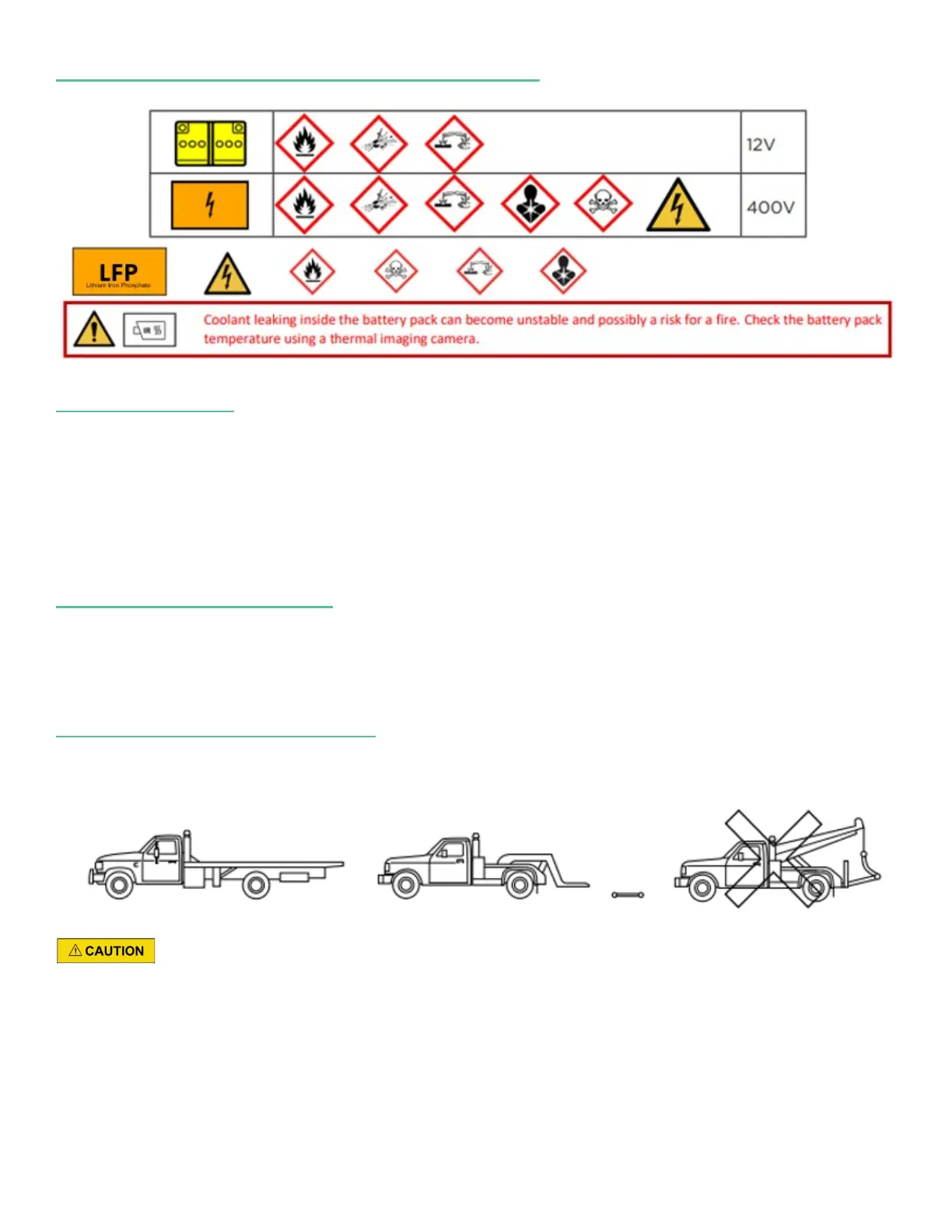
Stored Energy / Liquids / Gases / Solid
In Case of Fire
If the vehicle is on fire, use a Class ABC powder-type extinguisher to contain and smother the flames.
• While not ideal, water can be used in copious amounts to extinguish the flames. The cooling and
smothering effects of water flushing the affected article is still beneficial for minimizing the severity of
the event.
• Note that water can cause some degree of arcing/shorting across exposed battery cells and terminals;
it can also react with the electrolyte from the battery cells to generate combustible gases and other
byproducts such as hydrofluoric acid.
In Case of Submersion
If the vehicle is submerged in water, varying degrees of arcing/shorting within the battery will take place.
• Do not remove the vehicle until you are sure the high voltage battery is completely discharged.
• A submerged high voltage battery may produce a fizzing or bubbling reaction to the water.
• If fizzing or bubbling is observed, the high voltage battery is not fully discharged.
Moving Damaged Vehicles
If the vehicle becomes disabled and requires towing, please do the following:
• Make sure the gear selector dial is in NEUTRAL (N) position and the parking brake is disengaged.
• Disengage high voltage components by removing the MSD and disconnecting the 12-volt battery.
WHEN TOWING THE VEHICLE, USE A FLATBED TRAILER OR TOW FROM THE FRONT WHEELS. TOWING FROM THE REAR
WHEELS CAN DAMAGE THE VEHICLE.


 To Next Page