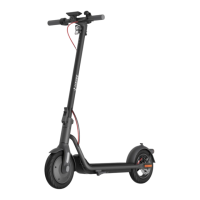
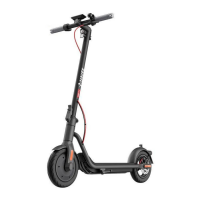
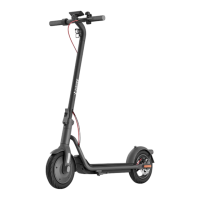
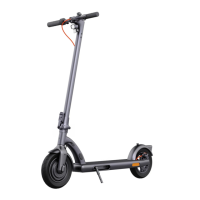
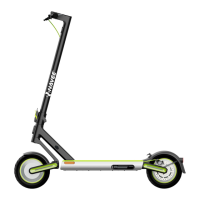
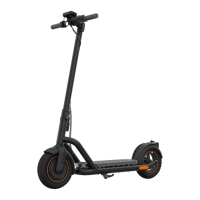
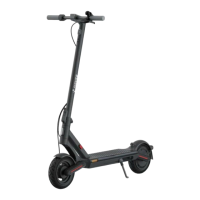
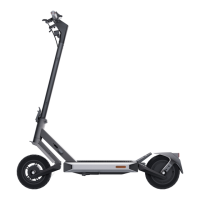
05 06
EN EN
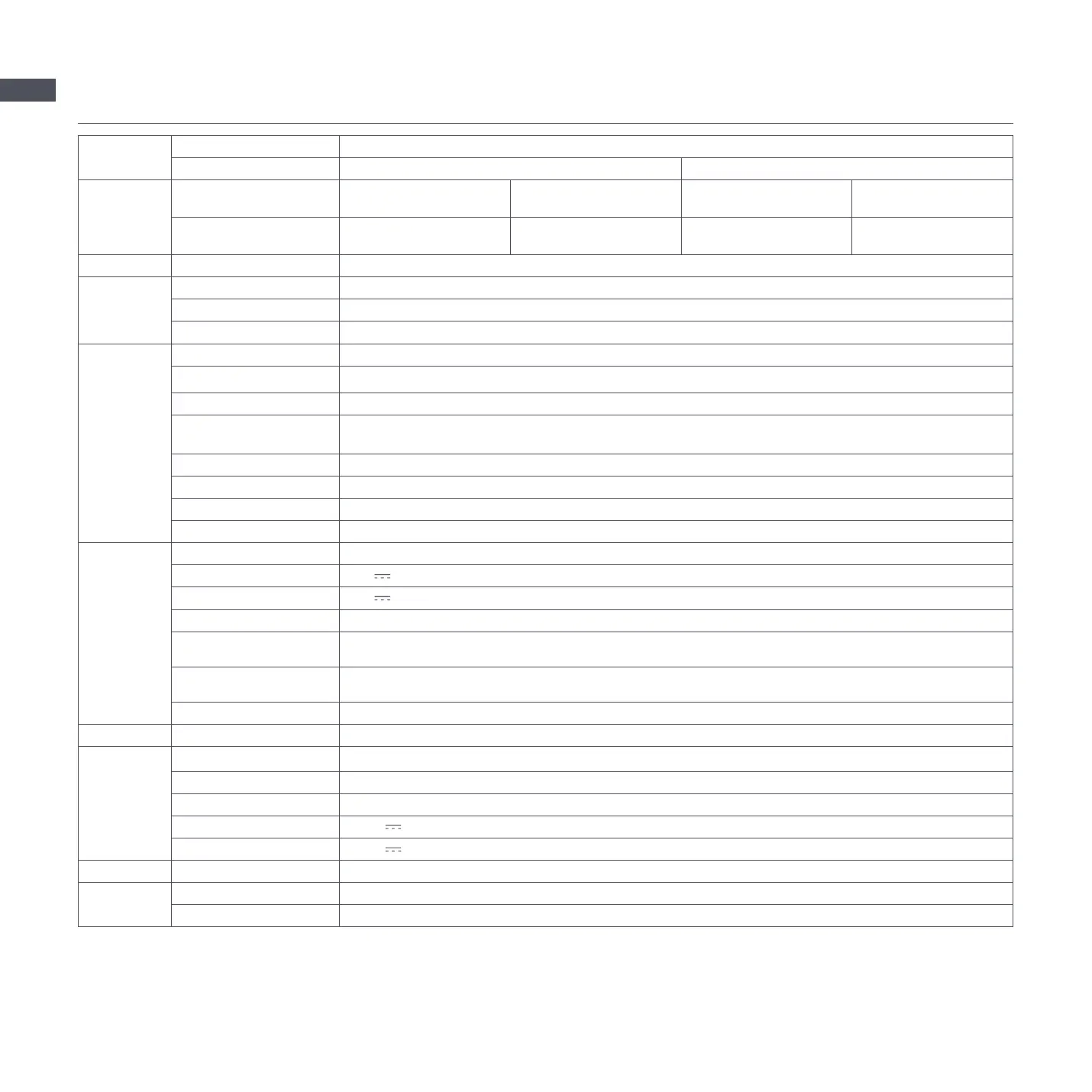
Product
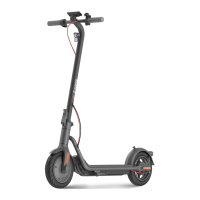
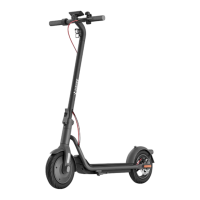
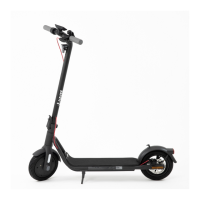
Name NAVEE Electric Scooter
Model V25-U
V25i-U
Dimensions
Vehicle: L × W × H
[1]
44.9 × 19.1 × 47.0 in
(1140 × 485 × 1195 mm)
44.9 × 19.1 × 45.9 in
(1140 × 485 × 1165 mm)
44.9 × 22.4 × 47.0 in
(1140 × 570 × 1195 mm)
44.9 × 22.4 × 45.9 in
(1140× 570 × 1165 mm)
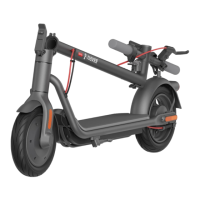
After Folding: L × W × H
44.9 × 19.1 × 19.3 in
(1140 × 485 × 490 mm)
44.9 × 6.3 × 19.9 in
(1140 × 160 × 505 mm)
44.9 × 22.4 × 19.3 in
(1140 × 570 × 490 mm)
46.5 × 6.3 × 19.9 in
(1180 × 160 × 505 mm)
Net Weight Vehicle Net Weight 37.7 lbs (17.1 kg)
Rider
Load Range 55.1 - 220.5 lbs (25–100 kg)
Age (years) 16–50 years
Body Length 3’11”–6’6”(120–200 cm)
Assembled
Electric
Scooter
Max. Speed 19 mph (30 km/h)
General Range
[2]
Approx. 15.5 miles (25 km)
Max. Climbing Angle Approx. 15%
Suitable Surfaces
Cement or asphalt road, with benches of less than 1 cm or crevices
narrower than 3 cm
Operating Temperature 14–104 ° F (-10 to 40 °C
)
Storage Temperature -4–113 ° F (-20 to 45 °C)
IP Rating IPX5
Charging Time Approx. 4-4.5 h
Battery Pack
Model T2314-BA2A
Nominal Voltage 36 V
Max. Charge Voltage 42 V
Rated Energy 183.6 Wh
Intelligent Battery
Management System
Over-heating, short circuit, over-current, over-discharge, and
over-charge protection
Normal Charging
Temperature Range
32–104 ° F (0 to 40 °C
)
Rated Capacity 5.1 Ah
Wheel Motor Rated Power 300 W (0.3 kW)
Battery
Charger
Model
[3]
LI-0554200130NA
Output Power 53.3 W (0.0533 kW)
Input 100-240 V~ 50-60 Hz
Max. Output Voltage 42.0 V
Rated Output 41.0 V 1.3 A
Tire Front & Back Tires 10-inch pneumatic tires
Bluetooth
Frequency Band 2.4000 – 2.4835 GHz
Max. RF Power 8 dBm
[1] Vehicle height: From the ground to the top of the scooter.
[2] General range: Measured when there is no wind and at 77 ° F (25 ° C), the scooter is fully charged to ride at a constant speed of 9.3 mph
(15 km/h) on a flat surface with a load of 165.3 lbs (75 kg).
[3] To recharge the battery, only use the battery charger provided in the package. Please see battery charger parameters in Specifications.
2. Specifications 3. Certification
FCC Supplier's Declaration of Conformity
FCC Note
FCC Radiation Exposure Statement
FCC Compliance Statement for USA
This supplier's declaration of conformity is hereby for
Product: NAVEE Electric Scooter
Model Number(s): V25-U, V25i-U
Brand/Trade: NAVEE
We declare that the above mentioned device has been tested and found in compliance with CFR 47 Part Regulation.
Responsible Party—U.S.Contact Information
Company: Brightway Innovation Intelligent Technology (Suzhou) Co., Ltd.
Address: Building A2, Shangjinwan Headquarters Economic Park, No.2288, Wuzhong Avenue, Wuzhong Economic
Development Zone, Suzhou Jiangsu P.R. China
Country: China
Changes or modifications not expressly approved by the party responsible for compliance could void the user's
authority to operate the equipment.
The device has been evaluated to meet general RF exposure requirement.
The device can be used in portable exposure condition without restriction.
This device complies with part 15 of the FCC Rules. Operation is subject to the following two conditions:
1. This device may not cause harmful interference.
2. This device must accept any interference received, including interference that may cause undesired operation.
This equipment has been tested and found to comply with the limits for a Class B digital device, pursuant to part 15 of
the FCC Rules. These limits are designed to provide reasonable protection against harmful interference in a residential
installation. This equipment generates uses and can radiate radio frequency energy and, if not installed and used
in accordance with the instructions, may cause harmful interference to radio communications. However, there is no
guarantee that interference will not occur in a particular installation. If this equipment does cause harmful interference
to radio or television reception, which can be determined by turning the equipment off and on, the user is encouraged
to try to correct the interference by one or more of the following measures:
— Reorient or relocate the receiving antenna.
— Increase the separation between the equipment and receiver.
— Connect the equipment into an outlet on a circuit different from that to which the receiver is connected.
— Consult the dealer or an experienced radio/TV technician for help.


 To Next Page
 Loading...