EasyManua.ls Logo

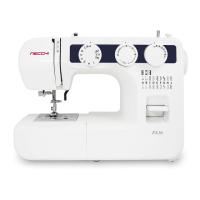
Necchi FA16 - User Manual

Necchi FA16
36 pages
Print Icon
To Next Page IconTo Next Page
Loading...
Instruction Manual

Table of Contents

Questions and Answers

  • M
    Mark BlankenshipJul 31, 2025
    Why does the needle thread keep breaking on my Necchi FA16 Sewing Machine?
    • S
      Scott LeonJul 31, 2025
      The needle thread might be breaking due to several reasons: * The needle thread may not be threaded properly. * The needle thread tension may be too tight. * The needle might be bent or blunt. * The needle could be incorrectly inserted. * The needle thread and the bobbin thread might not be drawn to the rear and set properly under the presser foot when starting to sew. * The fabric may not be drawn to the rear when sewing is finished. * The thread may be too heavy or too fine for the needle.
  • S
    Seth CarrollAug 4, 2025
    Why does the bobbin thread break on my Necchi FA16?
    • L
      laura49Aug 4, 2025
      The bobbin thread may break because: * The bobbin thread is not threaded properly in the bobbin holder. * Lint has collected in the bobbin holder. * The bobbin is damaged and does not turn smoothly; in this case, replace the bobbin. * The thread is wound loosely on the bobbin; if so, re-wind the bobbin.
  • L
    Linda FloresAug 9, 2025
    What causes skipped stitches on Necchi Sewing Machine?
    • K
      Krista BlackAug 9, 2025
      Skipped stitches can occur on your Necchi Sewing Machine if: * The needle is incorrectly inserted. * The needle is bent or blunt. * The needle and/or thread are not suitable for the fabric being sewn. * The needle thread is not threaded properly. * A poor quality needle is used; replace the needle in this case.
  • B
    brennandawnAug 13, 2025
    Why is there seam puckering on my Necchi Sewing Machine?
    • A
      Angela HoganAug 13, 2025
      Seam puckering may occur because: * The needle thread tension is too tight. * The needle thread is not threaded properly. * The needle is too heavy for the fabric being sewn. * The stitch length is too long for the fabric; make the stitch shorter. * A stabilizer may be needed for very fine fabrics.
  • C
    Christopher OwenAug 17, 2025
    What causes the cloth to not feed smoothly on my Necchi FA16?
    • T
      Taylor ButlerAug 17, 2025
      The cloth may not feed smoothly because: * The feed dog is packed with lint. * The stitches are too fine; in this case, make stitch longer. * The feed dog was not raised after being lowered.
  • C
    Cindy JonesAug 21, 2025
    Why is the buttonhole not sewn well on my Necchi FA16 Sewing Machine?
    • J
      Jacob GomezAug 21, 2025
      If the buttonhole is not sewn well, it may be because: * The stitch density is not suitable for the fabric being sewn. * Interfacing is not being used with stretch fabrics; use an interfacing in this case.
  • S
    Shelly RobertsonAug 26, 2025
    Why is my Necchi FA16 making a noisy operation?
    • J
      John MatthewsAug 26, 2025
      Noisy operation may be due to: * The feed dog being packed with lint. * Lint having collected in the bobbin holder.

Summary

IMPORTANT SAFETY INSTRUCTIONS

General Safety Precautions

Critical safety instructions to prevent electric shock, burns, fire, and injury.

Regional Safety Notes

Specific safety advice for users in Europe and other regions.

SECTION 1. KNOW YOUR MACHINE

Machine Components and Accessories

Identification of machine parts, accessories, and the extension table.

SECTION 2. GETTING READY TO SEW

Connecting Power Supply

How to connect the sewing machine to the power source.

Presser Foot and Feed Dog Operation

Operating the feed dog and presser foot for fabric handling.

Needle and Bobbin Procedures

Procedures for needle replacement and bobbin winding/insertion.

Machine Threading

Complete guide to threading the machine and its components.

Stitch Settings and Tension

How to select stitch patterns, adjust settings, and balance thread tension.

SECTION 3. BASIC SEWING

Straight Stitch Sewing

Fundamental technique for sewing a straight stitch, including starting.

Fabric Handling and Guides

Techniques for fabric handling, direction changes, and using seam guides.

SECTION 4. UTILITY STITCHES

Common Utility Stitches

Instructions for basic zigzag, overcasting, stretch stitches, button sewing, buttonholes, zippers, and hemming.

SECTION 5. DECORATIVE STITCHES

Decorative Stitch Techniques

Techniques for creating decorative stitches like shell tuck, smocking, applique, pin tucking, satin, and decorative stretch.

SECTION 6. CARE AND MAINTENANCE

Cleaning Machine Parts

How to clean essential internal parts like the hook race and feed dog.

Troubleshooting Common Issues

Common problems and their solutions for the sewing machine.

Button Sewing

Sewing Buttons onto Fabric

Technique for sewing buttons onto fabric, including shank creation.

4-Step Buttonhole

Creating 4-Step Buttonholes

Creating buttonholes using a four-step manual process.

Corded Buttonhole

Sewing Corded Buttonholes

Sewing a buttonhole with a decorative cord for a raised effect.

Zipper Application

Zipper Foot Attachment and Prep

Attaching the zipper foot and preparing fabric for zipper insertion.

Sewing and Finishing the Zipper

Detailed steps for sewing the zipper into the fabric and finishing the seam.

Blind Hemming

Blind Hemming Technique

Method for creating invisible hems using the blind hemming foot.

Decorative Stitch Techniques

Shell Tuck and Smocking

Techniques for creating decorative shell tuck and smocking stitches.

Applique and Pin Tucking

Stitching decorative applique pieces and creating pin tucks.

Satin and Decorative Stretch Stitches

Using satin and decorative stretch stitches for embellishment.

Necchi FA16 Specifications

General IconGeneral
Number of Stitches16
Max Stitch Width5 mm
Max Stitch Length4 mm
Free ArmYes
Built-in Needle ThreaderYes
Stitch Length0-4 mm
Stitch Width0-5 mm
Presser FeetButtonhole Foot
Included AccessoriesBobbins, Needles, Seam Ripper, Screwdriver

Related product manuals