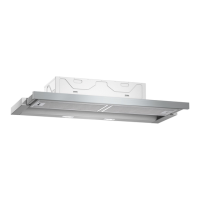
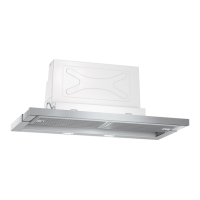
Need help?
Do you have a question about the NEFF D46ED52X0 and is the answer not in the manual?
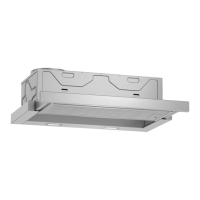
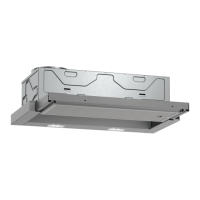
This document serves as an instruction manual for an extractor hood, providing comprehensive guidance on its installation, operation, and maintenance. The extractor hood is designed for domestic use, primarily in kitchen environments, to manage cooking fumes and odors. It can operate in two main modes: exhaust air mode and air recirculation mode, offering flexibility based on the kitchen's ventilation setup.
The primary function of the extractor hood is to remove cooking fumes, steam, and odors from the kitchen. In exhaust air mode, the air drawn in is cleaned by grease filters and then expelled to the exterior through a pipe system. This mode is highly effective for completely removing airborne particles and gases from the living space. For optimal performance in this mode, it is crucial to ensure adequate fresh air supply to the room, especially when other room air-dependent heat-producing appliances (like gas or oil heaters) are in operation. This prevents the creation of a partial vacuum that could draw toxic flue gases back into the living space. The exhaust air duct should be short, straight, and have a large diameter (preferably 150 mm, but at least 120 mm for round pipes) to maximize extraction efficiency and minimize noise. Flat ducts should also maintain an equivalent inner cross-section and avoid sharp deflections.
In air recirculation mode, the air drawn in is cleaned by both grease filters and an activated carbon filter before being returned to the kitchen. This mode is suitable for kitchens where external venting is not feasible. The activated carbon filter is essential for binding odors effectively. This mode allows for unrestricted operation without concerns about negative pressure in the room.
The appliance features a control panel for easy operation. It includes buttons for switching the light on/off, turning the fan on/off, and adjusting the fan speed. An intensive setting is available for situations with a large build-up of odors and fumes, which automatically reduces to a lower setting after approximately six minutes. A fan run-on time feature ensures that the fan continues to operate for about 10 minutes after the filter pull-out is slid in, to clear any remaining fumes. The lighting can be operated independently of the ventilation system.
To maximize the effectiveness of the extractor hood, it is recommended to switch it on when cooking begins and to leave it running for several minutes after cooking is finished. This ensures that kitchen fumes are efficiently removed. The fan speed should be adjusted according to the intensity of cooking fumes; using a lower fan speed when possible helps save energy. In cases of intensive cooking fumes, selecting a higher fan speed in good time is more effective than trying to clear fumes that have already spread throughout the kitchen.
Safety is a paramount concern. Users are warned against operating gas burners without cookware, as this can generate excessive heat and damage the ventilation appliance. Similarly, operating multiple gas burners simultaneously on the highest flame for extended periods (longer than 15 minutes) should be avoided. The appliance is designed for use up to a maximum height of 2000 meters above sea level. Children over eight years old and individuals with reduced physical, sensory, or mental capabilities can use the appliance if supervised and instructed on safe operation.
Regular cleaning and maintenance are crucial for the appliance's efficiency, longevity, and safety. The metal mesh grease filters are a key component requiring frequent attention. They should be cleaned at least every two months to prevent grease deposits from catching fire. The grease filters can be cleaned either by hand using a hot soapy solution and a brush, or in a dishwasher. If cleaning in a dishwasher, it's important not to clean heavily soiled filters with other utensils and to place them loosely to avoid wedging. After cleaning, the filters should be thoroughly rinsed and allowed to drain. It is also recommended to clean the filter holder in the appliance with a damp cloth. The appliance should never be operated without the grease filter in place.
For general cleaning of the appliance surfaces, specific cleaning agents and methods are recommended to prevent damage. Stainless steel surfaces should be cleaned with hot soapy water and a soft cloth, following the grain direction, or with special stainless steel cleaning products. Painted surfaces, aluminum, and plastic parts can be cleaned with hot soapy water or glass cleaner and a soft cloth. Controls should be cleaned with a damp dish cloth and dried with a soft cloth/towel, avoiding wet cloths to prevent moisture ingress into the electronic circuitry. Harsh, abrasive, or high-alcohol content cleaning agents, as well as hard scouring pads, cleaning sponges, high-pressure cleaners, or steam cleaners, should not be used on any part of the appliance.
Bulbs, particularly halogen bulbs, become very hot during operation and should be allowed to cool down before replacement to avoid burns. When replacing bulbs, the appliance must be disconnected from the electricity supply to prevent electric shock. Only bulbs of the same type and wattage should be used. LED lights, if defective, should only be replaced by the manufacturer, customer service, or a qualified technician due to their dazzling nature (risk group 1).
The instruction manual also includes troubleshooting tips for common issues like the appliance not working or lights not functioning, guiding users to check power connections, fuses, and bulbs before contacting customer service. This proactive approach helps resolve minor issues and ensures the appliance's continued safe and efficient operation.
 General
| Type | Wall-mounted |
|---|---|
| Width | 60 cm |
| Extraction Rate | 650 m³/h |
| Number of Speeds | 3 |
| Lighting | LED |
| Energy Efficiency Class | A |
| Colour | Stainless Steel |
| Material | Stainless Steel |
| Filter Type | Grease filter |
| Installation height | 65 cm |

 To Next Page