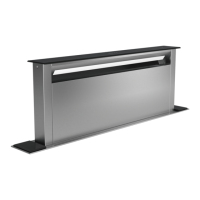
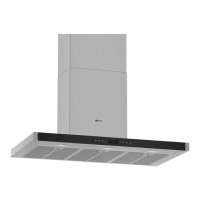
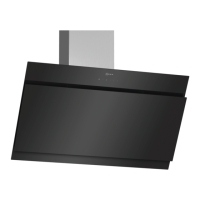
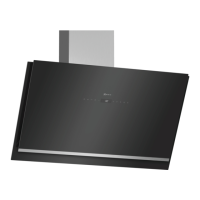
This document describes an extractor hood, providing comprehensive instructions for its installation, use, and maintenance. The appliance is designed for domestic use within a household environment, intended to extract cooking fumes and odors from the kitchen.
Function Description:
The extractor hood operates in two primary modes: exhaust air mode and circulating-air mode.
In exhaust air mode, the air drawn into the appliance is cleaned by grease filters and then conveyed to the exterior through a pipe system. This mode effectively removes cooking fumes and odors from the kitchen by expelling them outside. It is crucial to ensure adequate fresh air supply in the room when operating in exhaust air mode, especially if room air-dependent heat-producing appliances (such as gas, oil, wood, or coal-operated heaters) are also in use. This prevents the risk of toxic flue gases being drawn back into the living space due to a partial vacuum. The exhaust air must not be conveyed into a functioning smoke or exhaust gas flue or into a shaft used to ventilate rooms with heat-producing appliances without proper consent from the heating engineer. For external wall exhaust, a telescopic wall box is recommended.
In circulating-air mode, the drawn-in air is cleaned by both grease filters and an activated carbon filter before being recirculated back into the kitchen. This mode is ideal when external venting is not possible or desired. An activated carbon filter is essential for binding odors in this mode. Unrestricted operation is possible in circulating-air mode, as it does not create a partial vacuum that could interfere with other heat-producing appliances.
The appliance features a control panel with buttons for fan settings and lighting. Users can select different fan speeds (1, 2, or 3) to match the intensity of cooking fumes. If multiple fan speed buttons are pressed, the highest selected setting will apply. The fan settings can be switched off individually. The lighting can be operated independently of the ventilation system.
Usage Features:
To maximize effectiveness, it is recommended to switch on the extractor hood at the start of cooking and keep it running for several minutes after cooking is finished. This approach is most effective for removing kitchen fumes.
For energy saving, users are advised to ensure sufficient air supply during cooking for efficient operation and low noise. The fan speed should be adjusted to the intensity of cooking fumes, using intensive mode only when necessary, as lower speeds consume less energy. If cooking fumes are intense, a higher fan speed should be selected promptly to prevent them from spreading. The extractor hood and its lighting should be switched off when no longer needed.
The appliance is designed for use up to a maximum height of 2000 meters above sea level. It can be used by children over 8 years old and by individuals with reduced physical, sensory, or mental capacities, or lack of experience/knowledge, provided they are supervised or instructed on safe use and understand the risks. Children must not play with the appliance.
Maintenance Features:
Regular cleaning and maintenance are crucial for the appliance's performance and safety.
Fatty deposits in the grease filter can catch fire, so regular cleaning is essential. The appliance should never be operated without a grease filter. It is recommended to clean the grease filters every two months. When cleaning the metal grease filters, the metal grease filter holder inside the appliance should also be cleaned with a damp cloth.
The metal grease filters can be cleaned either by hand or in a dishwasher.
- By hand: Soak the filters in hot soapy water, clean them with a brush, rinse thoroughly, and let them drain on an absorbent material. A special degreaser can be used for stubborn dirt.
- In the dishwasher: Use normal domestic dishwashing detergents. Do not clean heavily soiled metal grease filters with cookware. Place the filters in the dishwasher with ample space, ensuring they are not trapped. Select a temperature of no more than 50 °C. Slight discoloration may occur but does not affect performance.
General cleaning:
Different surfaces require specific cleaning products to prevent damage.
- Stainless steel: Clean with hot soapy water and a dishcloth, then dry with a soft cloth. Clean in the direction of the grain. Special stainless steel cleaning products can be used, applied in a thin layer with a soft cloth.
- Painted surfaces: Clean with hot soapy water and a damp dishcloth, then dry with a soft cloth. Do not use stainless steel cleaner.
- Aluminium and plastic: Clean with hot soapy water and a soft cloth.
- Glass: Clean with glass cleaner and a soft cloth. Do not use a glass scraper.
- Controls: Clean with hot soapy water and a damp dishcloth, then dry with a soft cloth. Never clean controls with a wet cloth to prevent moisture ingress into electronics. Do not use stainless steel cleaner.
Important cleaning precautions:
- Always allow the appliance to cool down before cleaning to avoid burns.
- Before cleaning, unplug the appliance or switch off the circuit breaker to prevent electric shock.
- Do not use high-pressure cleaners or steam cleaners, as this can cause electric shock.
- Wear protective gloves when cleaning, as internal components may have sharp edges.
- Do not use harsh, abrasive, or alcohol-based cleaning agents, hard scouring pads, pressure washers, steam cleaners, descaling products, aggressive all-purpose cleaners, or oven spray.
- Wash new sponge cloths thoroughly before use.
- Remove the protective film from all parts of the appliance before first use to prevent surface damage.
Regular cleaning and, if required, replacement of the filter at regular intervals will increase the effectiveness of the ventilation system and prevent the risk of fire.



 To Next Page
 General